
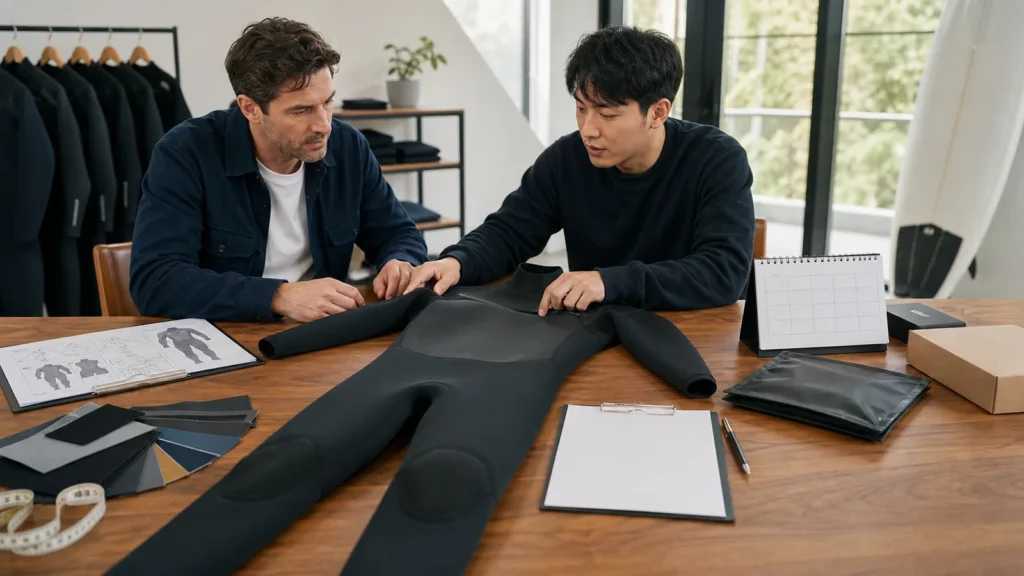
Short answer: INSEAKU’s standard wetsuit manufacturer MOQ starts at 50 pieces per style and color. Sizes may be mixed within those 50 pieces, but different colors cannot be combined to reach the MOQ. Sample pricing is quoted case by case. Sample development starts from seven working days after the materials and specifications are confirmed and payment is received. Under normal conditions, bulk production takes approximately 30 working days after the sealed sample is approved and the required bulk-order deposit is received. International transportation time is additional.
Those numbers are starting points, not an unconditional promise. Product type, materials, construction, branding, packaging, quantity and factory capacity allocation can change cost and timing. The written quotation should state the exact assumptions for your project.
For a supplier shortlist, compare these private label wetsuit manufacturers by product focus and published service scope, then request the MOQ and lead time for your exact specification.
This guide explains how MOQ, sample charges and lead time fit together so water-sports brands, retailers, importers and product teams can create a realistic budget and launch plan before requesting a quotation.
Wetsuit MOQ, sample cost and lead time at a glance
| Commercial item | INSEAKU starting point | Important condition |
|---|---|---|
| Standard production MOQ | Starts at 50 pieces per style and color | Sizes may be mixed within the 50 pieces; colors may not be mixed |
| Sample price | Quoted case by case | Depends on product, materials, construction, components and development work |
| Sample-fee credit | May be credited against a qualifying bulk order | The corresponding bulk order must reach 300 pieces of the same style and color, subject to the written quotation |
| Sample development | Starts from seven working days | The clock starts after materials and specifications are confirmed and payment is received |
| Normal bulk production | Approximately 30 working days | Starts after sealed-sample approval and receipt of the required bulk-order deposit |
| International transport | Not included in production lead time | Freight mode, route, customs and the agreed Incoterms® rule affect the delivery plan |
| Custom packaging MOQ | 1,000 units | Packaging quantity can exceed the wetsuit order and should be budgeted separately |
Planning example: one style in black with a mixed size run can start at 50 pieces. The same style in black and navy requires at least 50 pieces of each color, or 100 wetsuits in total. The two colors cannot be combined into a single 50-piece MOQ.
What does wetsuit manufacturer MOQ mean?
MOQ is the minimum order quantity a manufacturer will accept under a defined combination of product, material, color, construction and commercial terms. It is not always a single factory-wide number. A useful MOQ statement names the unit to which the number applies.
For INSEAKU’s standard starting policy, the unit is style and color. A buyer can distribute the 50 pieces across available sizes within that style-color combination. A color change creates a separate production group because it may require different laminated material, thread, printed graphics, trims or process controls.
Style, color and size are different MOQ decisions
- Style: the product architecture, pattern, panel layout, thickness map, entry system and construction.
- Color: the agreed colorway across fabric, print, thread, binding, zipper or other visible components.
- Size: the graded size within the same approved style and color.
A size mix should be supplied before the quotation is finalized because unusual grading, very small quantities in individual sizes or extra pattern work can affect efficiency. “Mixed sizes allowed” does not mean every possible size is automatically available; the approved size range and quantity breakdown still belong in the purchase order.
Why does private label wetsuit MOQ change?
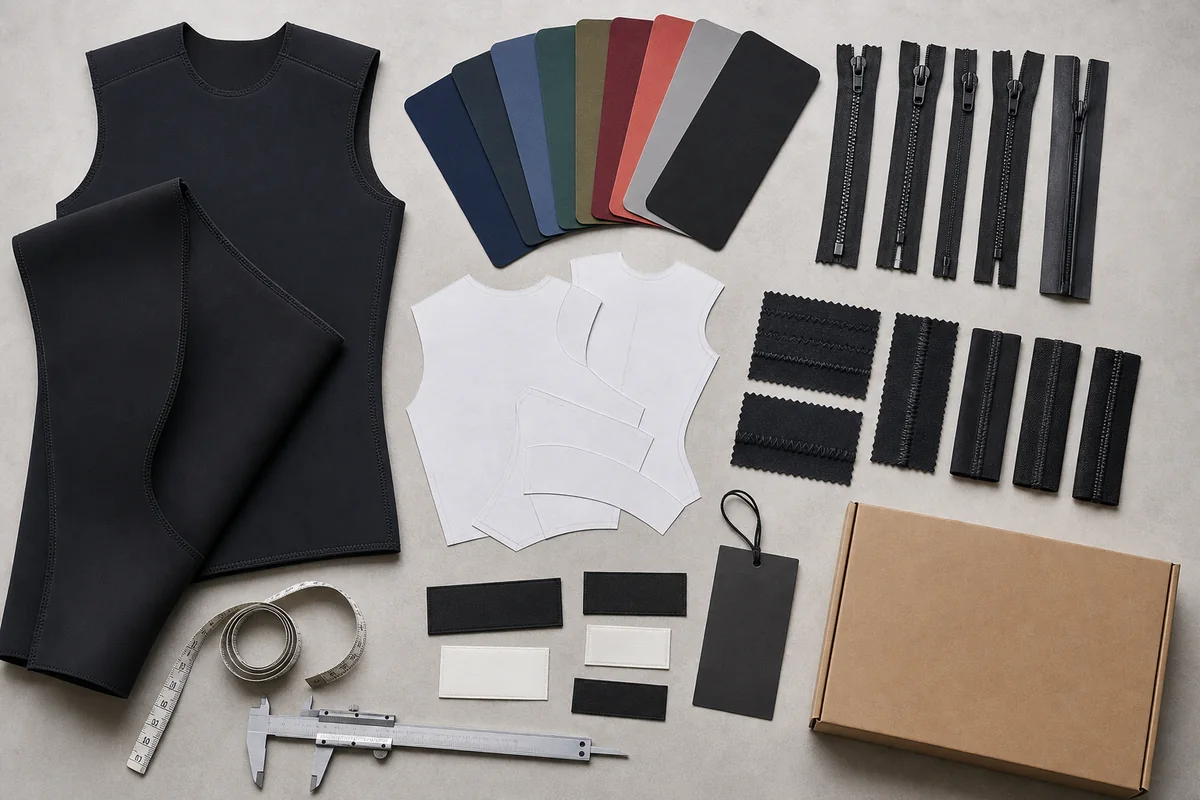
A private label wetsuit MOQ can change even when two products look similar in a catalogue. The minimum is influenced by the smallest practical batch across the materials and processes required to make the finished product. The wetsuit assembly quantity may be only one part of that calculation.
1. Material and lamination availability
Neoprene or other foam, face fabric, lining, thickness, stretch direction and lamination color must be available in the required combination. A stocked material may support a smaller starting order. A special laminate, custom color or uncommon thickness can carry a supplier minimum that is higher than the sewing batch.
Open-cell interiors, textile linings, coatings, camouflage printing and project-specific lamination can change material preparation and sampling. Review the construction choices in the open-cell vs closed-cell wetsuit comparison before requesting a final MOQ and schedule.
Before requesting a material-based quotation, compare foam type, supplier grade, lining, thickness, lamination, test evidence and traceability in our wetsuit material selection guide.
A new thickness, zoned panel map or thermal lining can change material availability, sampling work and the quotation basis. Define these inputs with the 3 mm, 5 mm and 7 mm wetsuit thickness guide for brands before comparing MOQ or lead time.
2. Construction and component choices
Seam type, zipper system, seals, reinforcement, print method and specialty trims affect setup and purchasing. A simple existing construction is easier to batch than a design requiring custom components or several new operations.
Chest zip, back zip and zipless entries can change components, panel architecture, labor and inspection. Review the specification variables in our chest zip vs back zip wetsuit guide before requesting a final quotation or schedule.
3. Branding and colorways
Logos, prints, woven labels, heat transfers and color-matched components have their own setup requirements. Each additional colorway creates more material control, purchasing and production changeovers. That is why 50 black and 50 navy wetsuits are treated as two qualifying color batches rather than one 100-piece mixed-color run.
Printing setup and substrate choices can also change sampling needs and cost, so compare the custom printed wetsuit sourcing options before finalizing artwork and colorways.
4. Custom packaging
INSEAKU’s custom packaging MOQ is 1,000 units. If a buyer orders 100 wetsuits, the remaining 900 packaging units do not disappear. The quotation should state who owns the unused packaging, where it will be stored, how long it can be stored, whether storage charges apply and what happens if the artwork changes before the next order.
5. Development route
Private label normally starts from a proven base solution. OEM starts from a buyer-controlled design, while ODM includes more product-development support. These routes can share the same assembly MOQ but require different development work. Read our detailed comparison of OEM vs ODM wetsuits and private-label manufacturing before choosing a route.
What determines OEM wetsuit cost?
There is no responsible universal answer to “What is the OEM wetsuit cost?” without a specification and quantity. A low unit price can omit development, testing, packaging, freight or quality requirements. A useful custom wetsuit cost breakdown separates the cost drivers so competing quotations cover the same scope.
| Cost driver | Examples | What the buyer should confirm |
|---|---|---|
| Product category | Surf, diving, triathlon, freediving, rental, kids or accessory product | Intended use, user, water conditions and performance priorities |
| Materials | Foam type, thickness, density, lining, stretch, finish and color | Exact material or an approved performance-based alternative |
| Construction | Panel count, seam type, taping, seals, reinforcement and entry system | Drawings, construction notes and acceptable tolerances |
| Components | Zippers, pulls, hook-and-loop, knee pads, cords and hardware | Brand, performance level, color and substitution rules |
| Branding | Screen print, heat transfer, patches, labels and hangtags | Artwork size, location, color count and approval method |
| Development | Pattern, grading, tech pack, prototypes and revision rounds | Included deliverables, revision limits and ownership terms |
| Quality and compliance | Inspection level, performance tests, buyer protocols and reports | Required standard, laboratory, sample size and acceptance criteria |
| Packaging and logistics | Polybag, carton, custom retail packaging, freight and insurance | Packaging MOQ, carton standard, ship-to location and trade term |
Wholesale wetsuit prices should therefore be compared as like-for-like landed or agreed trade-term costs, not only as an ex-factory number. Ask each supplier to identify inclusions, exclusions, validity period, payment terms and the version of the specification being quoted.
For a worked example and an editable comparison sheet, see how to compare wetsuit factory quotes on the same scope before choosing a supplier by unit price.
What is included in wetsuit sample cost?
A wetsuit sample cost is quoted case by case because a sample is a development unit, not simply one bulk-production wetsuit. The charge may reflect material procurement, pattern work, cutting setup, specialized construction, branding setup, manual handling, inspection and communication across a small batch.
Sampling requirements also change with construction. See how GBS, flatlock, taped and liquid-sealed seams affect process steps, validation and relative cost.
Before paying, ask the quotation to state:
- the sample type and purpose;
- the exact specification, artwork and material version;
- which development work is included;
- how many samples and sizes are included;
- which logo, label and packaging elements will be represented;
- how many revision rounds are included or separately charged;
- sample freight, payment fees and import charges;
- the approval criteria and who can authorize the sealed sample;
- whether and under what conditions the sample fee can be credited.
At INSEAKU, the sample fee may be credited when the corresponding bulk order reaches 300 pieces of the same style and color, subject to the written quotation. For example, 150 black and 150 navy pieces of the same style do not satisfy a 300-piece same-color condition. Treat the credit as conditional until the qualifying order and commercial terms are confirmed in writing.
Why the first sample may not be the sealed sample
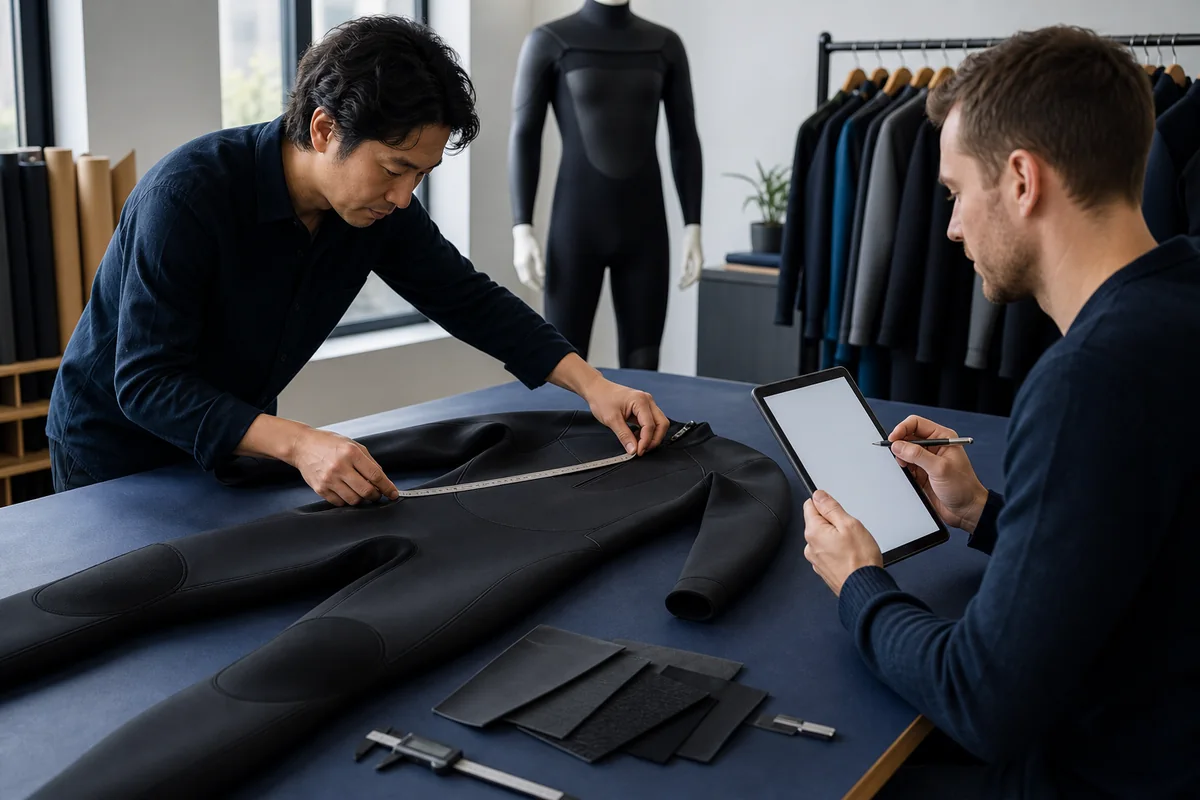
A first prototype can answer construction and fit questions without representing every final graphic or retail detail. The sealed sample is the approved physical reference for bulk production. If the product requires more than one stage, name them clearly—for example, prototype, fit sample, pre-production sample and sealed sample—and record what each stage is intended to approve.
See the complete wetsuit sample development and approval workflow for stage definitions, revision control, pre-production review and the evidence required before bulk release.
How long is wetsuit production lead time?
INSEAKU’s normal wetsuit production lead time is approximately 30 working days after two conditions are met: the sealed sample has been approved and the required bulk-order deposit has been received. The confirmed schedule depends on style, materials, order quantity and factory capacity allocation and is stated in the written quotation.
Production timing should also reserve time for the agreed wetsuit inspection and quality-control stages, including material checks, in-process verification, final inspection and release.
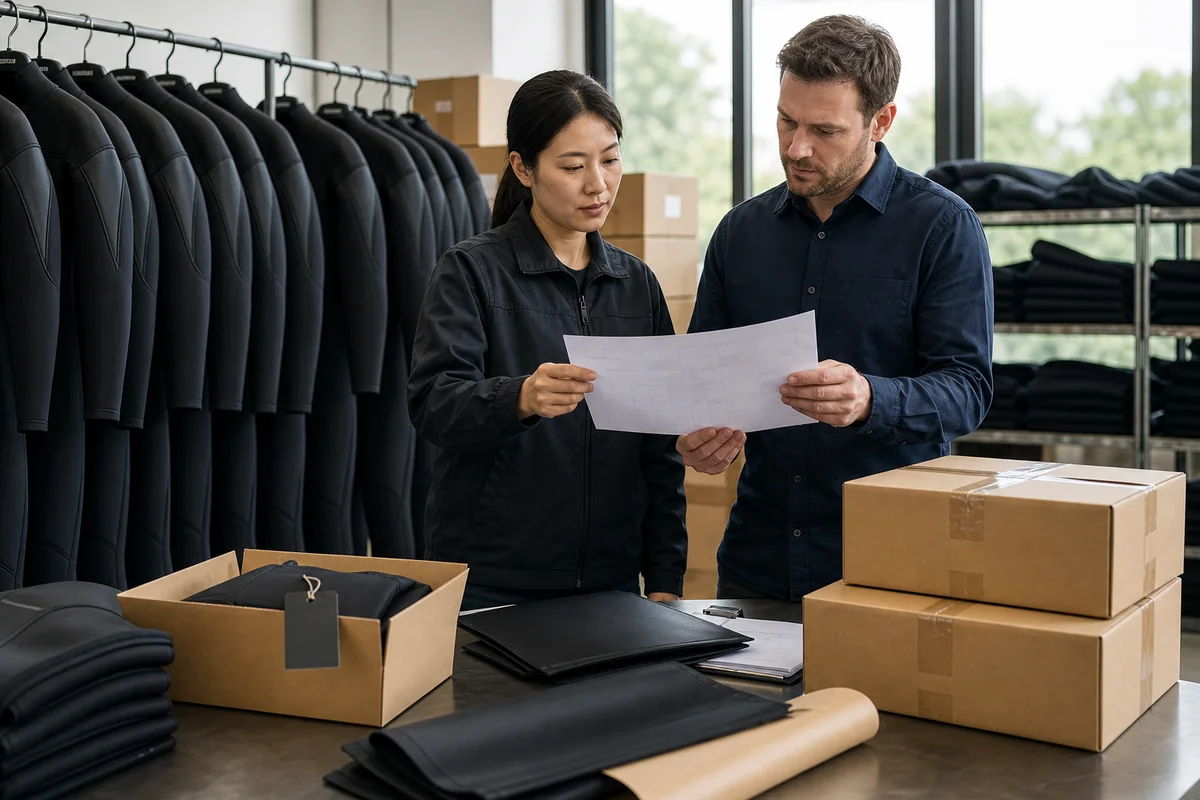
This is production time, not total calendar time from first inquiry to delivery. The complete project can also include RFQ clarification, material confirmation, sample development, buyer review, revisions, packaging production, final inspection, freight booking, international transport and customs clearance.
Production timing depends on the approved sequence from material preparation and cutting through seam assembly, inspection and packing; see how wetsuits are manufactured.
Dive centers can turn the same MOQ and lead-time assumptions into an operating forecast with the rental wetsuit cost-per-use and size-mix calculator.
Sample-development clock
Sample development starts from seven working days after materials and specifications are confirmed and payment is received. “Starts from” matters: complex patterns, special materials, custom components, multiple sizes or revision rounds may require more time. The quotation should define the expected sample stage and its planned completion date.
Allow time not only to make the sample but also to measure, review and correct it. This wetsuit fit testing protocol shows the evidence to close before pre-production approval.
International transportation is separate
International transport is not included in the approximately 30-working-day production period. Freight time depends on route, mode, consolidation, carrier schedule, destination procedures and customs. The purchase contract should use a named place with the agreed Incoterms® rule so buyer and seller understand their respective delivery tasks, costs and risks.
A practical timeline from RFQ to shipment
| Stage | Clock starts when | Main output or gate | Common source of delay |
|---|---|---|---|
| 1. RFQ review | Manufacturer receives the brief and quantity breakdown | Questions, feasibility review and comparable quotation scope | Missing size mix, materials, artwork or target date |
| 2. Specification confirmation | Buyer and manufacturer align the product inputs | Controlled specification and confirmed materials | Unresolved alternatives or conflicting documents |
| 3. Sample development | Specification and materials are confirmed and payment is received | Starts from seven working days for the agreed sample stage | Special components, new pattern work or late artwork |
| 4. Buyer review and revisions | Buyer receives the sample and review documents | Consolidated feedback or approval | Fragmented comments, new requirements or slow fit testing |
| 5. Sealed-sample approval | All agreed product details are represented | Dated physical sample and document version approved for bulk | Unclear approval authority or unresolved exceptions |
| 6. Bulk production | Sealed sample is approved and required deposit is received | Approximately 30 working days under normal conditions | Material changes, quantity changes or capacity conflicts |
| 7. Inspection and release | Production is complete and goods are presented for inspection | Accepted inspection result and shipping release | Late inspection booking or corrective work |
| 8. International transport | Goods are released under the agreed trade term | Carrier handoff, export, transit, import and delivery | Carrier schedules, customs or incomplete documents |
Build your launch plan backward from the required in-market date. Include buyer approval time and contingency rather than treating factory production as the entire schedule.
Three project scenarios: private label, OEM and ODM
Scenario A: one-color private-label launch
A buyer selects an available base style, one black colorway and a mixed size run of 50 pieces. Branding uses an agreed existing application method. This can fit the standard starting MOQ if the chosen materials and components are available. If custom retail packaging is required, the 1,000-unit packaging MOQ is a separate purchasing decision.
Scenario B: two-color OEM program
A buyer provides a complete tech pack for one style in black and navy. Each color requires at least 50 pieces, so the starting production quantity is 100 pieces. Sizes may be mixed within each color’s 50-piece group. The quotation should separate shared development work from color-specific materials, artwork and setup.
Scenario C: new ODM product
A buyer has a target user and performance brief but needs pattern, material and construction development. The assembly MOQ may still start at 50 pieces per style and color, but sample cost and schedule must also cover the agreed development outputs and revision stages. MOQ alone does not describe the full project commitment.
How to reduce cost and avoid delays
- Start with one priority style and color. Validate demand and fit before multiplying color-specific batches.
- Use available materials where appropriate. Ask for options that meet the required performance without unnecessary custom procurement.
- Freeze decisions before sampling. Confirm intended use, materials, measurements, construction, artwork and packaging so the sample is testing a stable specification.
- Send one consolidated feedback document. Conflicting comments from design, sales and management create avoidable revisions.
- Name the approval owner. One authorized person should approve the sealed sample and bulk release.
- Separate production and freight dates. Confirm the factory completion target, inspection date, shipping handoff and required delivery date.
- Plan packaging inventory. If the packaging MOQ is 1,000 units, approve artwork that can remain valid across future reorders.
- Keep a change log. Every approved change should identify the affected document, sample and price or timing consequence.
Reducing complexity is different from removing quality controls. A lower-cost project still needs a controlled specification, sample approval and appropriate inspection.
To place MOQ and supplier timing inside the full cash and launch decision, use the private-label wetsuit startup planner covering the first range, landed cost, break-even, sample approval and launch dependencies.
What to send for an accurate project estimate
Send the same information to every shortlisted manufacturer. The following RFQ inputs allow INSEAKU to assess feasibility, MOQ, sample scope, unit-cost drivers and timing:
Before requesting a firm quote, organize the product specification and quantity breakdown with our wetsuit tech pack template and RFQ checklist.
- brand, company and target market;
- product category and intended use;
- OEM, ODM or private-label route, if already selected;
- reference sample, drawings or tech pack;
- material, thickness, lining and construction requirements;
- style count and quantity by color;
- size range and quantity by size within each color;
- logo artwork, labels, hangtags and packaging requirements;
- required tests, inspection protocol and compliance documents;
- target sample date, required production-completion date and destination;
- preferred freight mode or Incoterms® rule, if known.
If you are still evaluating suppliers, use our 12-point wetsuit factory audit scorecard. When your scope is ready, review our custom wetsuit manufacturing services or send your product brief for a project estimate.
Buyer FAQs
What is INSEAKU’s standard wetsuit manufacturer MOQ?
It starts at 50 pieces per style and color. Sizes may be mixed within those 50 pieces, but different colors cannot be combined to meet the MOQ. The written quotation confirms whether the selected product, material and components qualify for that starting point.
Can I order 25 black and 25 navy wetsuits?
Not under the standard starting policy, because each color has its own MOQ. A two-color order normally starts at 50 black plus 50 navy pieces. Sizes can be mixed within each color group.
How much does a wetsuit sample cost?
There is no single public reference price. Sample cost is quoted case by case according to the product, materials, pattern or design work, construction, components, branding and sample stage.
Can the sample fee be deducted from a bulk order?
It may be credited when the corresponding bulk order reaches 300 pieces of the same style and color, subject to the terms in the written quotation.
How soon can sample development start?
It starts from seven working days after the materials and specifications are confirmed and payment is received. Complex products, special materials and revision rounds can extend the schedule.
How long does bulk wetsuit production take?
Under normal conditions, bulk production takes approximately 30 working days after the sealed sample is approved and the required bulk-order deposit is received. The final schedule depends on style, materials, quantity and factory capacity allocation and will be confirmed in writing.
Does the 30-working-day lead time include international shipping?
No. International transport, customs and destination delivery are outside the production lead time and should be planned separately under the agreed shipping arrangement.
Why is the custom packaging MOQ higher than the wetsuit MOQ?
Printed or custom packaging is purchased through a separate production process with its own setup and supplier minimum. INSEAKU’s custom packaging MOQ is 1,000 units, so storage and future use of excess packaging should be agreed before ordering.
Can a quotation be compared using unit price alone?
No. Compare the same specification, quantity, development scope, sample stages, quality requirements, packaging, payment terms, trade term and exclusions. Otherwise the lower number may simply cover less work.
Get a project estimate
To receive a useful estimate, send your intended use, style count, colors, size range, quantity, materials, construction, branding, packaging and target date. INSEAKU can then identify the applicable MOQ, sample scope, cost drivers and production schedule for the written quotation.
Send your wetsuit project brief and include whether you need OEM production, ODM development or a private-label starting point.
References and further reading
- International Chamber of Commerce — Incoterms® rules
- INSEAKU — How to Find a Wetsuit Manufacturer: A 12-Point Factory Audit Scorecard for Brands
- INSEAKU — OEM vs ODM Wetsuits: Which Model Fits Your Brand—and Where Does Private Label Fit?
Last reviewed: September 1, 2026. INSEAKU confirmed the standard starting MOQ, size and color rules, sample-fee credit condition, sample-development starting point, normal bulk-production timing, packaging MOQ and transport exclusion used in this article. Project-specific terms remain subject to the written quotation, approved specification and agreement.