
Finding good private label wetsuit manufacturers starts with a shortlist of companies that actually make the products your brand needs. A manufacturer with extensive material capabilities may suit an established collection; a development-focused partner may be more useful when your first style still needs pattern work and sample revisions. The right recommendation should explain that difference before you send a quotation request.
Our ten recommended manufacturers are SHEICO, AROPEC, Pacific Eagle, INSEAKU, HAOWEI, Voll Will, Possess Sea, Seaskin / Lanbo, Ocean Tec USA and Keep Well. Below, compare their publicly described strengths, see their official homepages and identify the questions that determine whether they fit your production plan.
Editorial disclosure: INSEAKU publishes this article and is included in the list. Recommendations are based on the sources linked below, not comparative factory audits or product tests. Numbering is an editorial order, not an independently verified ranking of quality or size. Website screenshots identify the companies; they do not establish endorsement or audited manufacturing capability.
Private label wetsuit manufacturers: quick comparison
Use this table to identify relevant conversations, then read the matching profiles. The project-fit column is our editorial interpretation of the published capabilities. A missing MOQ means it was not established from the reviewed sources—not that the manufacturer has no minimum.
| Manufacturer | Published strength | Suggested project fit | Confirm before ordering |
|---|---|---|---|
| 1. SHEICO Group | Vertical integration | Established volume programs | Project acceptance and MOQ · Source |
| 2. AROPEC | Broad watersports range | Multi-category collections | OEM scope and manufacturing site · Source |
| 3. Pacific Eagle | Wetsuits, waders and materials | Neoprene product development | Current range and production site · Source |
| 4. INSEAKU | Custom development and QC | Brand launch and line extension | MOQ by material, color and style · Source |
| 5. HAOWEI | Technical wetsuit development | Construction-led projects | Specific materials and test evidence · Source |
| 6. Voll Will | Commercial-volume OEM / ODM | Defined-specification bulk orders | 200–500 pieces/style, conditional · Source |
| 7. Possess Sea | Materials and finished products | Material-led collections | Assigned factory and small-order terms · Source |
| 8. Seaskin / Lanbo | Development-to-production service | Multi-application OEM / ODM | Contracting and manufacturing entities · Source |
| 9. Ocean Tec USA | US production and private branding | US-based sourcing requirement | Capacity, styles and bulk MOQ · Source |
| 10. Keep Well | Wetsuits and neoprene accessories | Coordinated suit/accessory sourcing | Updated catalog and current OEM terms · Source |
Public capability descriptions are company statements. MOQ, factory assignment, available materials and delivery terms require confirmation for your specific order. Headquarters, sales offices and production sites are not interchangeable.
Selection approach · Read the ten profiles · Choose your shortlist · Buyer FAQs · Official sources
How we selected these manufacturers
We looked for identifiable businesses with public evidence of finished-wetsuit manufacturing, brand customization and specific products or production capabilities. The selection includes integrated manufacturing groups and more focused development partners. Raw-material suppliers without finished-wetsuit services and retail brands without a documented manufacturing offer were outside the scope.
Our recommendations emphasize reasons to investigate a company, not a promise that every supplier will accept every project. A large production footprint is useful evidence of manufacturing scope, but it does not establish low minimums or willingness to develop a new brand. Likewise, a smaller initial order does not demonstrate better quality. The practical comparison is whether a supplier can deliver your agreed specification, quantity and verification requirements.
Terminology also matters. In this article, private label covers manufacturing for another brand, including OEM and ODM routes. Ask whether the proposal uses an existing design with your branding, modifies an available pattern, or develops a new product. Those routes can have different costs, ownership arrangements and approval steps.
Our ten recommended wetsuit manufacturers
1. SHEICO Group — vertically integrated wetsuit manufacturing
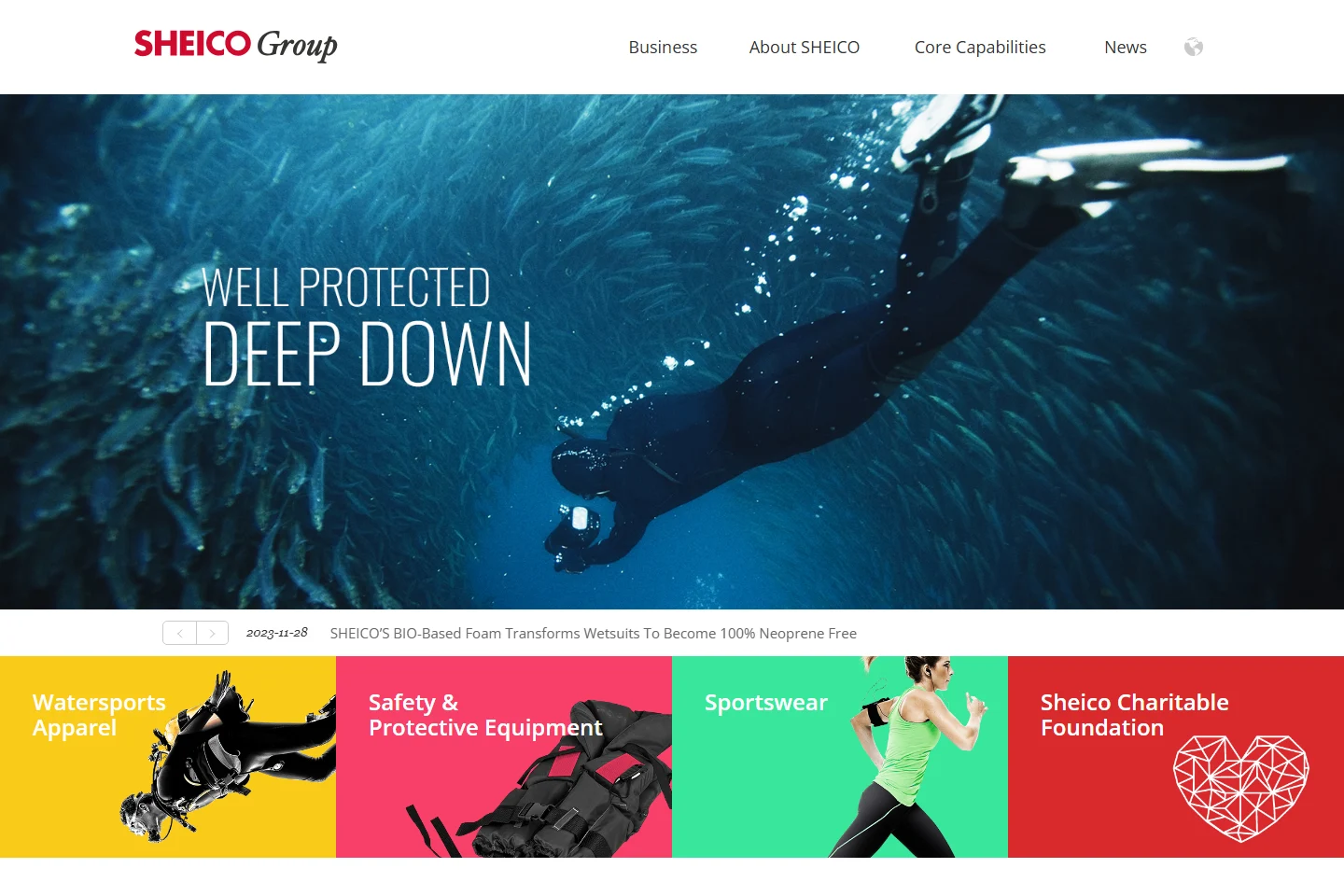
Why we recommend it: SHEICO is a strong starting point when manufacturing depth matters. Its official company profile describes an integrated operation spanning rubber sheets, performance fabrics and finished watersports products. It also identifies operations in Taiwan, Thailand, Cambodia and Vietnam. This is a materially different proposition from a supplier that only decorates purchased garments.
The commercial attraction is the opportunity to discuss materials and finished-product development within a broad manufacturing organization. We would put SHEICO on an established brand’s research list when the project involves repeat production, several styles or a longer-term sourcing program. That is a fit assessment, not confirmation that any particular volume will be accepted.
What to confirm: Ask which business unit and production site would handle your collection, whether the proposed materials and construction are available, and what quantities justify development. Confirm sample ownership, capacity reservation and delivery assumptions before using a group-level capability statement in your launch plan.
Our take: A compelling integrated-manufacturing benchmark. Do not assume a large group necessarily offers ready-made white-label styles or startup-sized orders; request the actual project-entry conditions.
2. AROPEC — a broad watersports product range
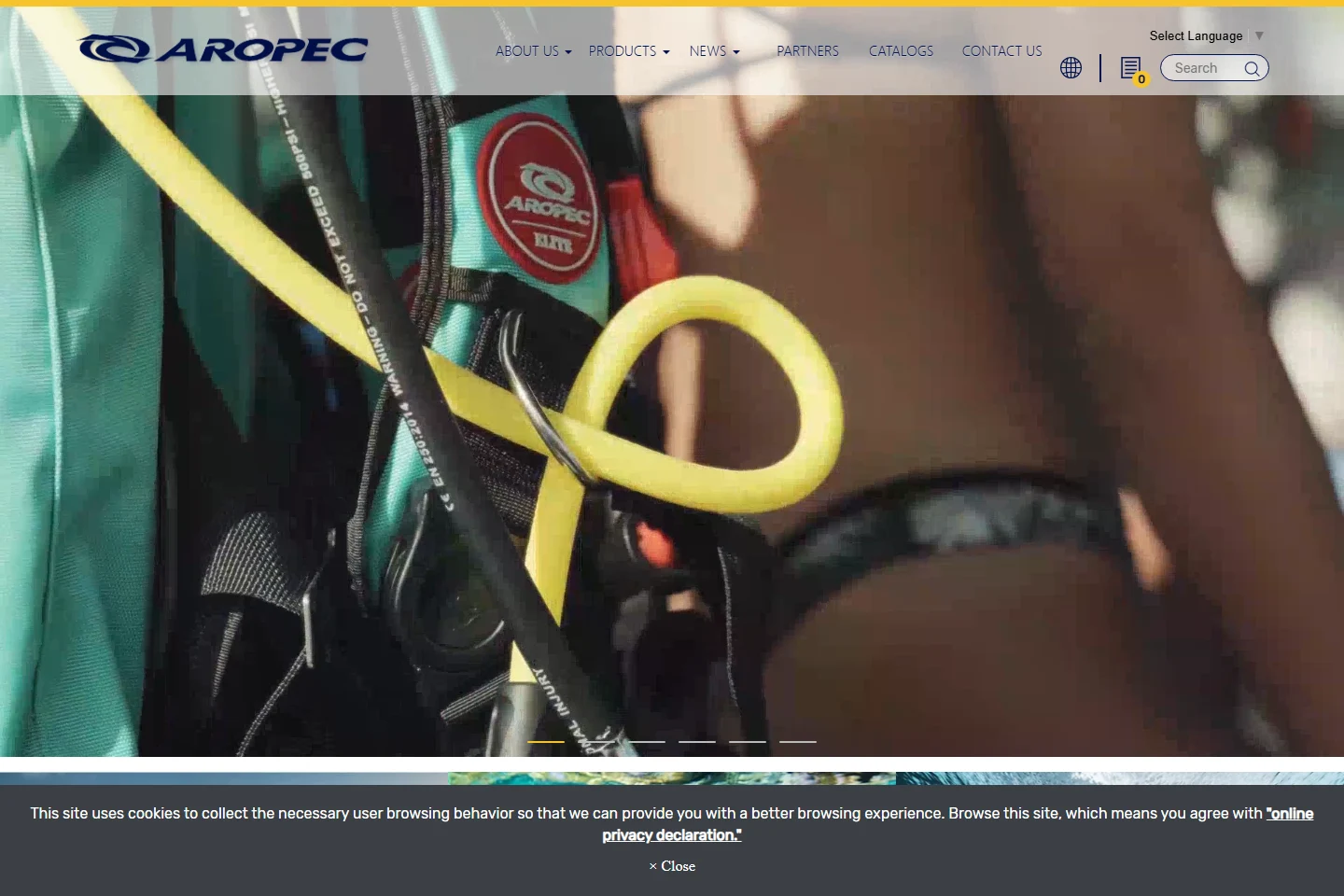
Why we recommend it: AROPEC’s wetsuit offering explicitly includes OEM and ODM services alongside its own brand. Its official product navigation spans diving, surfing, freediving, spearfishing and triathlon, with related accessories. The breadth makes it relevant to buyers planning a coordinated watersports collection rather than one isolated garment.
For a brand adding diving products or extending an existing range, the useful question is how much of that catalog can inform a private-label program. Reference products can make early conversations more concrete: identify the entry system, suit configuration and accessory types that interest you, then ask what can be adapted under your label.
What to confirm: Establish which products are available for OEM or ODM, what development work is included, and whether minimums apply separately to each category. A combined catalog does not automatically mean a combined MOQ. Confirm the production location and distinguish your custom design rights from the manufacturer’s existing patterns or branded products.
Our take: Worth contacting for multi-category watersports sourcing. Its broad catalog is the reason to investigate—not evidence that every displayed item is offered on identical private-label terms.
3. Pacific Eagle — wetsuits, waders and neoprene development
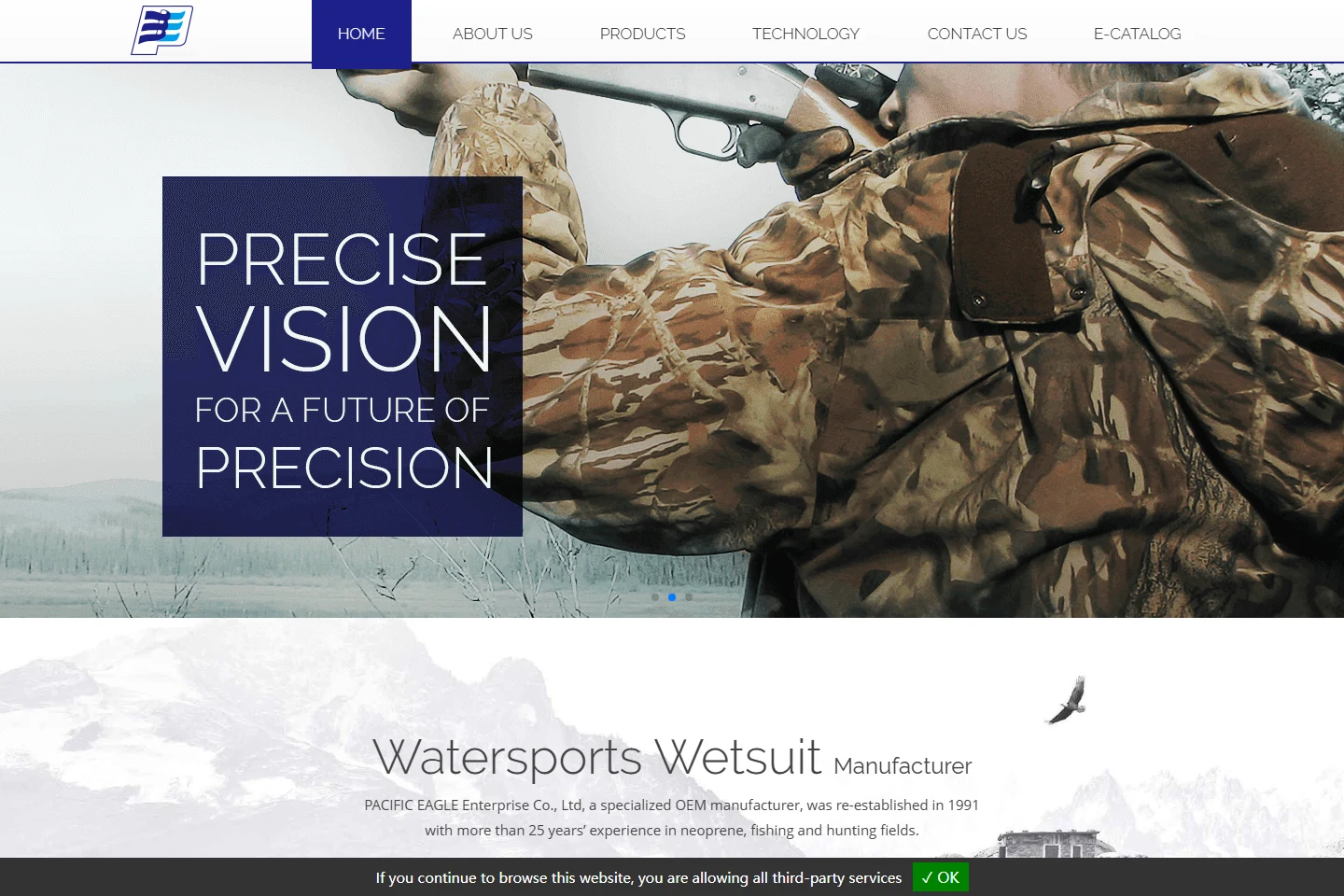
Why we recommend it: Pacific Eagle identifies itself as an OEM manufacturer and presents wetsuits, waders, neoprene sheets and accessories on its official website. It also describes sample and pattern-making support for product development. That combination is relevant when a buyer wants to discuss the garment together with its underlying material and construction choices.
We would investigate Pacific Eagle for a collection that connects wetsuits with other neoprene products, or for development where the brief requires more than selecting a color and adding a logo. Its Taiwan headquarters and listed overseas business presence offer contact routes, but those office listings should not be treated as proof of where a particular order will be manufactured.
What to confirm: Request the current wetsuit catalog, relevant recent samples, manufacturing location and MOQ for your proposed construction. Clarify who develops and retains the pattern, how sample revisions are charged, and which specifications can be repeated in future orders. Some website descriptions use historical experience figures, so ask for current operating information.
Our take: A useful material-and-product development candidate, particularly for buyers comparing wetsuits and adjacent neoprene categories within one sourcing discussion.
4. INSEAKU — private-label development, sampling and quality control
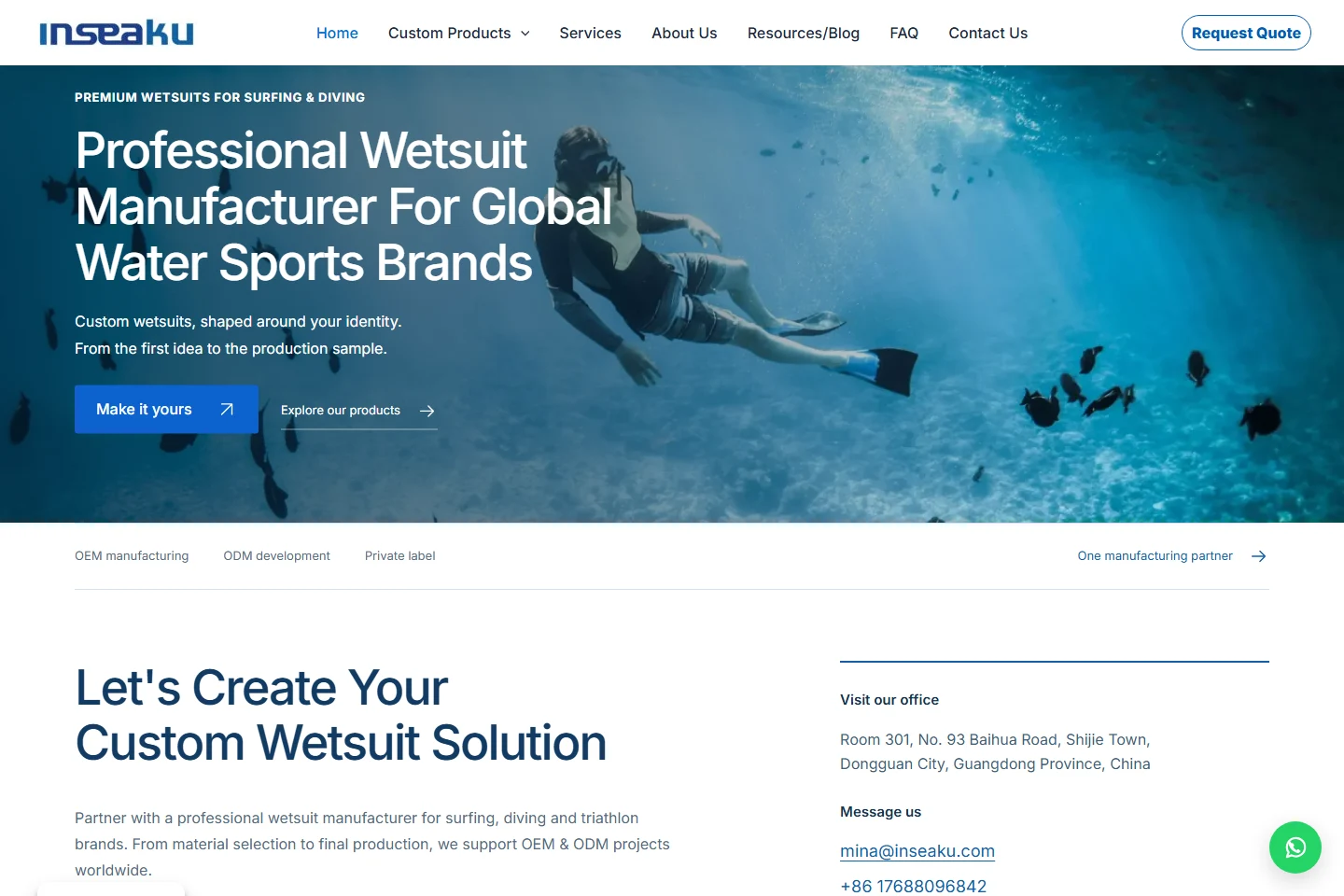
Why we recommend it: INSEAKU’s offer connects design review, sample development, production and final quality checks. Customization covers material thickness, pattern and fit, seams, entry systems, branding and packaging. For a brand moving from a reference product or initial specification toward an approved sample, those connected decisions are central to making the product reproducible.
The published starting MOQ is 50 pieces per style and color, with final requirements depending on materials, colors, size assortment, branding and packaging. That makes INSEAKU worth discussing with buyers managing the scope of an initial collection, without assuming every construction qualifies for the same minimum. See INSEAKU’s private-label wetsuit manufacturing services for the stated service scope and conditions.
There is also a specific quality-control example behind the recommendation. In INSEAKU’s profile of QC Supervisor Xuemei Zhang, an owner-supplied case describes how she found a one-letter branding error by comparing the goods with the customer’s original files. The affected goods were held for correction and reinspection. This is a company-reported case, not an independent comparative audit.
What to confirm: Agree the exact material, fit-development scope, sample revisions and inspection criteria before placing an order. Obtain project-specific MOQ and lead time in writing. Our take: A relevant option for brands seeking custom development with explicit approval and final-QC responsibilities, including initial launches and product-line extensions.
5. HAOWEI — technical wetsuit design and manufacturing
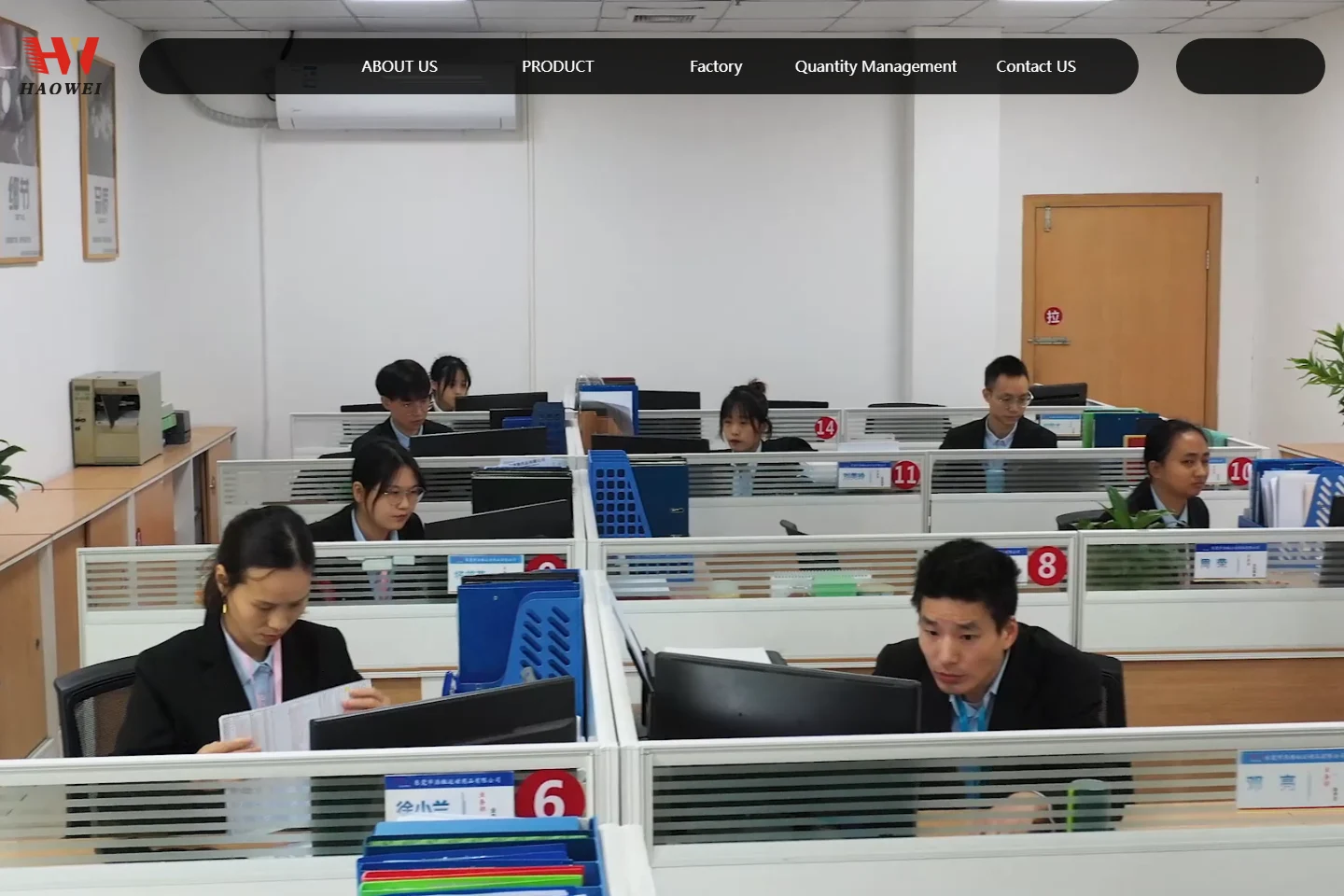
Why we recommend it: Dongguan Haowei Sporting Goods describes a business combining design, production and sales in its company introduction. Its product navigation includes diving, surfing, spearfishing and triathlon suits. This makes it a relevant technical-development candidate when the buying brief centers on construction, materials and the requirements of a particular activity.
Rather than beginning with a general request for a “premium wetsuit,” show HAOWEI the panels, seams, entry arrangement and surface properties you need. A useful first discussion should reveal which details come from an available platform and which require fresh development. The ability to explain those trade-offs is more helpful to a purchasing decision than broad quality language.
What to confirm: Ask for examples close to the intended product, the proposed manufacturing sequence, material identities and applicable test evidence. Where a treatment or coating is important, clarify its availability, limitations and verification method. The public description of a patent application should not be turned into a claim of a granted patent or independently established performance advantage.
Our take: Worth evaluating for construction-led projects. Compare a relevant sample and a written technical proposal before drawing conclusions about fit, durability or performance against another supplier.
6. Voll Will — commercial-volume custom wetsuit production
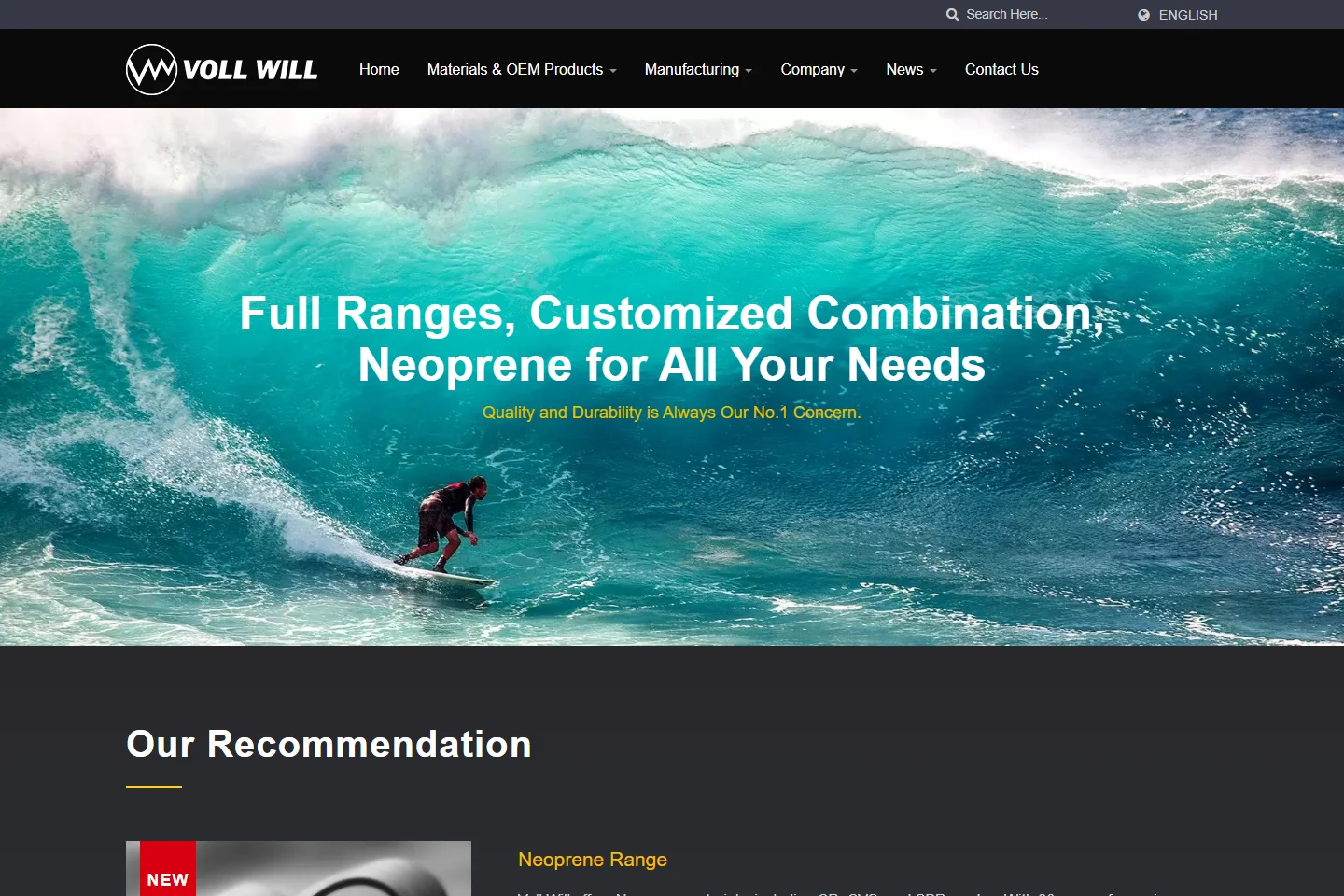
Why we recommend it: Voll Will’s custom wetsuit page expressly offers OEM and ODM work from artwork, technical packs or physical samples. It describes full-length, shorty and two-piece configurations. Its company profile also discusses manufacturing and supply-chain management, which should be considered together when evaluating how a project will be delivered.
One useful distinction is the published emphasis on commercial-volume orders. The wetsuit page gives a typical minimum of 200 pieces and a standard range of 200–500 pieces per style depending on technical requirements. Those are conditional website statements, not a quote for your design, but they help buyers ask more focused questions before commissioning development.
What to confirm: Request the minimum for the exact pattern, material and color combination, and clarify any design-mixing conditions. Establish which entity and facility will make the goods, which processes are coordinated through the supply chain, and who controls material approval and final release.
Our take: A relevant choice for buyers with an established specification and a commercially meaningful initial quantity. A very small experimental run may need a different arrangement; confirm rather than assuming an exception.
7. Possess Sea — materials and finished watersports products
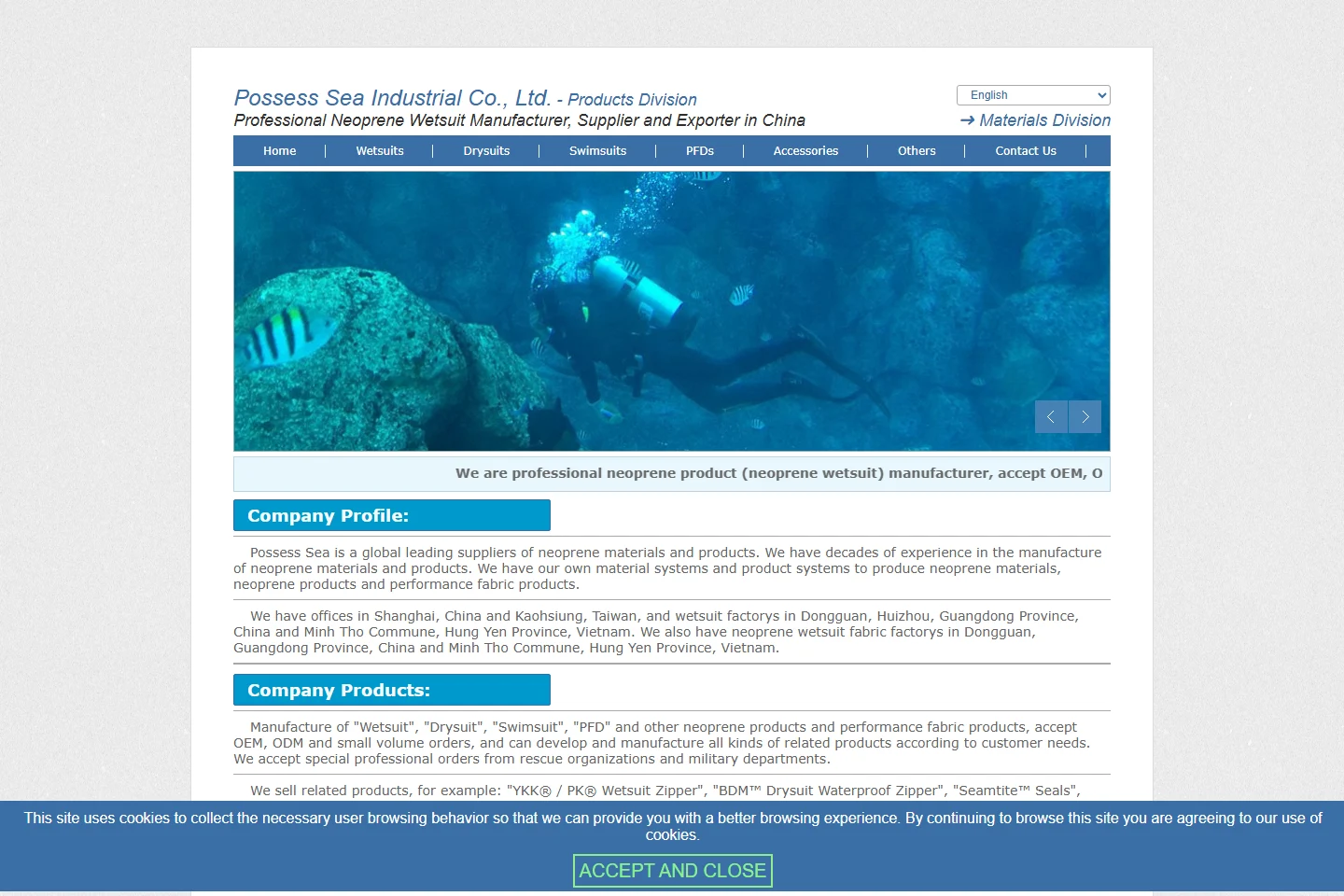
Why we recommend it: Possess Sea’s products division website describes both material and finished-product systems, with OEM, ODM and small-volume services. Its listed ranges include surfing, diving, freediving, spearfishing and triathlon wetsuits. It reports wetsuit production locations in China and Vietnam, alongside offices in Shanghai and Kaohsiung.
That combination is useful for a material-led sourcing brief: for example, a buyer who needs to discuss the foam-and-lining construction together with the garment design. A broad range can also help when the wetsuit is part of a larger collection, although each product still needs its own specification and approval.
What to confirm: “Small volume” is not a numerical offer. Ask for the quantity by style and material, the assigned production site, the contracting entity and the proposed sampling steps. If material compliance is part of the brief, obtain documents matching the actual material, applicable requirements and relevant date; historical website test summaries do not establish current compliance for a new order.
Our take: A worthwhile candidate for buyers who want material and garment options discussed together, with factory assignment and order conditions resolved before commitment.
8. Seaskin / Lanbo — custom development and manufacturing
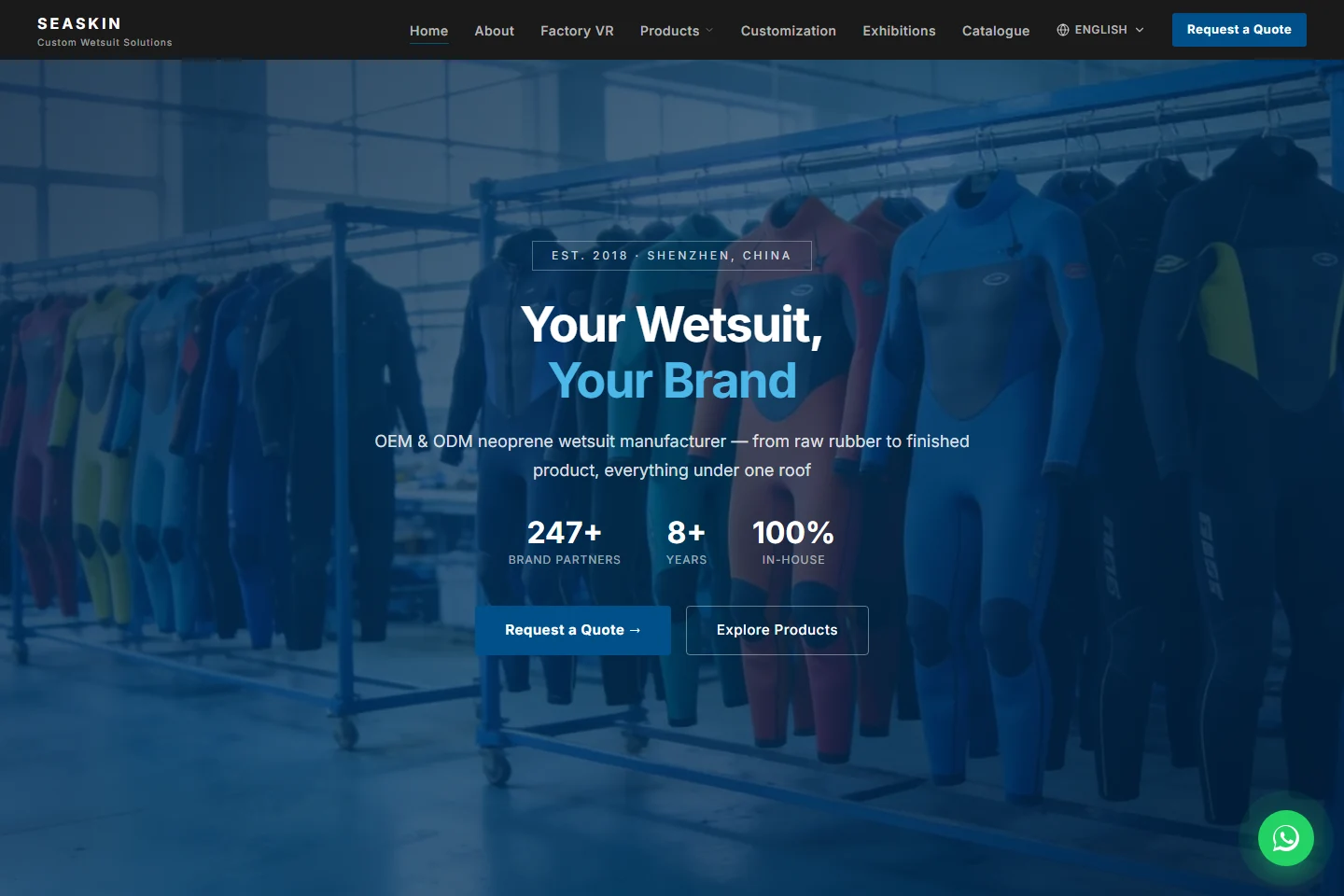
Why we recommend it: Seaskin’s company page distinguishes Shenzhen Seaskin Sports Goods, the business and management entity, from Dongguan Lanbo Sports Goods, the manufacturing facility. It describes OEM/ODM wetsuit development across diving, surfing, spearfishing and triathlon, with production processes extending from material preparation to final QC.
For buyers, that entity distinction is useful information rather than a reason to count the businesses as two separate recommendations. It provides a starting point for asking who signs the contract, who manages development, where manufacturing happens and who accepts responsibility when an approved requirement is missed.
What to confirm: Put those responsibilities into the quotation and purchase documentation. Check the specific material and construction options, minimum quantity and approval timeline. If the project requires certifications or test reports, request the actual documents and examine the named entity, product or material scope and validity—not just the logos displayed online.
Our take: A relevant development-to-production candidate for brands seeking an OEM/ODM program across several wetsuit applications. Evaluate the exact team and manufacturing proposal that will serve your project, rather than relying only on group-level presentation.
9. Ocean Tec USA — US manufacturing and private branding
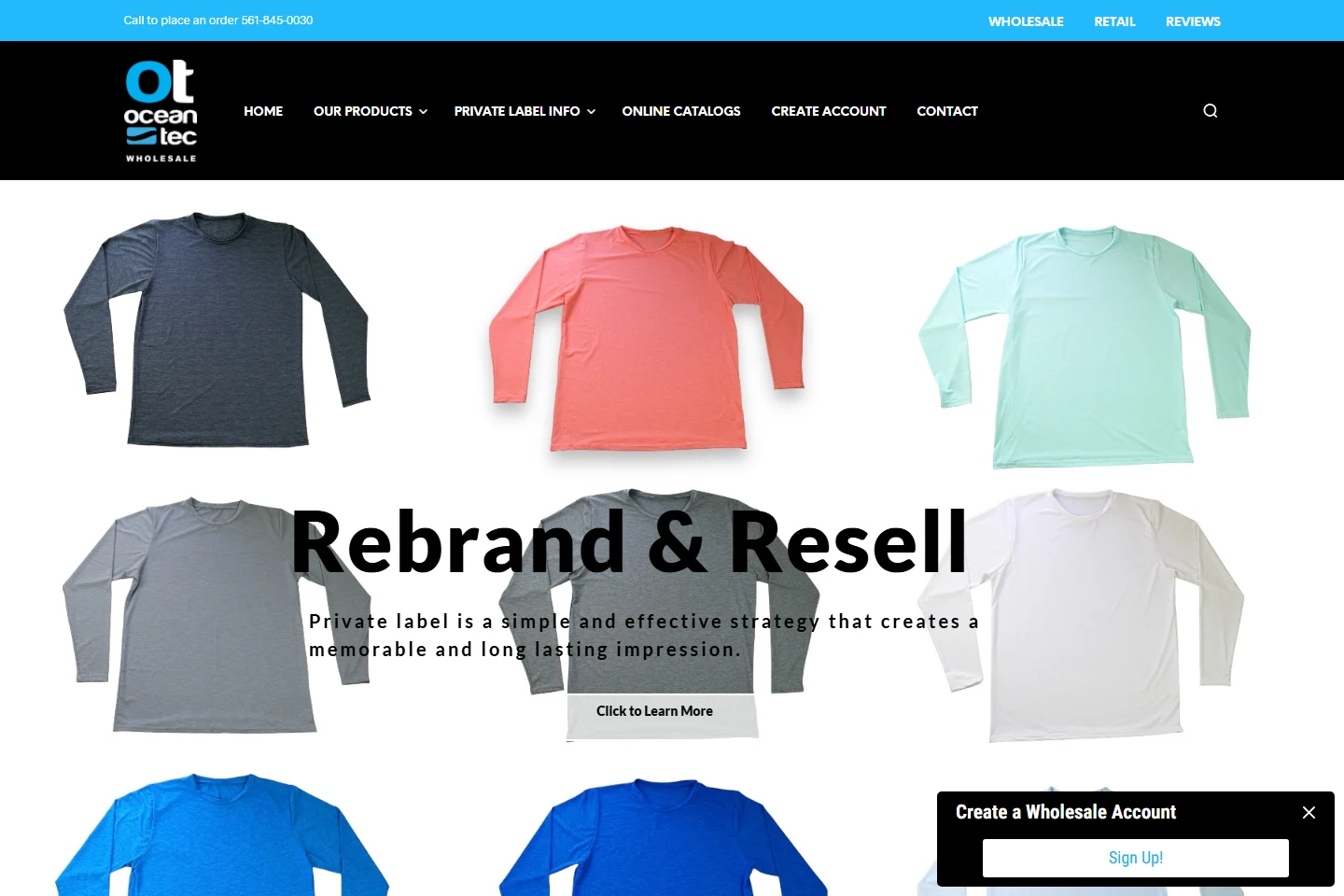
Why we recommend it: Ocean Tec USA provides a geographically distinct option. Its neoprene and private-branding page says it makes wetsuits in its Florida facility and offers products for resale under the buyer’s brand. Listed options include thickness, color combinations, size labels, thread colors, logos and new designs.
We would investigate it when a US production location is an explicit part of the sourcing brief. Keeping that requirement visible prevents a misleading comparison based solely on ex-factory unit price. The buyer should evaluate the complete project, including development access, delivery arrangements and the product configuration actually available.
What to confirm: Ask whether the proposed style is based on an existing line or a new development, what private branding includes, and what minimum quantity and capacity apply. Obtain a written manufacturing scope for your order. The website’s reference to low minimums for its stock line is not a universal MOQ for every custom design.
Our take: A useful US-based candidate. Do not assume it must be more expensive—or faster—than an overseas alternative without comparable quotations covering the same garment and delivery scope.
10. Keep Well — wetsuits and neoprene accessories
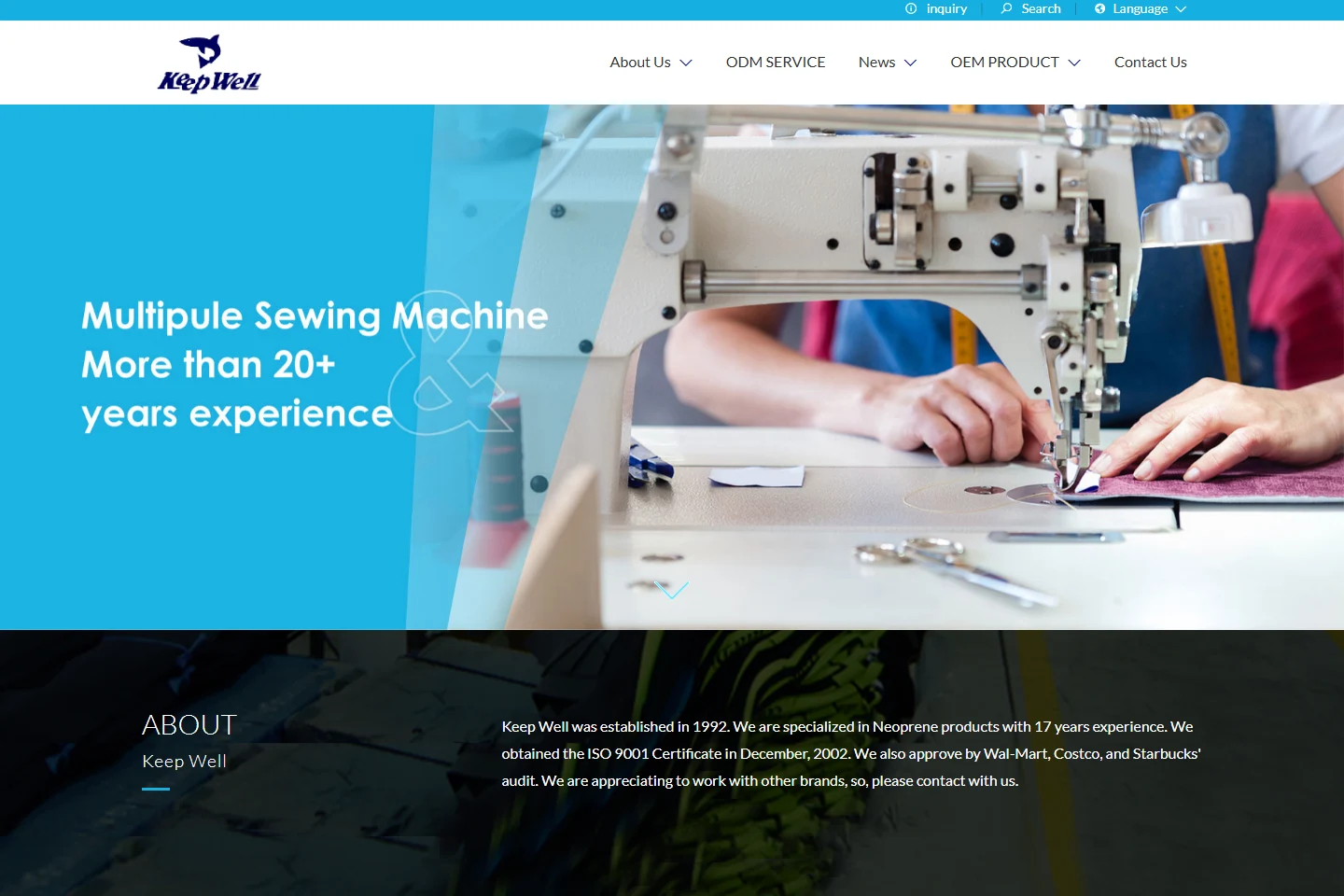
Why we recommend investigating it: Keep Well’s wetsuit information identifies an OEM manufacturing business and lists suits, shorties, vests, hoods and related products. Its official site also presents neoprene accessories and an ODM service. That range makes it relevant to a coordinated suit-and-accessory sourcing discussion.
The appeal is the possibility of reviewing related items with a supplier familiar with neoprene product construction. Start with a tightly defined assortment rather than assuming the entire displayed catalog uses the same materials, factory or ordering terms. Request examples that match your target product and price architecture.
What to confirm: This entry has a specific information limitation: some public descriptions contain visibly dated experience and certification references. Confirm current operations, a recent product catalog, the manufacturing site and current OEM terms before treating Keep Well as a production-ready choice. Historical certification statements are not evidence of a currently valid certificate.
Our take: A conditional recommendation for further investigation in neoprene suits and accessories. Its published product scope supports inclusion in the research shortlist; a current capability confirmation should precede paid development or supplier approval.
Which manufacturer should you shortlist for your project?
The strongest shortlist is not simply the first three names in a list. It contains manufacturers with a credible reason to fit the same brief, so their responses reveal meaningful differences. Use the following decision table as a starting point, then remove candidates that cannot meet your written requirements.
| Your priority | Start the discussion with | The deciding question |
|---|---|---|
| Established collection and repeat volume | SHEICO; Voll Will | Will the proposed site accept your quantities and reserve the required production window? |
| Manageable first order with development support | INSEAKU; Possess Sea | What minimum applies to your actual material, color and pattern—not a headline MOQ? |
| Several watersports product categories | AROPEC; Possess Sea; Seaskin / Lanbo | Which categories can be developed together, and which have separate minimums? |
| Material or construction-led development | Pacific Eagle; HAOWEI; Voll Will | Can the supplier explain, sample and verify the precise construction you need? |
| US-based wetsuit production | Ocean Tec USA | Does its current manufacturing scope and capacity match your specific style and order? |
| Suits and related neoprene accessories | Pacific Eagle; AROPEC; Keep Well after current-capability confirmation | Can the supplier coordinate specifications and approvals without treating each item as interchangeable? |
These are editorial starting points, not exclusive specialties or performance rankings. A company may fit several scenarios. Shortlist two or three, send the same product brief, and compare the clarity of their technical responses alongside sample results and commercial terms.
Pay attention to unresolved exceptions. A useful quotation identifies what is included, what is excluded and what still needs approval. A lower number is not a better offer if it quietly removes a lining, changes a seam specification or assumes a different size mix. Record those differences before discussing final price.
What to send before requesting quotes and samples
Make the first inquiry specific enough to test whether a manufacturer understands the project. Include the intended activity, target customer, suit configuration, reference images or drawings, proposed materials and thicknesses, size range, colors, quantity by style, branding and packaging. State your target sample date and delivery requirement without presenting either as already agreed.
Use a controlled wetsuit tech pack and RFQ checklist so each supplier prices the same requirement. Ask for a breakdown separating development, samples, production and delivery-related charges. Identify the quotation’s validity period and any assumptions about material availability.
Before paying for development, agree what the sample is intended to prove. Fit, appearance, material identity and construction may require different checks. The custom wetsuit sampling process explains approval stages; the quality-control checklist helps define the evidence required before release.
If INSEAKU is on your shortlist, send your product brief and quantity plan for a project-specific discussion. Bring the same written requirements you use with other manufacturers: that is how you obtain a comparison useful enough to support a production decision.
Frequently asked questions
What is the difference between private-label and white-label wetsuits?
Suppliers use these terms differently. A white-label offer often starts with an existing product to which your branding is added; a private-label project may include more customization or exclusive specifications. Do not rely on the label alone. Ask which pattern, materials, colors, branding and ownership rights are included in the actual offer.
Which private label wetsuit manufacturers accept smaller first orders?
INSEAKU publishes a starting MOQ of 50 pieces per style and color, subject to project conditions. Possess Sea advertises small-volume orders without a universal number in the reviewed source, while Ocean Tec mentions low minimums for its stock line. These are different offers, not directly comparable minimums. Confirm the exact construction and assortment; see the MOQ and sample-cost guide for questions to ask.
Can I give a factory my own design or reference sample?
Several manufacturers in this list describe OEM or ODM development, and Voll Will explicitly names artwork, technical packs and physical samples. Ask what documentation your selected factory requires, what development costs, who owns the resulting files and how revisions are approved. A reference sample should communicate requirements, not authorize copying another brand’s protected work.
Should I choose an Asian factory or a US manufacturer?
Start with your product and business constraints: required manufacturing location, order size, technical support, delivery scope and ability to assess samples. Ocean Tec offers a US-based route; other entries describe Asian manufacturing or sourcing operations. Compare the actual project proposals rather than assuming that geography determines price, quality or lead time.
How should I compare samples from different factories?
Use the same written specification, measurement method and intended-use requirements. Separate fit and appearance judgments from tests requiring defined procedures or a competent laboratory. Record discrepancies and requested changes, then approve an identified reference before bulk production. A sample is evidence about that sample; it does not by itself guarantee the consistency of a future shipment.
Official sources and verification notes
The following first-party pages support the company and service descriptions. They are not independent endorsements of the list. Public information was reviewed on 30 September 2026; commercial terms and current manufacturing availability should be reconfirmed directly. Keep Well’s dated public material is explicitly flagged in its profile.
- SHEICO — Company: integrated materials and finished-products manufacturing; reported operating locations.
- AROPEC — Wetsuits and official homepage: explicit OEM/ODM offer and product categories.
- Pacific Eagle — Official website: OEM positioning, wetsuits, waders, materials and sample/pattern development.
- INSEAKU — Manufacturing Services and Xuemei Zhang QC profile: service scope, conditional MOQ and company-reported inspection case.
- HAOWEI — Company: design/manufacturing description and product directions.
- Voll Will — Customized Wetsuits and Company Profile: custom-development inputs, conditional MOQ and manufacturing/supply-chain scope.
- Possess Sea — Products Division: OEM/ODM, small-volume positioning, product categories and reported locations.
- Seaskin — About: Seaskin/Lanbo entity roles and OEM/ODM manufacturing description.
- Ocean Tec USA — Neoprene: Florida manufacturing, private branding and customization options.
- Keep Well — Wetsuits and official homepage: published OEM product scope; historical claims require current confirmation.
Homepage screenshots are reproduced for identification and commentary, with source links and capture dates in their captions. Website designs, logos and displayed materials remain the property of their respective owners. No affiliation with, or approval by, the other listed companies is implied.