
Published · Updated
Choose flatlock for warm-water wetsuits where cost matters and some seam water entry is acceptable. Choose GBS when reducing seam water entry and retaining warmth are priorities, especially in cooler conditions. Tape can reinforce selected areas or more of the seam network. Overall suitability still depends on thickness, fit, activity and the entry system.
This guide helps brands and product teams compare the two base constructions, decide whether added sealing is worthwhile, and prepare a clear sample brief.
GBS vs flatlock: the differences that matter
| How it is joined | FlatlockOverlapping panels; stitches pass through the material. | GBSGlued panel edges; blind stitches do not pass through the full thickness. |
|---|---|---|
| Water entry | FlatlockNeedle holes allow water through. | GBSCorrect construction reduces water entry through the seam. |
| When to choose it | FlatlockWarm-water products where water exchange is acceptable. | GBSProducts that need better seam sealing and thermal retention. |
| Production trade-off | FlatlockA simpler process with generally lower seam cost. | GBSMore adhesive, preparation and curing control; generally higher seam cost. |
| What to check in a sample | FlatlockStitch consistency, stretch and skin comfort. | GBSGlue bond, stitch depth, stretch and seam leakage. |
These are typical differences, not temperature ratings or a guarantee that either seam will last longer. O’Neill’s construction guide explains the through-stitch and blind-stitch distinction.
Why does GBS let less water through?
Flatlock: stitched through the panels
Flatlock joins overlapping neoprene panels with stitches that penetrate the joined material. It produces a relatively flat seam, but the needle holes provide a path for water. That is acceptable in many warm-water designs; it becomes a disadvantage when limiting water exchange is important.
GBS: glued edges supported by blind stitching
GBS means glued and blind stitched. The panel edges are bonded together, then stitched partway through the material. The adhesive closes the joint while the stitches support it without creating a continuous path through its full thickness.
GBS reduces a source of water entry; it does not turn a wetsuit into a drysuit. Poor fit, openings, the zipper or a damaged joint can still let water in. Use a seam-leak and fit check to separate those causes.
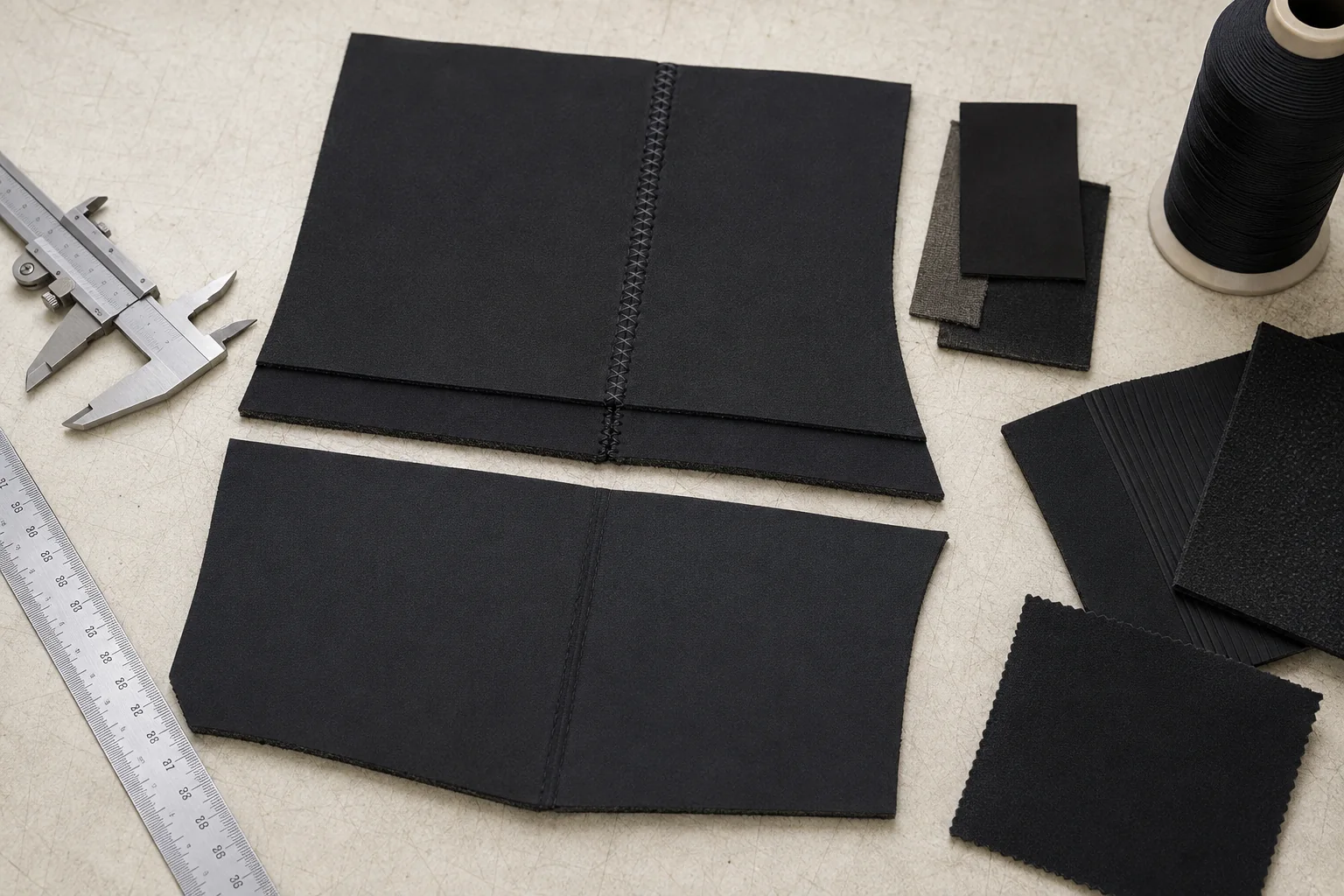
Which construction should your product use?
For a warm-water range with a tight cost target, start by evaluating flatlock. Confirm that seam water exchange is acceptable for the intended activity and session length. A rental or training label alone does not make flatlock suitable: the actual conditions still decide.
For cooler-water products or a stronger emphasis on warmth, start by evaluating GBS. Compare it on the intended material, thickness and pattern. A well-sealed seam cannot compensate for an unsuitable thickness or poor fit; use the wetsuit thickness guide alongside the seam decision.
For either option, assess movement and skin contact in the finished sample. Thread, panel layout and added tape can change how a seam feels. Do not assume that one seam name guarantees better flexibility or less chafing.
When is tape or liquid sealing worth adding?
GBS describes the base joint. Tape and liquid seal are additional treatments, so “GBS versus taped” is not always a choice between separate constructions.
- Critical or spot tape: consider it when selected intersections or stress points need reinforcement. Mark the exact locations on a seam map.
- Full internal tape: consider it when the product calls for more extensive seam reinforcement and sealing. Define coverage and any exclusions; check adhesion and movement on curved areas.
- Liquid seal: consider it when a flexible sealant layer is part of the intended construction. Specify its position and check adhesion, continuity and stretch after curing.
These treatments add work and material. Depending on their type and coverage, they can also change bulk, stretch or feel. Choose the treatment that addresses the product’s requirement, then validate it in a sample. Billabong’s wetsuit guide describes GBS, internal reinforcement and liquid-sealed construction.
How much more does GBS cost?
For a comparable pattern and material, flatlock generally has a lower seam-production cost than GBS. Taping or liquid sealing adds further operations. There is no reliable universal percentage: seam length, panel count, adhesive, tape coverage, handling and order quantity all affect the quotation.
Ask for two quotes using the same material, thickness, pattern and quantity, with the seam change shown separately. If you are considering tape, request the proposed coverage too. A selective treatment may meet the brief without paying for full coverage everywhere.
For INSEAKU’s commercial conditions, see the MOQ, sampling and lead-time guide. Confirm the current terms for your project in the quotation.
Which seam lasts longer?
Neither construction wins in every product. Flatlock avoids reliance on a glued edge joint, but its thread and stitches still need to withstand use. GBS depends on a sound adhesive bond as well as controlled stitching. Additional tape is useful only if it remains bonded and moves with the material.
During sample review, look for:
- Flatlock: skipped stitches, uneven overlap and damaged thread.
- GBS: opening glue lines, poor alignment and incorrect stitch penetration.
- Tape or liquid seal: lifting edges, gaps, cracking or restricted movement.
Evaluate these after the agreed stretch, wear or water checks, rather than approving appearance alone. Set the method and acceptance criteria before bulk production; the wetsuit QC checklist covers the wider inspection process.
What should a brand send for a seam recommendation?
Keep the initial brief focused on five decisions:
- Use: activity, expected conditions and session length.
- Product: material, lining, thickness, fit and entry system.
- Construction: base seam by location, plus tape or sealant coverage.
- Acceptance: the sample checks needed for fit, stretch, comfort and leakage.
- Commercial target: quantity by style, colour and size, target cost and timing.
A marked-up pattern or reference sample helps make the request clear. Use the tech pack and RFQ checklist when the team is ready to develop the full specification.
INSEAKU can review flatlock, GBS and additional sealing options for your proposed construction. Send your wetsuit brief for a seam recommendation, with your use case, target material and quantity. The written specification and approved sample should establish what will be produced.
Sources and further reading
- O’Neill — What is the difference between Flatlock and GBS?
Official explanation of overlapping flatlock panels, through-stitching, glued and blind-stitched joints, and how these constructions affect seam water entry. - Billabong — How to Choose a Wetsuit for Men
The seam-construction section explains flatlock, GBS, internal seam tape and liquid sealing, including their use in wetsuits for different conditions.
Sources checked on October 16, 2026. These brand guides support the general construction explanations; they are not test reports or endorsements of INSEAKU products. Cost comparisons and procurement guidance in this article are INSEAKU’s manufacturing guidance, subject to the project quotation and approved sample.