

Short answer: A useful wetsuit product compliance checklist begins before the first sample. Define the target country, intended age, activity, product claims, sales channel and complete material construction. Then convert the applicable legal and buyer requirements into a controlled specification, design-hazard review, evidence plan, label file, traceability system and sample-to-bulk release record. There is no single worldwide “kids wetsuit safety standard,” and a general test report cannot prove that every design, size, component, claim and destination is covered.
For a children’s product, the buyer or importer should appoint a qualified compliance professional to confirm the current requirements for each market. This guide is a development framework, not legal advice, a certification, a laboratory report or a declaration that any particular wetsuit complies. It also does not treat a wetsuit as a personal flotation device. Unless a separate product has been designed, classified and evaluated for that purpose, a wetsuit must not be marketed as a life jacket, buoyancy aid or substitute for close adult supervision.
For product teams: Download the editable checklist to assign owners, capture market-specific decisions, record design risks, link material and test evidence, approve labels and control sample and bulk release.
Download the kids wetsuit specification and compliance checklist
Why there is no single global kids wetsuit safety standard
Searches for “kids wetsuit safety standards” often assume that one certificate covers the product everywhere. In practice, obligations follow the jurisdiction, product classification, intended age, intended use, materials and claims. A recreational thermal garment, a child’s product, a toy-like accessory and protective equipment may enter different legal routes even when they share neoprene, a zipper and similar styling.
The correct question is not “Which certificate does a kids wetsuit need?” It is “Which rules apply to this exact product in each destination, and what evidence supports every requirement?” The answer may include general product-safety duties, children’s product rules, chemical restrictions, clothing or textile requirements, warnings, care information, economic-operator details, traceability and buyer-specific tests. Some routes are mandatory; others are voluntary or contractual. Applicability should be recorded instead of assumed.
Two boundaries are especially important. First, not every children’s wetsuit automatically requires CE marking. The EU Personal Protective Equipment Regulation applies when a product is designed and marketed to protect against one or more health or safety risks; the intended protective function and claims require a qualified classification review. Second, U.S. children’s product requirements are not a single “CPSIA test.” The applicable CPSC rules must be identified for the exact product and age group before testing and certification are planned.
1. Classify the product, user, use and market
Write a one-page classification statement before requesting a quote. It should name every sales country, the intended age range, product type, water activity, expected environment, distribution channel and claims. In the United States, the CPSC describes a children’s product as one designed or intended primarily for children age 12 or younger and considers the manufacturer’s statement, marketing, consumer recognition and relevant age guidance. Calling a style “youth” instead of “kids” does not decide the classification by itself.
| Classification input | Questions to answer | Why it changes the plan |
|---|---|---|
| Market | Which countries and online destinations will receive the product? | Rules, languages, responsible parties and document formats differ. |
| Age | What age and body-size range is the product primarily intended for? | Children’s product, small-parts and testing duties may depend on age. |
| Use | Surfing, swimming, snorkeling, diving, rental, training or another activity? | Hazards, fit, construction and buyer tests are use-specific. |
| Claims | Thermal, UV, protective, buoyancy, eco or performance statements? | A claim can change classification and needs substantiation. |
| Construction | Foam, laminates, coatings, inks, zipper, puller, hook-and-loop and trims? | Chemical and mechanical evidence attaches to actual components. |
| Channel | Retail, rental, school, marketplace or direct-to-consumer? | Instructions, traceability and platform data requirements can differ. |
Create one requirements matrix for each market rather than adding flags to a single generic row. Record the rule or buyer requirement, applicability decision, rationale, responsible owner, evidence, version and approval. “Not applicable” is a conclusion that needs a reason, not an empty cell.
2. Freeze the Kids Wetsuit Specification
Compliance cannot be separated from the product definition. A report for one black zipper pull or printed fabric does not automatically cover a substituted puller, another ink color or a different laminate. The controlled specification should identify every material and component by supplier or approved reference, not only by generic names such as “neoprene” or “nylon.”
The wetsuit tech pack and RFQ checklist provides the base structure. For a children’s style, add the intended-age statement, target markets, compliance owner, required warnings, tracking fields, test references and change triggers. At minimum, freeze:
- style, age/size range, colorways and intended activities;
- body-size basis, finished-garment measurements, grading and tolerances;
- foam route, thickness by panel, outer and inner fabrics, lamination and stretch direction;
- seam construction, thread, adhesive, tape and reinforcement;
- zipper model, length, slider, stops, puller, guard and surrounding panel construction;
- pads, prints, heat transfers, hook-and-loop, cords, loops and detachable trims;
- labels, warnings, instructions, tracking information and packaging;
- inspection, laboratory, sample approval and production-release requirements.
Use revision control. The approved bill of materials, color standards, artwork, label files, measurement chart and sealed sample should share a revision or approval record. Any post-test substitution should reopen the affected risk, evidence and approval rows before cutting begins.
3. Run a child-focused design-hazard review
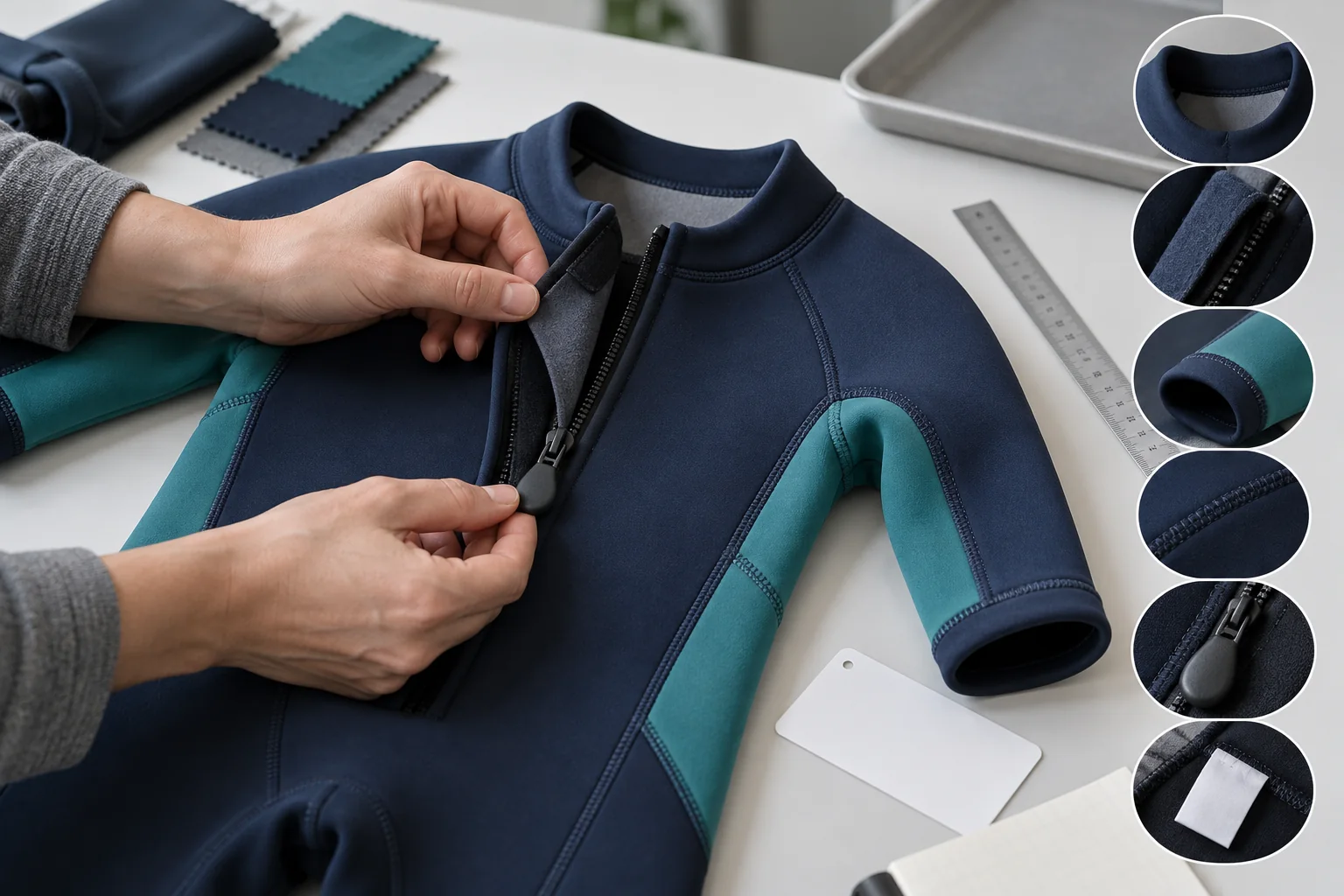
A hazard review asks how the product can fail, who can be affected and which control prevents or detects the problem. Do it during design—not after the packaging is printed. Include normal use, foreseeable misuse, dressing and removal, wet conditions, repeated stretching, cleaning, storage and wear.
| Area | Review points | Possible control evidence |
|---|---|---|
| Neck and openings | Pressure, chafing, excessive looseness, rolling edges and circulation restriction | Pattern review, measurements, fit observation and edge specification |
| Zipper system | Skin pinching, exposed teeth or stops, sharp burrs, puller detachment and forced operation | Guard coverage, component inspection, pull assessment and use instructions |
| Seams and panels | Restricted movement, seam opening, hard junctions, adhesive exposure and misplaced pads | Construction sample, mobility review, workmanship criteria and relevant performance checks |
| Small or detachable parts | Pullers, snaps, cord ends, labels or decorative pieces becoming accessible | Age-specific scope review, attachment test plan and production inspection |
| Cords and loops | Entanglement, snagging or an overly long zipper cord | Length/location limits, construction review and use-risk assessment |
| Prints and transfers | Cracking, peeling, skin contact, color transfer and restricted substances | Approved ink system, adhesion/colorfastness evidence and chemical review |
| Use communication | Incorrect size, unsupervised water use, heat/cold misunderstanding or flotation assumptions | Clear sizing, warnings, instructions and claim review |
Risk control should follow a hierarchy: remove the hazard through design where practicable, reduce the remaining risk through construction and quality controls, and communicate residual risk through appropriate instructions and warnings. A warning is not a substitute for correcting a sharp component or an unstable attachment.
Water safety messaging must be unambiguous. The product description and label should not imply that the wetsuit prevents drowning or removes the need for competent, close supervision. If buoyancy or protective-equipment claims are proposed, stop and obtain a separate classification and conformity assessment before approving claims or artwork.
4. Validate fit and size grading
Children of the same age can have very different height, torso, chest and limb proportions. Age-only sizing is therefore weak as the sole selection method. Define the body measurements behind each size and publish the measurements a parent, operator or retailer can use. Separate body measurements from finished-garment measurements; stretch and negative ease mean they are not interchangeable.
A sample review should capture torso length, chest, waist, hip, rise, sleeve and inseam, plus neck, wrist and ankle openings where relevant. Review shoulder reach, elbow and knee flexion, squat, forward bend, zipper operation, dressing and removal. Record pressure, chafing risk, restriction, excess volume, panel displacement and opening gaps. The wetsuit fit testing protocol explains how to connect these observations to dimensions, pattern versions and corrective actions.
Do not approve the entire range from one base-size sample without deciding whether a size-set review is required. Small sizes may create different zipper, puller and seam geometry; larger children’s sizes can cross into a different body profile. Define which sizes represent the grading range, who reviews them and what the approval covers.
5. Build a material and component evidence plan

Start with a complete material inventory. Include foam, outer and inner fabric, lamination adhesive, seam adhesive, thread, tape, zipper chain and coatings, slider, puller, hook-and-loop, pads, prints, transfers, labels, inks and packaging components that can contact or transfer to the product. For each item, record supplier, product code, color, batch, contact location and evidence status.
For EU sales, REACH restrictions and Candidate List duties should be reviewed against the current construction and supply chain. Do not rely on a permanent “REACH test list”; restrictions and substances can change, and different materials create different exposure routes. Ask the qualified reviewer and laboratory to build a targeted matrix from the current bill of materials, colors, coatings and intended use. Preserve the connection between each report and the tested sample.
For U.S. children’s products, identify which CPSC rules actually apply before choosing tests. Current CPSC guidance states that accessible components of children’s products are subject to a 100 ppm total-lead limit and paint or similar surface coatings to a 90 ppm lead limit, subject to the rule’s scope and exclusions. Phthalate limits apply to children’s toys and child care articles within their defined scope, not automatically to every wetsuit. Small-parts requirements likewise depend on age and product characteristics. A compliance professional should document each scope decision.
Performance tests are separate from regulatory chemical tests. Depending on the risk and buyer requirement, the plan may include thickness, stretch and recovery, seam strength, attachment security, zipper cycling, print adhesion, colorfastness, dimensional stability, care-cycle effects and localized leakage. Use the wetsuit material selection guide to define construction, then state the method, specimen, conditioning, direction, sample quantity and acceptance rule for every required check.
6. Map the U.S. compliance route
A U.S. route begins by deciding whether the product is primarily intended for children age 12 or younger and listing the CPSC rules applicable to that exact product. A children’s product subject to an applicable children’s product safety rule generally requires testing by a CPSC-accepted third-party laboratory and a Children’s Product Certificate based on the results. The CPC must contain the required identifying, testing, laboratory and responsible-party information; a logo or short “CPSIA compliant” statement is not a substitute.
Build the U.S. matrix in this order:
- Classification: document intended age, marketing, design features, channel and age-determination basis.
- Applicable rules: identify lead, coating, small-parts, phthalate, flammability or other rules only where their scope applies.
- Testing: define samples, color/component coverage, CPSC-accepted laboratory and report ownership.
- Certification: prepare the CPC from supporting reports and confirm all required elements.
- Tracking: plan permanent product and packaging marks, where practicable, to identify the manufacturer or private labeler, production location/date, batch/run and source information.
- Labels and care: review FTC textile, country-of-origin and care-label rules for the actual composite product.
- Import filing: follow the current CPSC eFiling requirements. CPSC states that eFiling has been in effect since July 8, 2026 for most regulated imports; verify the current procedures and any route-specific effective date for the shipment.
Flammability classification also needs a product-specific decision. CPSC guidance identifies 16 CFR Part 1610 for wearing apparel, with specified exceptions, and its children’s clothing CPC example includes flammability together with applicable lead requirements. Confirm whether the wetsuit construction falls within scope and which test or exemption evidence is appropriate.
7. Map the EU compliance route
The EU General Product Safety Regulation applies to consumer products within its scope and has applied since December 13, 2024. For a manufacturer, the framework includes an internal risk analysis, technical documentation, product identification, manufacturer contact details and clear instructions or safety information where needed. A covered product also requires a responsible economic operator established in the EU. The exact responsibilities depend on the supply chain role and product.
A practical EU file for a children’s wetsuit can include:
- product description, intended user, foreseeable use and market languages;
- risk assessment and the standards or methods used to control identified risks;
- bill of materials, drawings, specification, suppliers and change history;
- REACH restriction and Candidate List review with supporting evidence;
- test reports and explanations of sample/component/color coverage;
- product identifier, batch traceability and economic-operator details;
- approved instructions, warnings, online-listing information and label artwork;
- complaint, corrective-action, recall and document-retention procedures.
EU textile-fibre labeling rules apply to products containing at least 80% by weight of textile fibres and include provisions for components and multi-component products. Because a wetsuit combines foam, laminated textiles, coatings and trims, ask a qualified adviser to determine how the regulation applies and how fibre information should be expressed; do not copy a fabric composition line from an ordinary garment.
CE marking should follow a documented legal basis, never buyer preference alone. If the product is designed and claimed to protect the wearer against a health or safety risk, review the EU PPE Regulation, risk category, applicable essential requirements, standards, conformity-assessment route, technical documentation and declaration obligations with a competent specialist. If it is not PPE, do not add a CE mark merely to make the packaging look compliant.
8. Control labels, instructions and traceability
Treat each label as controlled artwork. Create a market-and-language matrix that maps every required field to the product label, packaging, instructions and online listing. The matrix may cover product/style identification, size, material or fibre information where applicable, country of origin, manufacturer/importer/responsible-person details, batch or run code, care instructions, warnings and product-specific use limitations.
Make safety information understandable to the intended adult purchaser and operator. Keep it visible and durable for the expected product life where required. Avoid unsupported temperature ranges, UV ratings, buoyancy statements, “non-toxic,” “hypoallergenic,” “chemical-free” or broad environmental claims. Claims need defined scope, evidence and approval just like a measurement or material.
Traceability should connect the finished item and packaging to the purchase order, production date or range, material lots, factory records, inspection report, test evidence and approved sample. A readable batch code is valuable only if the company can use it to isolate affected units and retrieve the corresponding records.
9. Convert risk into tests and approval gates
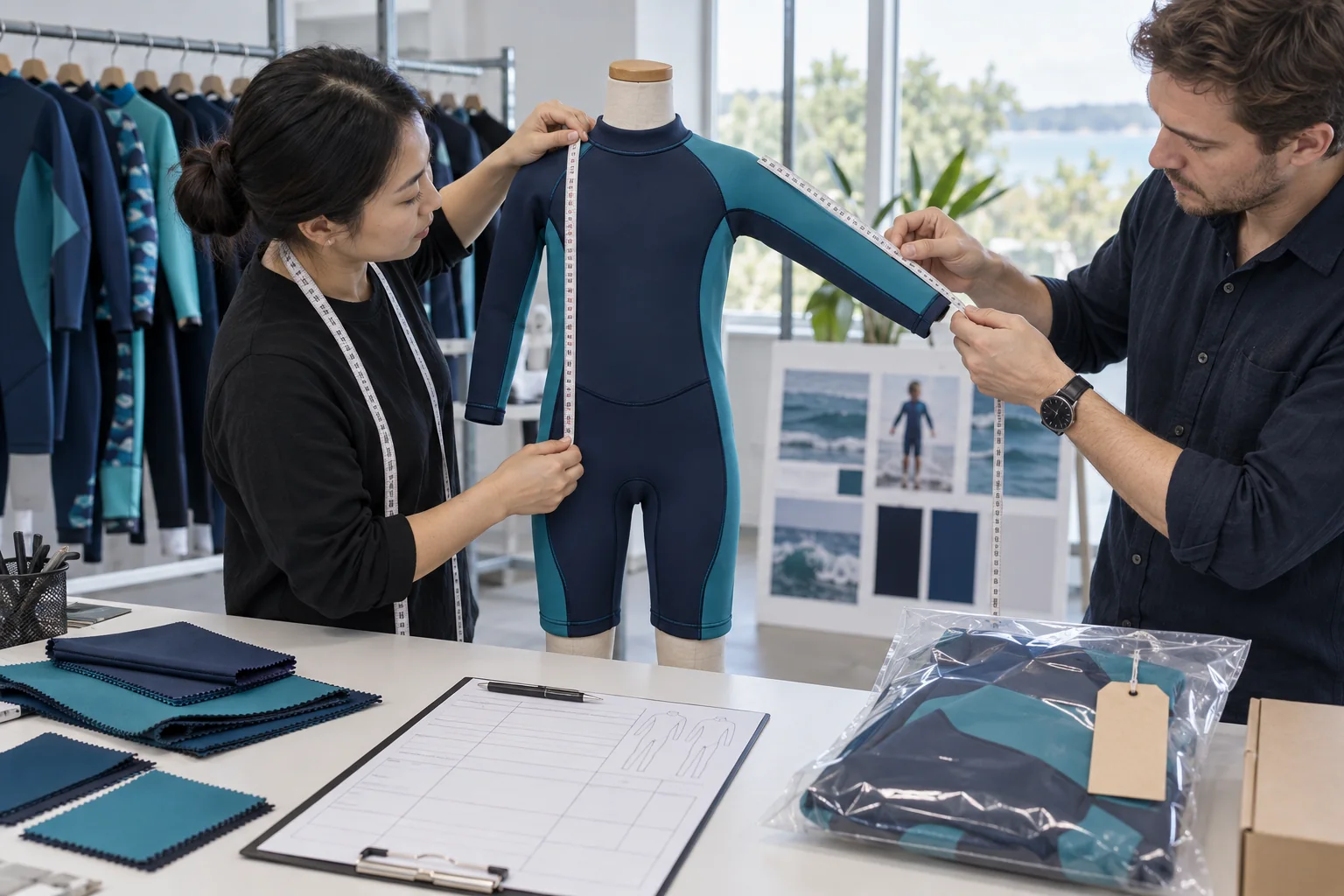
A laboratory request should name the rule or risk being addressed, the current method edition, specimen, component and color coverage, conditioning, units and acceptance criteria. Agree who selects and seals samples, who owns the report, how failures are handled and what changes require retesting. “Full compliance test” is too vague to control scope.
Use gates instead of one final inspection:
- Concept gate: market, age, use, claims and product classification approved.
- Specification gate: controlled BOM, measurements, design-risk controls and label requirements complete.
- Material gate: supplier documents and required chemical or performance evidence accepted for the exact components.
- Sample gate: construction, dimensions, fit, movement, attachment, warnings and packaging reviewed; open issues closed.
- Pre-production gate: correct production materials, files, sample reference and test status confirmed before bulk cutting.
- Bulk-release gate: incoming, in-process and final results reviewed against the wetsuit quality control checklist, with traceability and shipment documents complete.
Any failed or blocked item needs containment, root-cause review, corrective action, a revised sample or file and retesting of the affected requirement. Never change a component solely to pass a test sample and then return to an untested production material. Preserve the tested sample identity and verify incoming production batches against the approved reference.
10. Send a decision-ready supplier brief
A kids wetsuit manufacturer can develop and make the product, but the brand or importer must still define the markets, claims and compliance responsibilities. Send the supplier a structured brief containing:
- sales countries, intended age, intended activities and distribution channels;
- product classification decisions and the responsible compliance reviewer;
- style, size range, quantity by size/color and planned order timing;
- tech pack, measurement chart, BOM, artwork and label language matrix;
- child-focused hazard controls for openings, zipper, puller, seams, cords and trims;
- applicable rules, standards, test methods, laboratory and acceptance criteria;
- document, sample, traceability, inspection and shipment-release requirements;
- change-control rules and the person authorized to approve deviations.
INSEAKU supports custom children’s wetsuit development using agreed materials, patterns, construction, branding and quality plans. Buyers can review the dedicated kids rental wetsuit manufacturing options and explore INSEAKU’s manufacturing services before preparing the project brief. Product classification, market compliance and legal approval remain project-specific and should be confirmed by qualified advisers.
Frequently asked questions
Is there one international kids wetsuit safety standard?
No. The applicable framework depends on the market, intended age and use, materials, claims and product classification. Build a market-specific matrix and record both applicable and non-applicable decisions with their rationale.
Does every kids wetsuit need CE marking?
No. CE marking requires a specific EU legal basis. If the product is designed and marketed for a protective function, the EU PPE route may need review. A standard recreational wetsuit should not be marked simply because a buyer asks for a CE logo.
Does every U.S. kids wetsuit need the same CPSIA tests?
No. First determine whether it is a children’s product and identify the CPSC rules that apply to its construction and intended age. Lead, coatings, small parts, phthalates and flammability each have defined scopes. The third-party test and CPC plan should follow those decisions.
Can one test report cover every color and component supplier?
Not automatically. Coverage depends on the tested specimen, materials, colors, suppliers, methods and report scope. Grouping decisions should be justified by the compliance professional and laboratory. A supplier or formulation change can require review or retesting.
Is a wetsuit a life jacket?
No. A normal wetsuit must not be presented as a personal flotation device or a substitute for competent adult supervision. Any flotation or protective claim requires separate product design, classification, evidence and approval.
What should be approved before bulk production?
Approve the product classification, controlled specification, design-risk review, material and component evidence, applicable laboratory reports, size-set or fit results, labels and instructions, traceability format, pre-production sample, inspection plan and written release authority. Close or formally block every unresolved safety or compliance item.
Request a market-specific kids wetsuit review
Download the editable market-specific checklist, complete the scope and mark unknown items as Open. Then send INSEAKU your kids wetsuit brief for review. Include target markets, intended age and use, product claims, size chart, construction, colors, component list, required tests, label languages, quantities and target schedule.
Official reference sources
- U.S. CPSC — Children’s Products
- U.S. CPSC — Children’s Product Certificate
- U.S. CPSC — Tracking Label Requirements
- U.S. CPSC — Rules Requiring Third-Party Testing
- U.S. FTC — Care Labeling Rule Guidance
- EU General Product Safety Regulation (EU) 2023/988
- ECHA — REACH Restrictions
- EU Textile Fibre Names and Labelling Regulation
- EU Personal Protective Equipment Regulation (EU) 2016/425
Last reviewed: September 19, 2026. Regulatory scope, official guidance and implementation procedures can change. Verify the current text, current market practice and project-specific interpretation before publication, testing, certification, import or sale.