
How long do wetsuits last? A wetsuit can last several years, but age alone does not tell you when to replace it. Keep using one that still fits and performs appropriately for your activity. Repair an isolated fault while the surrounding material is sound. Consider replacement when deterioration is widespread, fit is no longer suitable, or a repair cannot restore the function you need.
Rip Curl describes several years of use as a general expectation for surfers with proper care—not a guaranteed lifespan for every wetsuit.[1] Follow any service-life or retirement limit specified for your own model.
Choose by condition, not the purchase date
Still doing its job
Fit remains suitable; closures work; no unresolved damage is affecting use.
Next step: continue routine checks and care. Cosmetic marks alone do not set a retirement date.
A local problem
A cut, seam fault or closure problem is confined to one area; the rest of the suit is in good condition.
Next step: get the fault assessed and repaired before relying on the suit again.
A whole-suit problem
Widespread material damage, unsuitable fit or repeated faults remain beyond a useful repair.
Next step: compare a repair assessment with a suitable replacement.
A decision guide, not a test certificate. If you are unsure which route applies, ask the manufacturer or a wetsuit repair specialist.
What tells you a wetsuit is wearing out?
1. Look beyond the obvious hole
One cut and a generally deteriorating suit are different repair decisions. Inspect both sides of the panels, the seams, the entry and the cuffs. An isolated wetsuit tear may be repairable; cracks across a broad area mean the material around any patch also needs assessment.
O’Neill’s US service guidance lists dry, cracked neoprene among signs of a suit that should be retired. Patagonia distinguishes repairable small tears and zipper faults from extensive wear that may be beyond repair.[2][3]
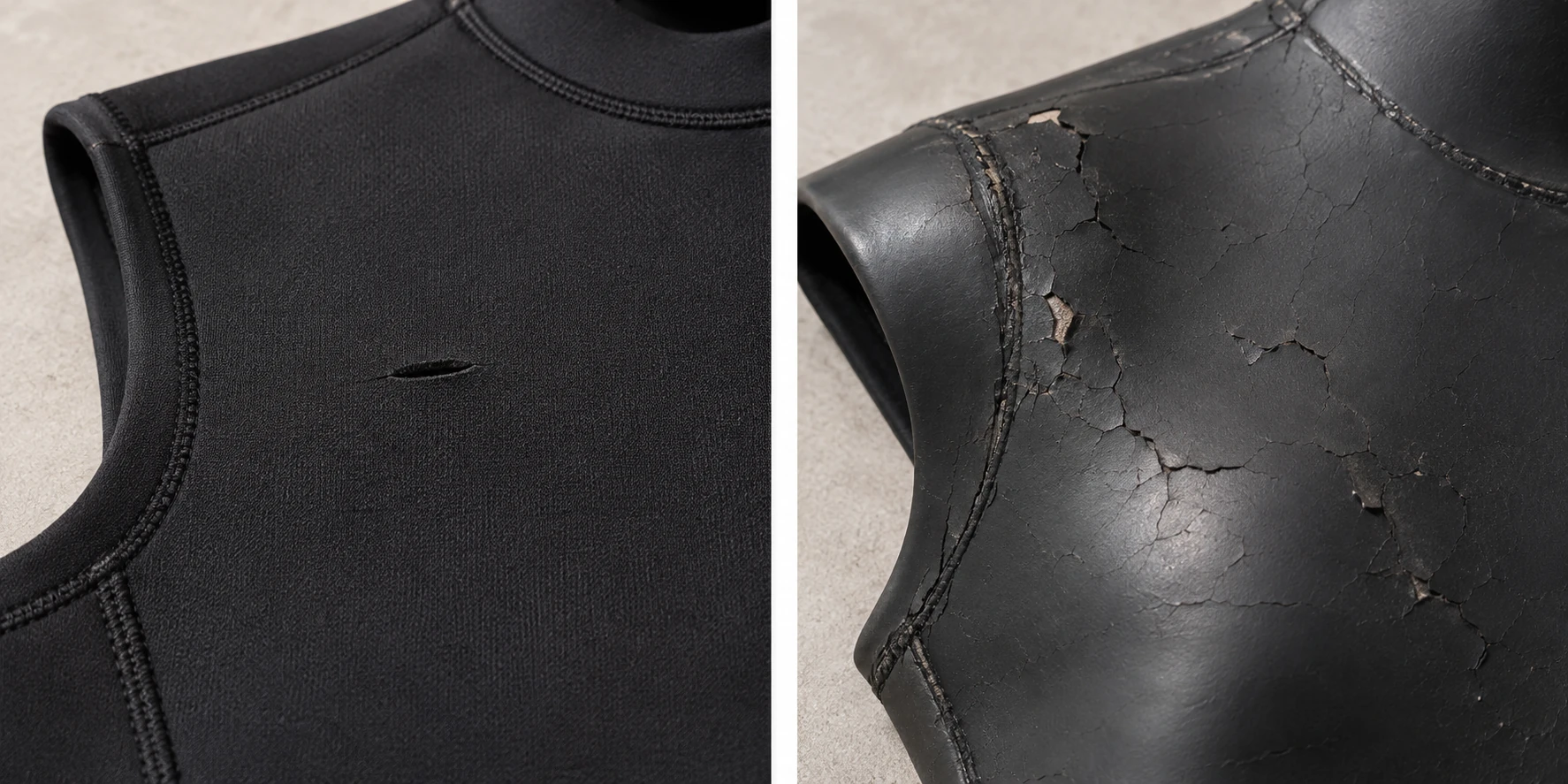
Check lifting lining as well as the outer surface. A small area and widespread separation need different assessments; our wetsuit delamination guide explains what to look for. Do not pull peeling fabric farther away to “test” it.
2. Check whether it still fits you
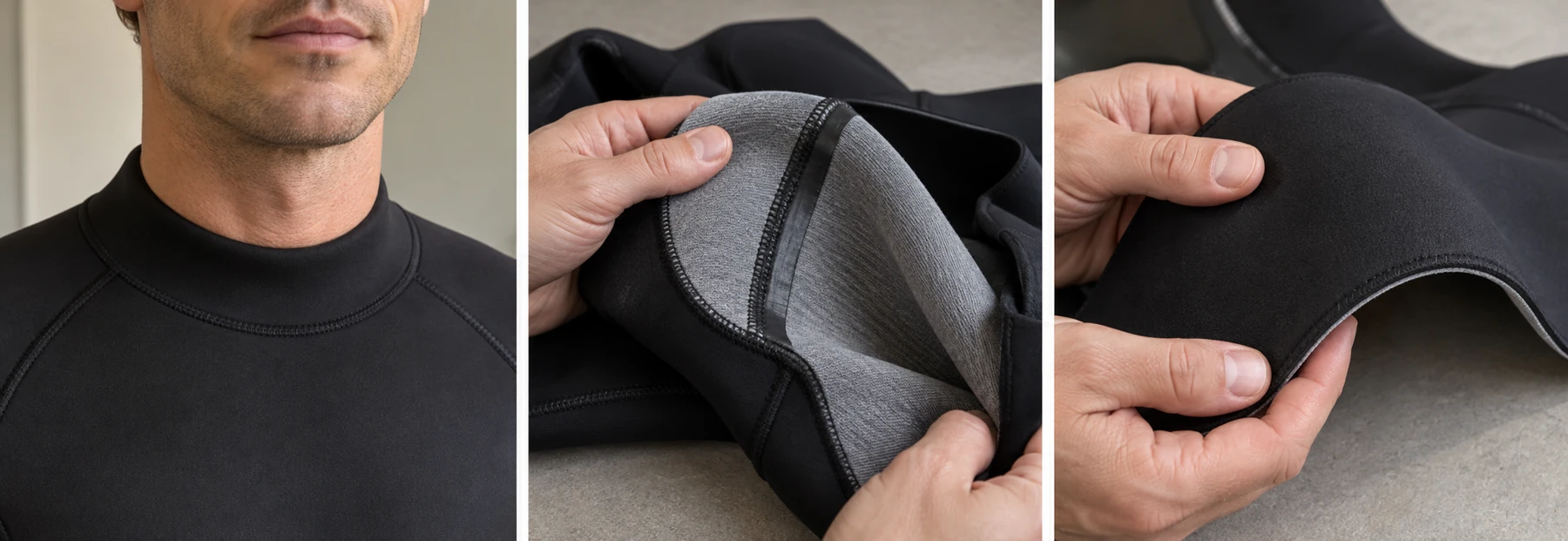
A suit can be intact yet no longer fit its wearer. After positioning it correctly, check the neck, lower back and underarms, then move through your intended activity. Persistent gaps or restricted movement deserve attention even if there are no holes. Rip Curl’s fit guidance emphasizes close contact without neck pinching or excessive resistance to reaching.[1]
Do not assume every fit change is material aging: your body size or the way the suit is positioned may have changed. Use our wetsuit fit checks before deciding whether to replace it. Repairing a hole does not, by itself, correct an unsuitable fit.
3. Separate a colder session from a failing suit
If the suit is no longer keeping you comfortably warm, reassess it before the next session. First compare the conditions: colder water, stronger wind, longer immersion or a less active session can change what you need. Then check for new gaps, an incorrectly closed entry or damage.
Feeling colder is a reason to investigate, not proof that all the neoprene has worn out. A local fault may be repairable; a sound but unsuitable suit may need replacing with a different specification. Our flushing versus leaks guide helps distinguish entry of water from local damage. Do not stay in uncomfortable conditions to test the suit’s remaining life.
When is repairing an old wetsuit worth it?
Repair is most useful when it solves the problem that stopped an otherwise suitable suit from working. Ask the repairer to assess the rest of the suit, not only the visible tear. A good local repair cannot make every other worn panel new.
| Question | How it changes the decision |
|---|---|
| Is the surrounding material sound? | If yes, a local repair has a useful purpose. If nearby areas are also failing, discuss the whole suit. |
| Will the repair address fit and function? | A repaired seam may solve a local fault. It will not necessarily solve an overstretched suit or the wrong thickness for your conditions. |
| What is the complete repair cost and scope? | Compare the quoted work, shipping and remaining unresolved faults with a replacement that meets your needs. |
There is no useful universal rule such as “repair if it costs less than half a new suit.” The answer changes with the condition and the work available. O’Neill Australia, for example, lists specific seam and panel services but excludes stretched suits and several other damage types. Repair availability varies by model, provider and region.[4]
Check warranty or service options before applying glue or making alterations. Send photos of both the fault and the whole suit, plus the model, purchase details and repair history. A warranty period describes coverage; it is not a promise of useful life or an automatic replacement date.[3]
If replacement is the better option, compare a suitable new suit with the complete repair quote. Our guide to wetsuit prices and worthwhile upgrades uses six dated US brand examples to help you decide which features justify the extra cost.
How long do wetsuits last in storage?
“Barely used” does not establish good condition. Ask how it was stored, then inspect it and check the fit before returning to use. A suit left hot, damp or tightly compressed has a different history from one dried fully and stored with proper support.
Keep it clean, fully dry and away from heat and direct sunlight. Rip Curl advises cool, dry storage, with the suit laid flat or supported on a suitable wide hanger. SRFACE recommends shaded drying with support at the waist and warns against dryers and blowdryers.[5][6]
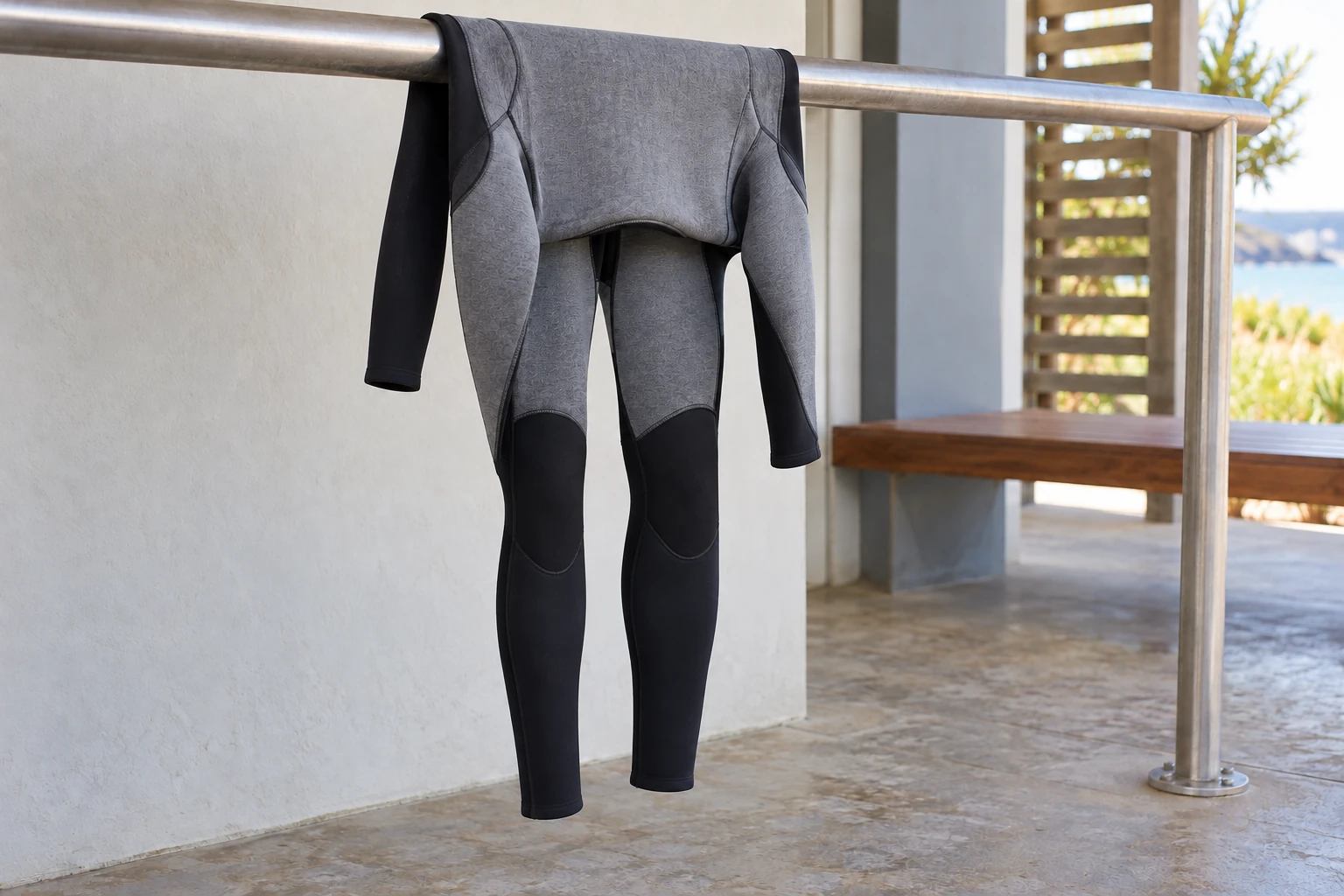
Care reduces avoidable damage; it does not reverse existing deterioration or guarantee extra years. For the full routine, use our wetsuit cleaning, drying and storage guide.
Can I keep a worn winter suit for warmer water?
Possibly, if it remains sound, fits and is suitable for that activity and those conditions. A colder-water suit that no longer meets your needs is not automatically a serviceable warm-water suit. Unresolved tears, failed closures or deteriorating material still need assessment.
What should you do with a suit that cannot be repaired?
Ask the manufacturer or a local specialist about a current take-back or reuse option before disposal. Patagonia’s European repair FAQ provides an end-of-life route for its own products. Check the program’s accepted brands, condition and location; do not assume every old wetsuit can go into household recycling.[2]
Sources
- Rip Curl — Wetsuit Temperature & Thickness Guide. Lifespan and fit FAQs; the brand’s general expectation, not a measured universal average.
- Patagonia Europe — Repairs FAQ. Wetsuit repairability, extensive wear and end-of-life options.
- O’Neill US — Wetsuits Customer Service. Cracked neoprene, repair assessment and service restrictions.
- O’Neill Australia — Wetsuit Repairs. Examples of available work and model/material limitations.
- Rip Curl — Wetsuit Care. Drying, storage and local repair guidance.
- SRFACE — FAQ. Wetsuit care and supported drying in shade.
Sources checked 21 October 2026. Repair and take-back policies are brand- and region-specific. Images illustrate visible features; they do not measure insulation, remaining lifespan or repair performance.