
Wetsuit delamination means bonded layers have separated. A surface bubble is a warning sign, but it does not tell you which layer failed or why. First distinguish fabric separation from torn foam, lifted seam tape and peeling print. Photograph the unchanged garment, identify its batch and contact the supplier before trying a repair.
This guide is for buyers, quality teams and after-sales staff. It explains an investigation method; no actual INSEAKU failure rate, batch finding or repair result is claimed.

AI-generated illustration. Simulated appearance comparison, not a diagnosis. View full size.
What wetsuit delamination actually looks like
In a lined wetsuit panel, fabric is bonded to rubber foam. That broad material bond is different from the narrow tape applied over a seam. SRFACE’s construction descriptions distinguish the foam-to-lining lamination from internal seam tape. [1] Our wetsuit material guide explains the wider foam-and-lining specification.
Describe the damaged layer before calling everything “delamination.” A raised area could involve loose fabric, while a bend may involve the whole sheet. Surface appearance alone does not establish the fracture path. Do not peel a customer’s suit further just to find out.
| Finding | Visible clue | Next check |
|---|---|---|
| Fabric separation | Fabric lifts away from the foam beneath it. | Inspect the existing separation surface and laminate identity. |
| Foam tear | Ragged foam remains on both separated surfaces. | Check where the foam broke; do not label it a clean bond release. |
| Seam tape lifting | A narrow strip lifts along a seam. | Check the tape attachment and the seam underneath. |
| Print film peeling | A printed layer flakes or lifts from fabric. | Check the print system and whether the fabric remains intact. |
Inspection clues, not diagnoses. Mixed damage can occur; record each affected layer separately.

AI-generated illustration. Prepared-specimen concept; do not peel a garment to reproduce these views. View full size.
Why does this distinction matter? Foam left on both sides suggests a break within the foam, rather than a clean release at its bonded surface. Rogers explains this distinction for tested industrial foam bonds. The principle helps describe a fracture, but its materials and results are not wetsuit acceptance criteria. [2]
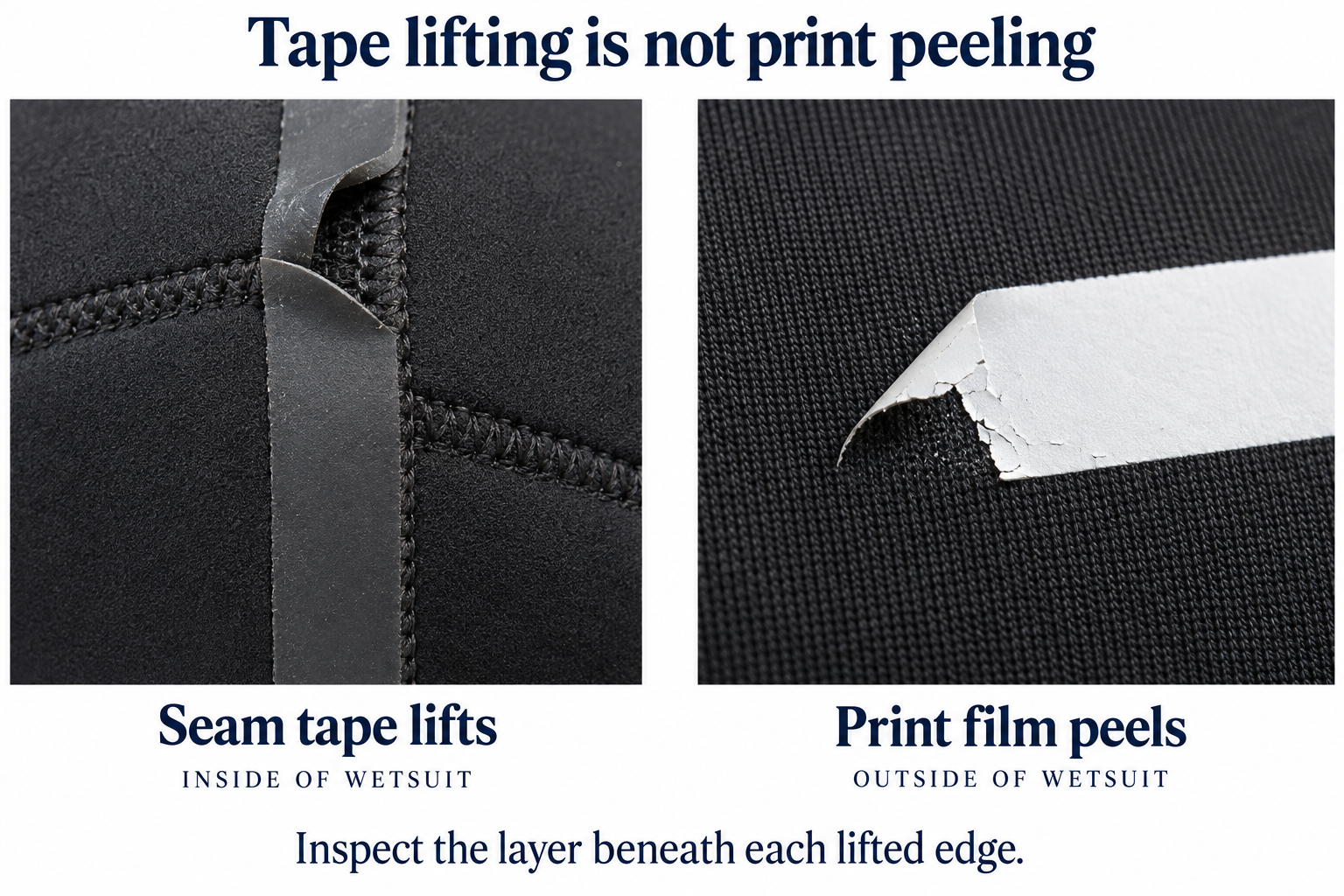
AI-generated illustration. Generic construction examples, not INSEAKU product defects. View full size.
With a peeling print, inspect the fabric below it; with loose tape, inspect the underlying seam. Neither finding alone tells you that the entire panel laminate has failed.
Save the evidence before changing the garment
Do not cut open, pull apart or cover the area with glue before the supplier has reviewed it. Preserve the original condition and ask how the item should be handled or returned. O’Neill Europe, for example, asks for close-ups, full-suit photographs, product identification and proof of purchase when reviewing a claim. [3]

AI-generated illustration. Photo-recording example, not a real customer return. View full size.
Keep one case record with the model, size, order reference, available batch or material-lot ID, and first-observed date. Describe the exact location using a panel or seam landmark. Add a label photo and the approximate affected dimensions, stating how you measured them without stretching the suit.
Record whether it appeared during unpacking, use or storage; whether it has changed; and the known washing, drying, storage and repair history. Mark unknown information as unknown. “First noticed after use” does not establish that use caused it. For newly received stock, our receiving-check guide also covers batch and packaging records.
Trace the cause with comparisons, not guesses
Start with three references: the approved sample, retained material or garments from the relevant lot, and other affected pieces. Check that their construction and revision actually match. An older sample made with a different lining is a weak comparison.
Then ask the supplier to connect the garment to its foam, fabric and lamination records. For a tape or print issue, follow that specific operation too. The table below is a proposed investigation route, not a list of confirmed causes.
| Question | Evidence to compare |
|---|---|
| Material or laminate issue? | Same material-lot samples, layer specification and relevant bond-test records. |
| Process variation? | Applicable adhesive preparation, application, drying/curing and lamination records against the approved process. |
| Local loading or exposure? | Damage position, fit/contact points, use and care history, compared with less-affected areas. |
A cluster tells you where to investigate; it does not, by itself, prove responsibility. Separate the number reported from the number inspected. Keep the inspected quantity, selection method and batch scope with any rate you later calculate. Our batch inspection and AQL guide covers inspection planning.
If testing is needed: agree the comparison first
Have the supplier or lab choose a method suitable for the actual laminate and question. Agree specimen construction, conditioning, test setup and acceptance criteria before comparing values. Record the separation surface as well as the force: similar peel readings can accompany different failure modes. [2] Use acceptance criteria agreed for the actual laminate. Use the quality-control checklist for the broader inspection sequence.
Can wetsuit delamination be repaired?
Sometimes a repair is possible, but the damaged layer, extent and brand’s service options determine the answer. Do not assume a loose tape edge and a delaminated panel need the same treatment. O’Neill Australia lists seam retaping among its services, yet excludes delaminated back, chest, hip and sleeve panels. That is one regional service’s scope, not a rule for every wetsuit. [4]
Ask for a written decision: repair, replacement, further examination or another agreed disposition. Keep the affected stock identifiable while that decision is pending. For a proposed process change, retain the original observation, state exactly what changes, and agree how the revised material or garment will be checked. A newly flattened surface alone is not evidence of durable performance.
How to interpret the illustrations
The images explain appearance only; they are not evidence from an INSEAKU return or laboratory test. Use them to describe what you see, then have the actual garment and its history assessed before assigning a cause.
For an INSEAKU order, send the garment identification, unchanged-condition photos and timeline through our project services contact. Those details give the review a useful starting point.
A local cut needs a different assessment from fabric separating across a wider area. See our guide to repairing wetsuit tears to compare surface scuffs, open cuts and broken seams before choosing a repair method.
Sources and scope
Reviewed 7 October 2026. The case-record and comparison workflow is an editorial method; the sources below support the stated construction, fracture and service distinctions.
- SRFACE — Men’s Eco Wetsuit 4/3, construction details. Foam-to-lining lamination and internal seam tape are separate features; no adhesive ranking is inferred.
- Rogers Corporation — Foam Bonding Failure Modes. General fracture interpretation from industrial foam bonding, not neoprene wetsuit test results or limits.
- O’Neill Europe — Wetsuit warranty support. Documentation requested for assessment; local policies apply.
- O’Neill Australia — Wetsuit Repairs. Published regional repair capabilities and exclusions, not a universal repairability standard.