
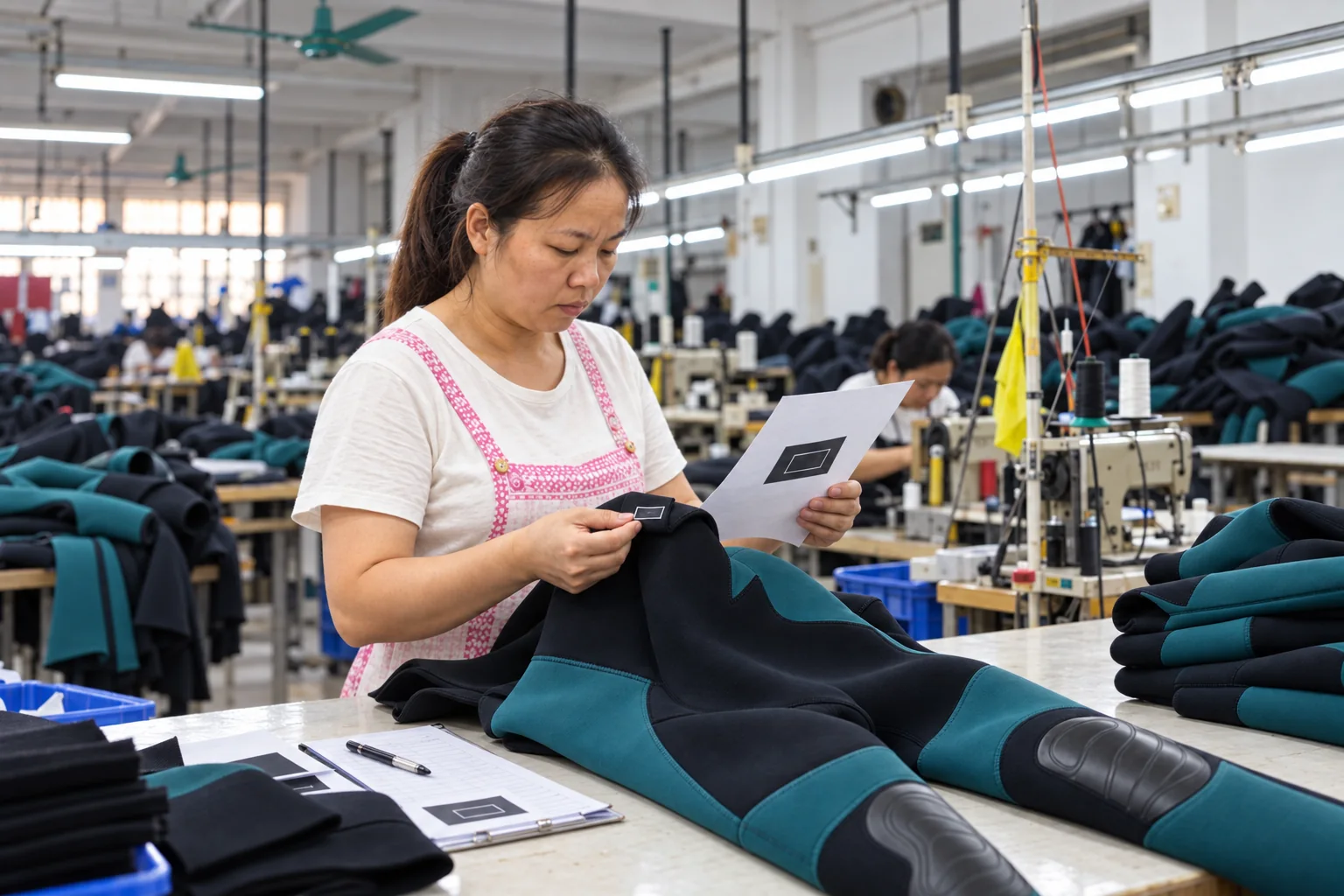
Short answer: Xuemei Zhang (张雪梅) is INSEAKU’s QC Supervisor and a wetsuit quality inspector with 10 years of quality-control experience, including eight years at INSEAKU. Her responsibility is the final quality gate: if finished goods do not meet the approved requirements, she can stop shipment and require rework or remaking. The goods can be released only after the problem is corrected and the order passes reinspection.
That authority matters because the last serious risk is not always an obvious broken seam or incorrect measurement. It can be a single character in a brand label that looks almost identical to the approved sample. In one real INSEAKU case, Xuemei compared finished goods with the customer’s original source material, found a one-letter error that earlier stages had missed, and placed the affected batch on hold. The branding was corrected and the goods were reinspected before release.
Meet Xuemei Zhang, INSEAKU’s QC Supervisor
| Name | Xuemei Zhang / 张雪梅 |
|---|---|
| Position | QC Supervisor |
| Quality-control experience | 10 years |
| Time with INSEAKU | 8 years |
| Primary responsibility | Final quality control of finished goods before shipment |
| Decision authority | Nonconforming goods cannot ship. They must be reworked or remade and pass reinspection before release. |
Xuemei’s job is not to make a finished order look good for a photograph. It is to decide whether the available evidence supports release. That requires attention to the product, the governing documents and any unresolved exception. Her eight years at INSEAKU help her recognize normal production variation, but experience is not a substitute for records: she still checks the finished goods against the controlled requirements.
This distinction is important when a buyer evaluates a factory. A written checklist describes the process; a named person with defined authority shows who is accountable at the final gate. Buyers can also review INSEAKU’s broader company background on the About Us page.
A final quality gate is more than a visual inspection
Quality assurance builds controls into development and production. Quality control checks whether actual materials, components and finished goods conform to the defined requirements. At the final stage, the inspector is looking for evidence that the order matches the correct style, size, construction, artwork, labels, packaging and documented approvals—not merely whether the garment appears clean.
For a custom wetsuit order, final inspection may include measurements, seams, reinforcement, zipper operation, printing, labels, size identity, accessories, folding and carton marks. The precise scope depends on the customer’s written quality plan and the product. INSEAKU’s detailed wetsuit quality control checklist explains how incoming, in-process and final checks connect.
Xuemei’s role sits at the end of that system. She does not replace material inspection, sample approval or in-process control. Her final review challenges the assumption that earlier approval makes a later mistake impossible.
What Xuemei checks before goods can leave the factory
The inspection plan varies by order, but a disciplined final review normally connects several kinds of evidence:
- Order identity: purchase order, style, color, size range, quantity and destination.
- Controlled product references: confirmed specification, measurement chart, production order and identified sample.
- Original brand files: customer-supplied artwork, spelling, symbols, label content and the approved revision.
- Finished construction: panel alignment, seams, reinforcement, closure installation and visible workmanship.
- Measurements and function: the defined points of measure and any agreed functional checks.
- Branding and labels: logo version, character accuracy, scale, placement, color, orientation and label identity.
- Packaging: size labels, barcodes where required, polybags, assortment, carton quantity and shipping marks.
- Open issues: defect records, deviations, rework evidence and reinspection status.
For custom development, the approved sample remains an important physical reference. However, one garment cannot preserve every measurable or digital requirement. The sample should be used together with the original artwork, final specification and written approval record. Buyers can see that document-control sequence in the guide to the custom wetsuit sampling process.
Case study: the one-letter error that stopped a shipment
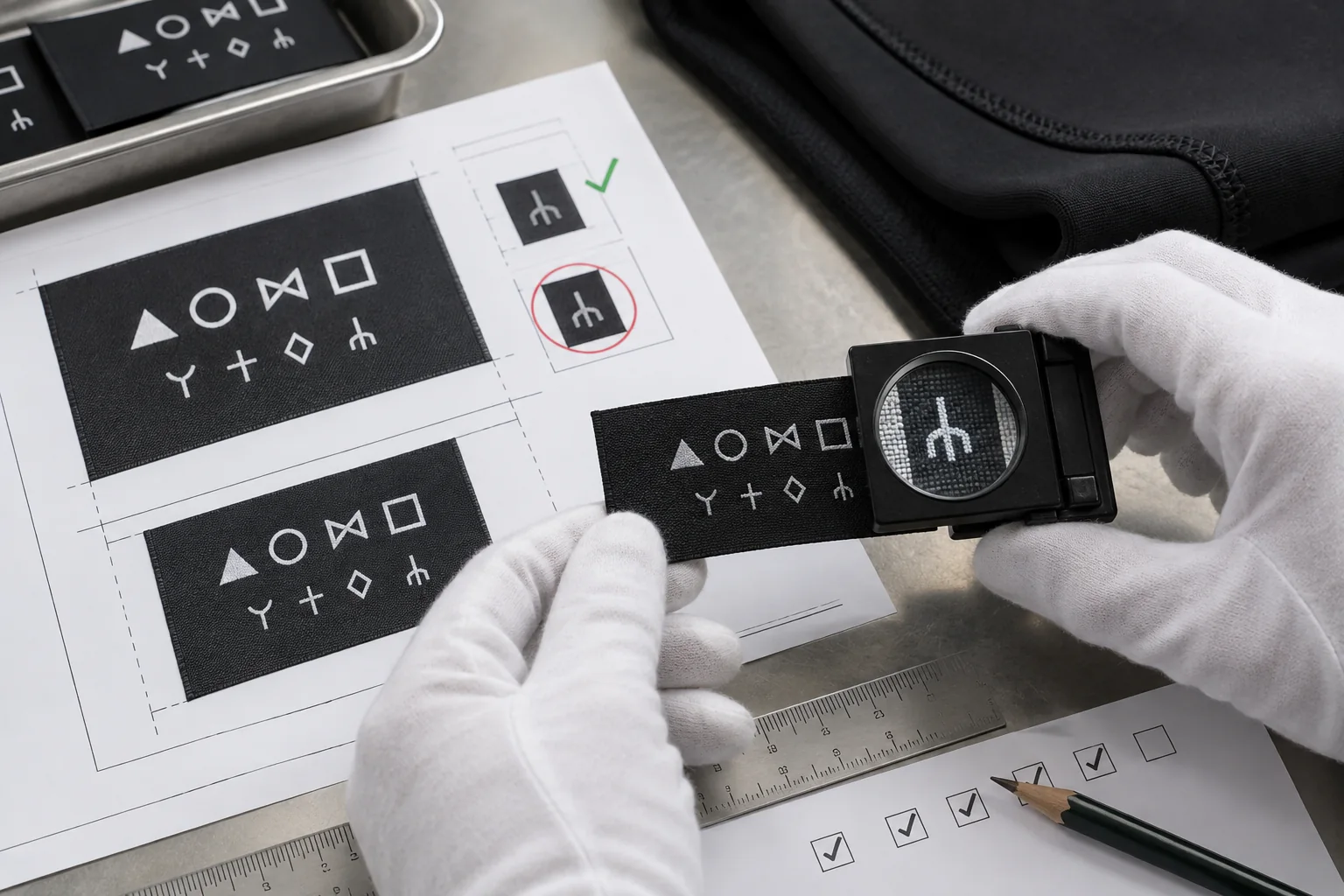
The affected order used a customer logo with a smaller English line beneath the main mark. One letter in that secondary line was wrong. At normal viewing distance, the layout, shape and visual balance looked very close to the intended artwork. The difference was small enough to escape casual review.
The problem had also acquired false authority: the same error appeared in the pre-production reference that the customer had approved. Subsequent production stages followed that approved reference. Because most operators were concentrating on placement, print quality and workmanship—and many did not read the English wording—the character error was not identified during those stages.
At final QC, Xuemei did not compare the bulk goods only with the approved sample. She returned to the customer’s original source material and checked the brand content item by item. That independent comparison exposed the incorrect letter.
The affected goods were immediately placed on hold. They were not permitted to ship simply because the physical product otherwise matched the approved pre-production sample. The factory arranged corrective reprinting or rework for the affected branding, then submitted the corrected goods to inspection again. Shipment could proceed only after the correction passed the required check.
No customer name, artwork, date or order quantity is published here. Those details are unnecessary to understand the control lesson, and keeping them confidential protects the buyer’s brand information.
Why one letter can be a critical commercial defect
A one-letter error may have little effect on the physical function of a wetsuit, but it can make the product commercially unacceptable. The brand owner may be unable to sell goods that display a misspelled name, slogan, product line or legal label. Packaging and campaign assets may no longer match. Correcting the error after international shipment can be slower, more expensive and less reliable than containing it before release.
That is why artwork control needs more than a quick visual impression. INSEAKU’s guide to custom wetsuit logo printing methods explains how artwork approval, process choice and bulk QC should connect.
Interview summary: In the owner-supplied interview, Xuemei emphasizes that an approved pre-production sample does not replace a final comparison with the original customer files. Small errors in letters, labels or familiar details can be missed even when workmanship looks correct. Her final inspection returns to the source requirements, and known defects must be corrected and reinspected before shipment. The control protects both the purchased product and the customer’s brand.
The control lesson: compare three references, not two
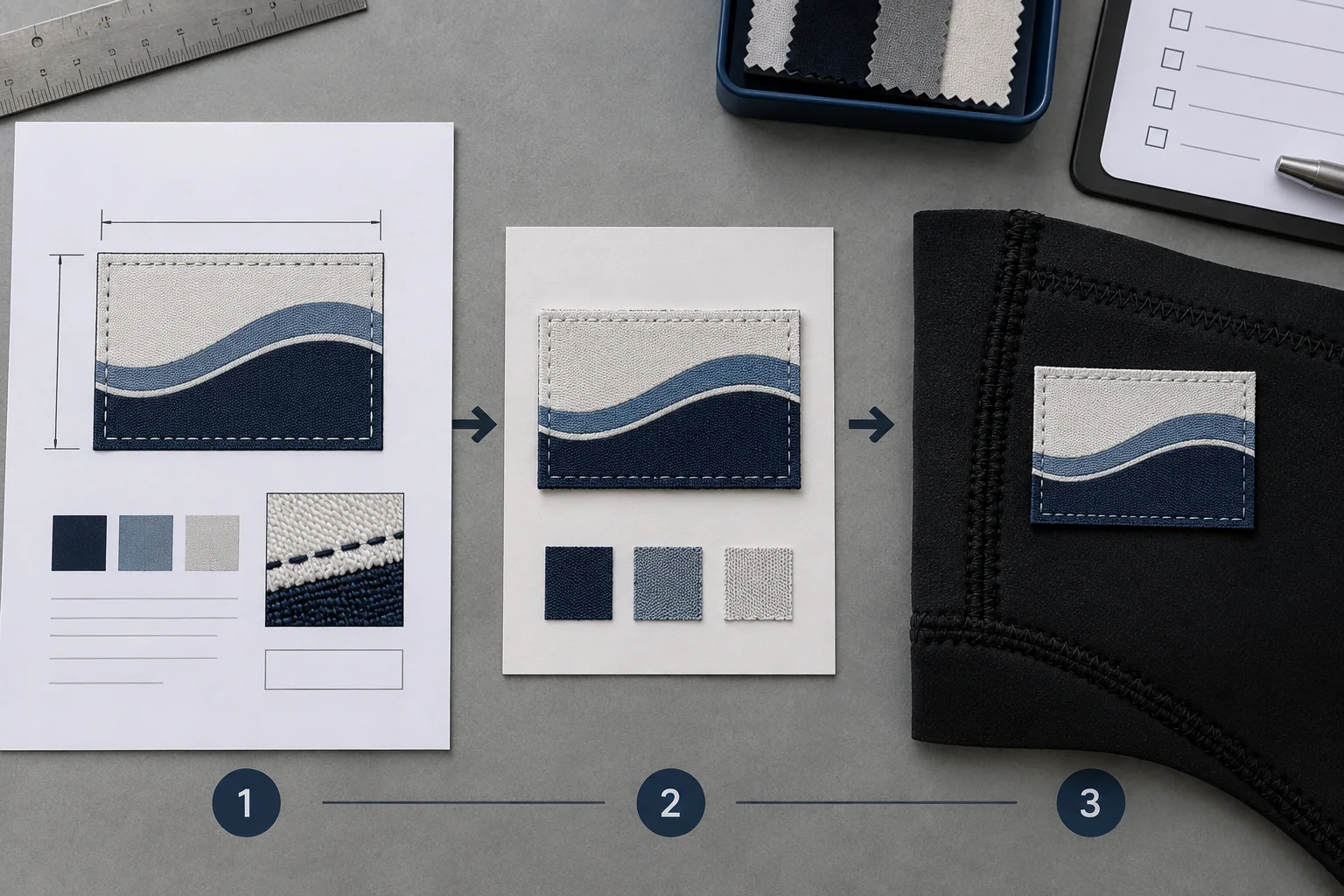
The incident did not prove that sample approval is unimportant. It proved that a sample is one part of a controlled reference set. A robust brand check compares:
- Customer’s original source requirement: the artwork or label file that contains the intended brand content.
- Approved production reference: the identified pre-production or sealed sample and its written approval status.
- Bulk-production output: the actual printed, transferred, embroidered or attached brand element on finished goods.
If the original source and approved sample disagree, matching the sample is not enough. The conflict must be contained and resolved in writing before release. The buyer may confirm that the source file has changed, approve a controlled deviation, or require correction. The factory should not silently choose which version governs.
Practical controls include a unique artwork filename and revision, a dated approval, a character-level comparison for small text, high-resolution proof images, and a final checklist that names the source files reviewed. These records make it easier to distinguish an isolated oversight from a systematic process problem.
Hold, rework, reinspection and release
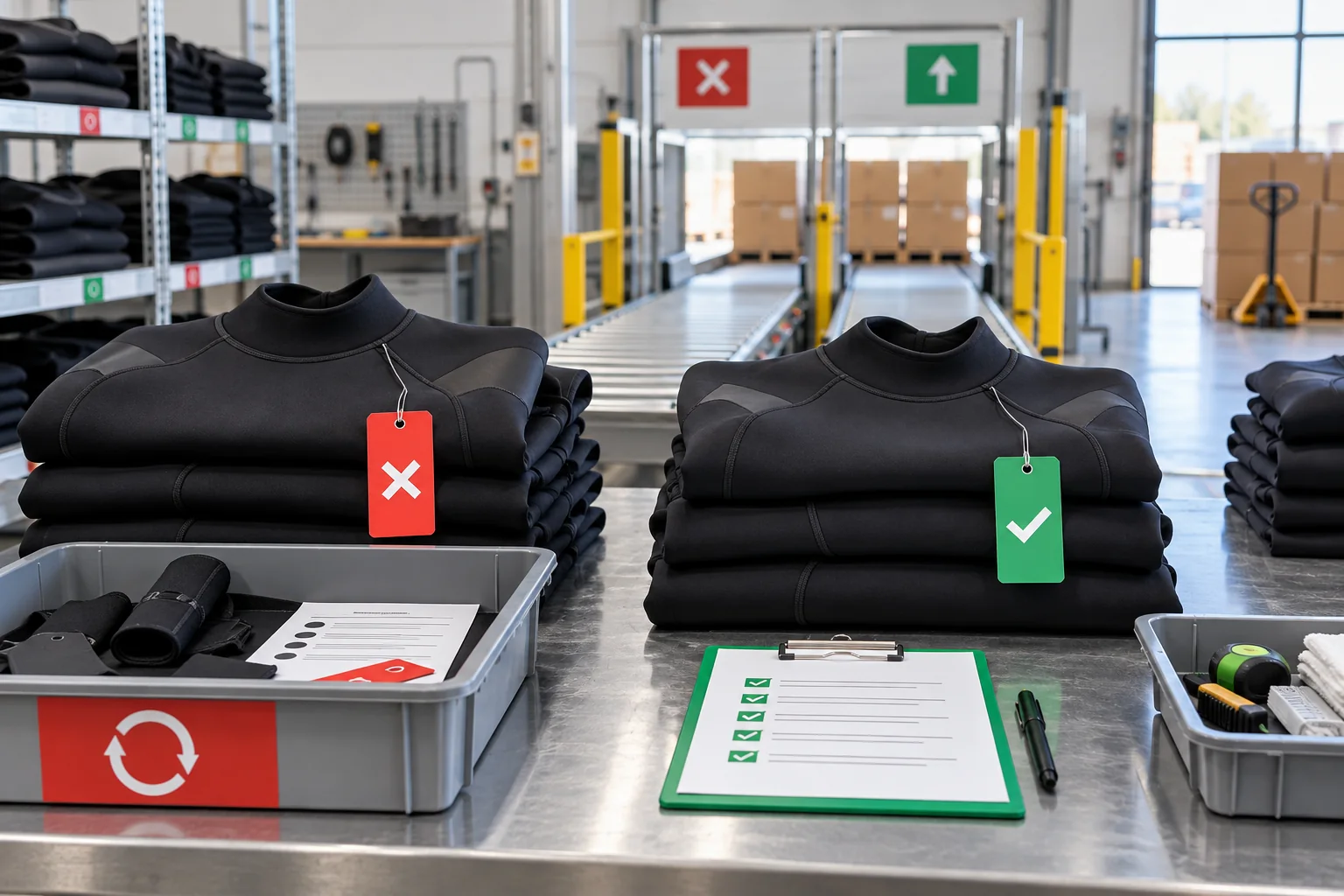
A QC title has limited value if the inspector cannot stop nonconforming goods. Xuemei’s stated authority is clear: goods that fail inspection cannot ship. Depending on the problem and the approved disposition, they must be reworked or remade. The corrected goods then return to QC for verification.
- Hold: identify and isolate the affected goods so they cannot be packed or shipped by mistake.
- Record: document what failed, the governing requirement, affected scope and available evidence.
- Disposition: define whether the goods will be reworked, remade, rejected or submitted for a written buyer deviation.
- Correct: perform the approved action without mixing corrected and uncorrected units.
- Reinspect: verify both the correction and any related risk created by the rework.
- Release: authorize shipment only when required checks, records and approvals are complete.
A final QC supervisor is one control owner within a larger system. Production, project and commercial teams still have responsibilities, and a buyer or third-party inspector may have separate approval rights. The release record should state who made each decision instead of suggesting that one person alone guarantees every aspect of quality.
What evidence can a buyer request?
A buyer does not need to rely on a profile alone. Before placing or releasing an order, ask the factory which records are available under the agreed quality plan. Useful evidence can include:
- the name or role responsible for final QC and the scope of that person’s stop authority;
- the original artwork filename, revision and approval trail;
- photos of the approved sample and bulk branding at readable resolution;
- measurement and final-inspection records linked to the order or batch;
- nonconformance, containment, rework and reinspection records;
- the final release status and authorized approvers;
- access arrangements for buyer or third-party inspection when agreed.
Record availability and inspection scope should be confirmed for the specific project. To discuss an order, artwork controls or inspection evidence, review INSEAKU’s wetsuit production and quality-control services and send the team your product brief and quality requirements.
If you are comparing production partners, see our private-label wetsuit manufacturer shortlist for company-specific strengths and questions to ask about sampling, manufacturing responsibility and quality control.
Download the final-release and artwork-verification workbook
The editable workbook accompanying this article helps buyers and factory teams connect the original brand file, approved sample, bulk result, inspection findings, nonconformance actions and final authorization. It is a planning and recordkeeping template, not a certificate or automatic release decision.
Download the INSEAKU Wetsuit Final Release and Brand Artwork Verification Workbook (.xlsx)
Wetsuit quality inspector FAQs
Who is Xuemei Zhang?
Xuemei Zhang (张雪梅) is the QC Supervisor at INSEAKU. According to the internal interview used for this profile, she has 10 years of quality-control experience and has worked at INSEAKU for eight years.
Can the QC supervisor stop a wetsuit shipment?
Yes. Xuemei’s stated authority is that goods that do not pass inspection cannot ship. They must receive the approved rework or remaking action and then pass reinspection before release.
Why check original artwork after a pre-production sample is approved?
An approved sample can itself contain an overlooked content error. Comparing the original source file, approved sample and bulk output provides an independent control and exposes conflicts that a two-way comparison can miss.
Does this case mean every finished wetsuit receives the same inspection?
No. The characteristics, inspection quantity and method follow the product and the customer’s written quality plan. Some checks may apply to every unit, while others may use an agreed sampling plan. Known nonconformity still requires containment and disposition.
Is a one-letter logo error a workmanship defect?
It may not affect physical performance, but it is a serious brand-conformity defect when the product no longer matches the customer’s intended artwork. Defect classification and acceptance criteria should be defined in the order-specific quality plan.
Is the lead image a documentary photograph of Xuemei’s label-error case?
No. The lead image is an AI-generated editorial reconstruction based on reference photographs of Xuemei Zhang and an INSEAKU workshop. Its quality-check scene is illustrative, not a photograph of the customer order or incident. The other process images are also illustrations.
Discuss your quality requirements with INSEAKU
Send the team your product type, intended use, design files, artwork revisions, size range, quantity, packaging requirements and required inspection evidence. INSEAKU can then review the manufacturing route and define project-specific checkpoints in writing. Contact INSEAKU to start the discussion.
Technical references
- American Society for Quality, How to Hire a Quality Control Inspector — overview of incoming, in-process and final inspection responsibilities.
- American Society for Quality, Quality Inspector Certification — role and body-of-knowledge context.
- ISO, ISO 2859-1:2026 — sampling procedures for inspection by attributes indexed by AQL.
- ISO, ISO 28590:2017 — introduction to the ISO 2859 series.
Last reviewed: September 28, 2026. Profile facts and the anonymized case narrative are based on the owner-confirmed internal interview. Inspection and release requirements follow the order-specific quality plan.