
For swimming, start with a close-fitting swimsuit, swim briefs or jammers. For triathlon, wear your race-ready tri suit underneath. For surfing, choose smooth swimwear—or no underlayer if your own suit’s instructions and your changing arrangements allow it. Avoid loose shorts, bulky knots and cotton underwear. The best layer stays flat without restricting the wetsuit’s fit.

What to wear under a wetsuit for your activity
| Activity | Start with | Why / what to check |
|---|---|---|
| Open-water swim | Swimsuit, swim briefs or fitted jammers. | Low bulk; easy to remove the wetsuit while keeping coverage. |
| Surfing | Smooth swimwear; no underlayer is also an option in a suitable personal suit. | Check comfort while paddling and popping up. Avoid ties and folds. |
| Triathlon | Tri suit, or tri shorts and tri top. | Remove the wetsuit in transition; keep the race kit on. |
| Rental / lesson | Your own close-fitting swimwear. | Practical coverage for changing; follow the operator’s requirements. |
Swimming guidance: [1]; surfing: [2]; triathlon: [3]. Rental choice is a practical starting point, not a universal rental policy.
For your first triathlon, our tri suit vs wetsuit guide shows what goes underneath, what comes off in the first transition and when a separate swim layer makes sense.
Swimming: keep the layer simple
A fitted one-piece, swim briefs or jammers usually gives you the coverage you need without much extra material. Jammers are close-fitting swim shorts, unlike loose boardshorts. ZONE3 recommends these streamlined swimwear options under its swim wetsuits. [1]
If you prefer a bikini, check its fastenings rather than the label. A smooth sports style is easier to accommodate than a large knot, metal clasp or thick gathered band. Put it on under the actual wetsuit and see whether the straps and waistband stay where you placed them.
Surfing: is wearing nothing underneath okay?
It can be, in your own suitable surf wetsuit. Rip Curl says an underlayer is optional and points out that extra garments can bunch. That does not override another manufacturer’s instructions or a rental provider’s rules. Swimwear is also useful when you need coverage before or after the session. [2]
Triathlon: wear what you will bike and run in
The tri suit stays on; the wetsuit comes off. A tri suit is the fabric race garment worn through swimming, cycling and running. The neoprene wetsuit goes over it for a permitted wetsuit swim. ZONE3 recommends a tri suit or tri shorts with a tri top so you do not need a clothing change between disciplines. [3]
Check your event’s wetsuit and clothing rules, then rehearse removing the wetsuit over your exact race kit. If you plan to change clothes instead, confirm the changing facilities. Our triathlon versus surfing wetsuit guide explains the outer suits separately.
Why do loose shorts and thick seams cause problems?
A wetsuit presses whatever is underneath against your body. A folded waistband makes a ridge. A loose leg can roll up as you pull the wetsuit on. Repeated movement can then make that small lump or seam uncomfortable. Blueseventy’s triathlon guidance distinguishes thin, flat layers from loose shorts, raised seams and bulky padding. [7]
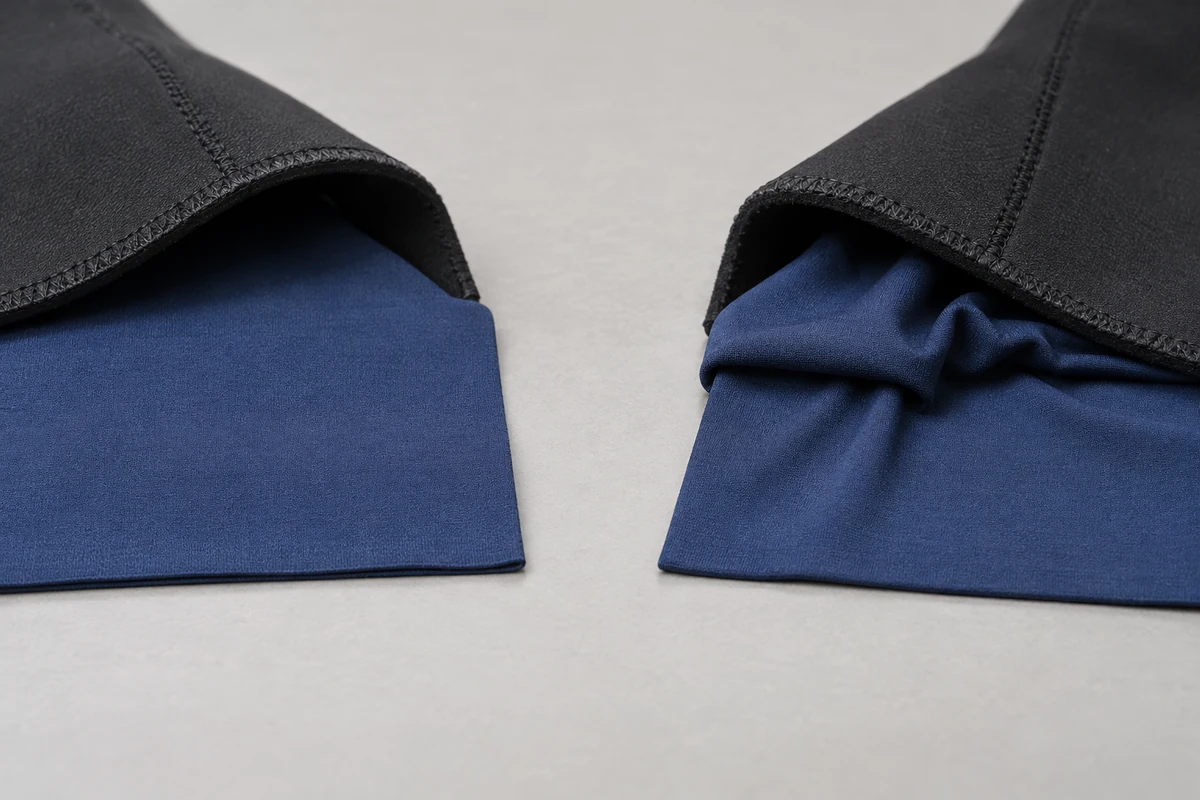
Before closing the suit, smooth the swimwear at the hips, lower back and thighs. Check that bra straps and short hems have not twisted. A layer that feels fine on its own may behave differently when covered by neoprene.
Skip everyday cotton underwear and loose cotton T-shirts. They retain water and add wet fabric inside an already snug suit. Choose swimwear or purpose-made wet-use layers instead. Thick cycling shorts are also a poor substitute for testing the appropriate triathlon kit. [3] [7]
Should you add a rash guard, dive skin or thermal top?
Add a layer for a specific job—not simply because more seems better. A thin dive skin can make a lined scuba wetsuit easier to put on; PADI suggests this as a dressing aid. A close-fitting rash guard may cover a contact area, but it still needs to sit smoothly under your particular suit. [4]
A regular thin rash guard is not the same product as an insulating thermal undersuit. The wetsuit’s foam provides insulation; a thermal layer is a separate addition that must fit without restricting movement or disturbing the openings. Reassess the whole setup if you are cold, rather than filling a badly fitting suit with extra clothing. [6]
For a guided river trip, a sleeveless rental suit may call for a different layering setup from a close-fitting surf or swim wetsuit. Our whitewater rafting wetsuit guide compares underlayers, splash jackets and footwear, with the outfitter’s requirements taking priority.
A textile lining and an unlined, exposed-neoprene interior do not behave the same way. PADI notes that bare neoprene is harder to slide over skin and helps limit water circulation. For an unlined open-cell freediving or spearfishing suit, follow its specific dressing and underlayer instructions. Do not assume a full fabric layer is compatible. See our open-cell wetsuit dressing guide. [6]
3 essential fit checks before you get in
Try the underlayer and wetsuit together before the session. A useful check is whether the complete outfit lets you breathe normally and perform the movements you need, without new pressure points. PADI advises a snug fit without excessive tightness or large gaps. [6]
- Settle both garments. Smooth folds and position the wetsuit fully at the hips and shoulders before judging it.
- Move for the activity. Reach overhead and imitate your swim stroke, or bend into your paddling and pop-up positions.
- Find the contact point. If a seam, band or closure presses or rubs, reposition or change the layer. Do not simply force the wetsuit closed.
For a race, include your support garments and practice transitions during training. ZONE3 recommends checking seams and rehearsing the full outfit before race day. Persistent neck rubbing needs a fit and contact check; our wetsuit neck chafing guide walks through that problem. [5]
Two practical questions before you pack
Do I wear a bra?Use the support you need; test it wet
What about a rental suit?Bring swimwear and ask the operator
Your own fitted swimwear makes changing easier and provides coverage. Confirm any underlayer requirement with the provider. Swimwear is not a substitute for cleaning a shared wetsuit, and it does not make an unsuitable rental size fit properly.
Sources and further reading
Checked on 7 October 2026. Brand guidance is used in its activity context; your garment’s instructions and event or operator requirements still apply.
- ZONE3 — What to Wear Under a Wetsuit for Open Water Swimming. Fitted swimwear and swim-specific underlayer choices.
- Rip Curl — How Do Wetsuits Work: A Beginner’s Guide. Optional underlayers in the surf-wetsuit context and the problem of bunching.
- ZONE3 — How to Choose Your First Triathlon Wetsuit. Race kit under a wetsuit and checking event rules.
- PADI — 7 Tips for Putting on Your Wetsuit. Dive skins as a dressing aid.
- ZONE3 — Race-Day Trisuit Comfort Checklist. Seams, support garments and rehearsing the complete outfit.
- PADI — Wetsuits. Foam insulation, lining differences and fit.
- Blueseventy — What to Wear Under a Triathlon Wetsuit. Bulk, seams, cotton, padding and low-profile layers.