
If your PFD pushes you forward or rides up against the kayak seat, check where its back foam meets the backrest. A high back PFD can put that foam above the seat; a thin-back design reduces bulk where they overlap. Choose by a seated trial with the actual seat and clothing—not the product name alone.
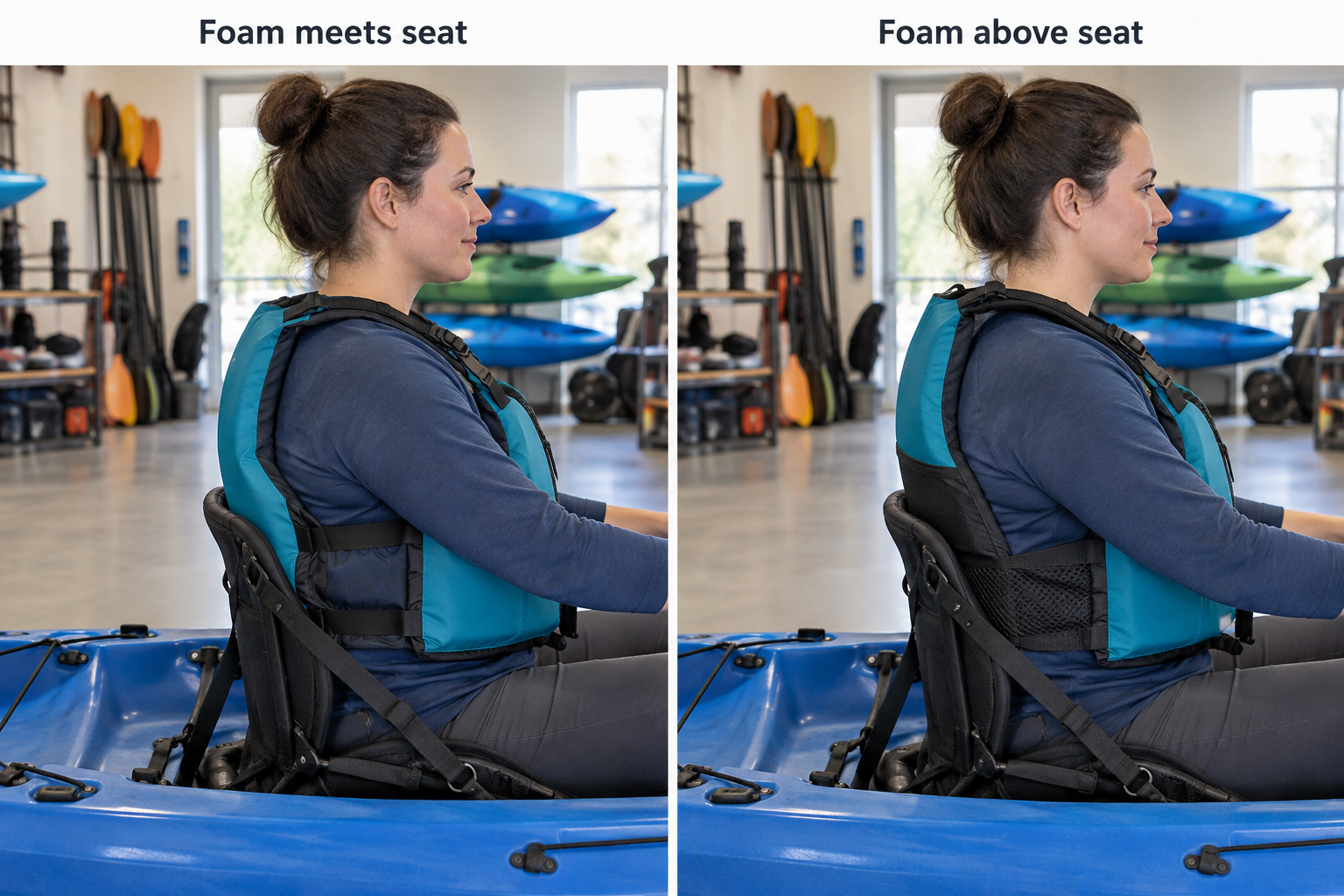
AI-generated illustration. Conceptual contact comparison; no real fit result or universal clearance is claimed. View full size.
Is the backrest pushing on the foam?
Fasten and adjust the PFD according to its instructions, then sit in your normal paddling position. Ask someone to look from the side. Does the backrest meet a thick pad, or does it sit against the lower mesh or a thinner panel? That contact point is more useful than a rear product photo taken on a hanger.
Touching the seat is not automatically a problem. The useful question is whether the contact changes your posture, moves the vest or interferes with movement. Use these observations to describe the issue to a shop or supplier:
| Observation | Look here | Next step |
|---|---|---|
| Pushed forward | Back foam between your torso and the seat. | Compare foam position and thickness in the same seat. |
| Vest moves upward | Seat edge catching the pad or lower hem. | Recheck fitting first, then repeat the seated trial. |
| Turning feels blocked | Side panels, pockets and seat edges. | Observe left and right turns separately. |
| Only comfortable when loose | Fit and contact with fastenings secured. | Try another suitable size or design. |
These are inspection prompts, not diagnoses or a safety score.
High back PFD versus thin-back: two different approaches
High-back describes where the rear flotation sits. NRS explains that this layout concentrates flotation higher on the back, leaving the lower area available to rest against a seat. [1] It does not mean the jacket will clear every tall backrest.
Thin-back describes the profile at the contact area. For example, Astral describes the Lonnie’s ThinVent back as thin and ventilated. [2] That is a different approach to sitting against a seat; it is not evidence that all thin-back models will fit every paddler.
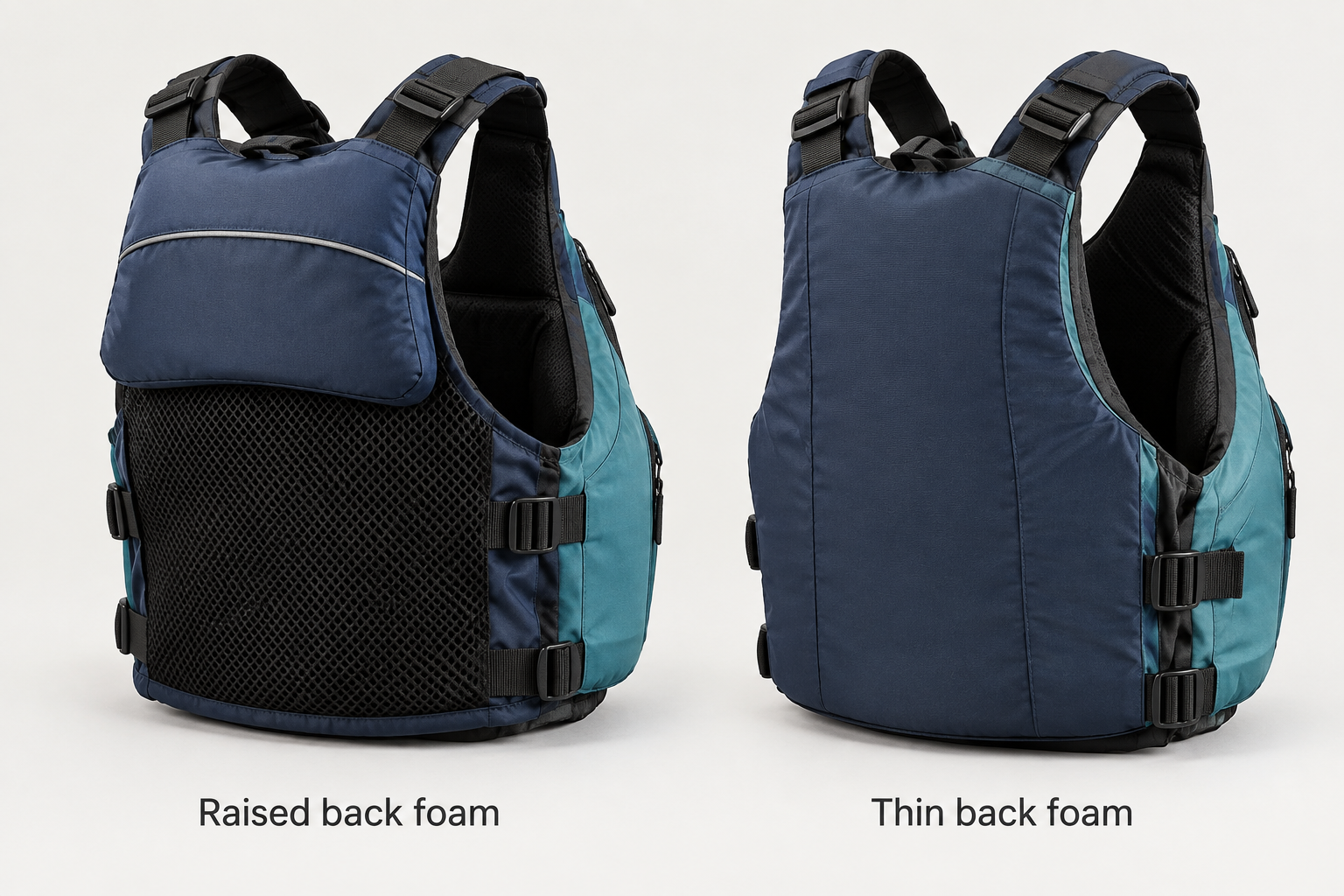
AI-generated illustration. Generic back layouts, not named brand models or INSEAKU specifications. View full size.
| Layout | Potential benefit | Check before buying |
|---|---|---|
| Raised foam + lower mesh | Can keep the thicker pad above the backrest. | Does the pad actually clear the seat on your torso? |
| Thin back panel | Reduces the bulk between your back and the seat. | Is the remaining contact comfortable during movement? |
The two approaches are not a ranking. A taller seat or a different seated torso position can bring a raised pad back into contact. A thin panel still occupies space. Compare the complete PFD on your body, not foam thickness in isolation. These are fit considerations, not flotation-performance conclusions.
Try the actual seat, then move
Use a shop fitting area or another stable setup arranged according to the kayak manufacturer’s instructions. Bring the clothing and permitted equipment you expect to wear. NRS recommends using the manufacturer’s size guidance and checking fit with the appropriate layers. [3]
- Fit the PFD first. Close its required fastenings and adjust it as directed. Do not loosen it just to create seat clearance.
- Sit normally. Use the actual seat and your intended, manufacturer-permitted setting. Notice whether you lean away from the backrest to escape pressure.
- Reach and rotate. Move through comfortable paddling motions to both sides. Watch for catching, upward movement and pocket interference.
- Compare one change at a time. Try another suitable PFD in the same setup, or a permitted seat adjustment. Repeat the movements before deciding.

AI-generated illustration. Generic movement demonstration, not a completed compatibility or flotation test. View full size.
A useful trial answers: “Can I sit and move normally while the PFD stays correctly fitted?” Standing comfort alone does not answer that. A dry-land check also does not verify in-water retention or flotation; follow the product’s instructions for any further checks.
What should I record when comparing two options?
Keep the seat, clothing and equipment consistent. For each PFD, record its model and size, seat setting, exact contact location and what changed during sitting, reaching and turning.
Write the observation precisely: “seat edge catches the lower rear pad during a left turn” is more useful than “uncomfortable.” Note whether a permitted adjustment resolved it or whether another design is needed. Do not turn checked boxes into a safety approval.
Review fastening and adjustment separately with our life jacket zipper vs buckle guide. Female wearers can also use our life jacket fit guide for women to compare chest pressure and lower-torso fit.
Buying online? Send the seat information too
A chest measurement helps with sizing; it cannot tell a supplier where your backrest meets the PFD. Send the kayak and seat model, the seat setting, and a side photograph showing both the seat surface and the top of the backrest.

AI-generated illustration. Photo-reference example, not a measured seat or a dimensional drawing. View full size.
If the supplier requests seat height, agree on the reference points and whether the measurement is vertical or follows the backrest. Include the unit and the setting used. A height number without that context is easy to misread. A seated side photograph adds the wearer’s position, which an empty-seat measurement misses.
Ask whether you can trial the suggested PFD with that seat, and confirm the seller’s fitting or return arrangements before ordering. For fleet purchases, include representative users and the actual seat setups in the sample review; one successful fitting does not establish fleet-wide compatibility.
What do the illustrations establish?
The illustrations show concepts, not completed product trials. They do not establish compatibility for an INSEAKU PFD and kayak seat. Confirm the exact models, settings and fit on the wearer through an actual sample review.
Can I cut the foam or leave the vest open?
No—choose a correctly fitting combination instead. Do not remove or reshape flotation foam to make room for the seat. Keep the required closures secured. The US Coast Guard’s guidance emphasizes proper, snug fit and avoiding a jacket that rides up. [4]
Seat comfort is only one selection check. Confirm the intended activity and the product’s applicable approval and instructions too; our buoyancy aid versus life jacket guide explains that distinction. For a sourcing brief, include these seat and sample-review requirements when discussing your project through INSEAKU’s services.
Sources
Checked 7 October 2026. Brand examples explain design approaches, not INSEAKU specifications. The observation table and comparison workflow are editorial guidance, not a standardized compatibility test.
- NRS — How to Choose the Right Fly Fishing PFD. Standard versus high-back flotation placement.
- Astral — Lonnie product information. ThinVent back-panel design; no universal-fit claim adopted.
- NRS — How to Fit a Life Jacket. Sizing, adjustment and clothing considerations.
- US Coast Guard — Wearing Your Life Jacket. Correct wear and snug fit.