

Short answer: A useful wetsuit batch inspection AQL plan defines the inspection lot, product status, sampling standard and edition, inspection level, sample size, random-selection method, defect catalogue, separate acceptance and rejection numbers for critical, major and minor defects, measurement and functional-test samples, packaging checks, reporting evidence and release authority. AQL is an index used to select an acceptance-sampling plan. It is not a promise that a fixed percentage of defective wetsuits may be shipped, and it does not replace incoming or in-process quality control.
Download the working tool: use the Wetsuit Batch Inspection and AQL QC Plan to record lot information, buyer-approved sampling inputs, defect definitions, inspected units, measurement results, carton checks, corrective actions and the final release decision. The workbook deliberately does not reproduce copyrighted sampling tables. Enter the code letter, sample size and acceptance/rejection numbers from the current standard or inspection plan authorized for your order.
Wetsuit batch inspection: what does AQL mean?
Acceptance sampling allows a decision about a defined lot to be made from a limited, selected sample. ISO 2859-1:2026 provides sampling schemes indexed by acceptance quality limit for lot-by-lot inspection by attributes. “By attributes” means an inspected result is classified into categories such as conforming or nonconforming, or defects are counted according to an agreed rule. The plan links the lot size and inspection conditions to a sample size and acceptance/rejection criteria.
The AQL value is an index within that system. It should not be read as the exact defective percentage in the shipment, a warranty that a particular lot contains no more than that percentage, or advance permission to ship known defects. Different samples from the same underlying process can produce different observations. Acceptance sampling manages decision risk; it does not reveal every unit in an uninspected lot.
AQL inspection also does not repair a weak process. If the wrong pattern was cut, a material batch was substituted, adhesive curing was uncontrolled or sizes were mixed during packing, a final sample may discover the problem only after much of the cost has already been incurred. The broader wetsuit quality control checklist should therefore connect incoming inspection, first-piece approval, in-process checks and final inspection instead of treating AQL as the whole quality system.
AQL, 100% inspection and testing answer different questions
- Acceptance sampling asks whether the inspected lot meets a defined statistical decision rule for the selected attributes.
- 100% inspection checks every unit for the specified characteristics, but its reliability still depends on method, visibility, inspector capability and records.
- Variable measurement records numerical results such as chest width, torso length or zipper length and compares them with targets and tolerances.
- Functional or laboratory testing evaluates a defined performance question under a controlled method, sometimes on a smaller or destructive sample.
A buyer may combine all four. For example, every sampled wetsuit may receive a visual workmanship check, a size-balanced subset may receive full measurements, every unit may receive a high-risk zipper operation check, and a separately selected sample may go to a qualified laboratory for a material or chemical test.
What must the buyer freeze before the inspector arrives?
An inspector cannot create the product requirement during final inspection. The buyer and manufacturer should approve the governing references before the inspection booking is confirmed. At minimum, identify the purchase order, style and revision, approved tech pack, bill of materials, measurement chart, artwork, label and packaging files, approved or sealed sample, destination market and any approved deviations.
The QC plan then translates those product references into an executable inspection instruction. It should state:
- which finished quantity forms the lot and how much must be completed and packed;
- which sampling standard, edition, scheme and inspection severity apply;
- which lot size and inspection level determine the code letter or sample-size route;
- the sample size and separate Ac/Re numbers for each defect class;
- the defect catalogue and classification authority;
- how units, cartons, colors and sizes will be selected;
- which checks apply to every sampled unit and which use a different sample;
- the measurement points, tolerances, test methods and equipment;
- photo and reporting requirements; and
- who may hold, conditionally approve or release the lot.
Use one dated revision. If a late commercial message changes a label, color, component or packing quantity, update the governing file and confirm whether inspected units need to be reselected. A chat message that is not reflected in the inspection pack creates two competing standards.
Step 1: define the inspection lot without hiding variation
A lot is the quantity presented for one inspection decision. Its definition affects the sampling plan and the meaning of the result. Record the purchase order, factory, production dates or lines where relevant, style, material route, colorways, size range, carton range and total units. State whether the lot is one homogeneous production group or a commercial combination of several groups.
Combining unlike goods can hide risk. A 3 mm surf suit and a 7 mm diving suit should not automatically share one lot because their materials, seam routes and performance expectations differ. The same concern applies when one order contains different factories, production periods, pattern revisions, unapproved substitutions or clearly separated rework batches.
Conversely, splitting one homogeneous production run into artificial small lots merely to obtain smaller samples can weaken the agreed protection. The lot definition should follow the approved sampling system, contract and production reality rather than being adjusted after defects appear.
Confirm readiness before sampling
Record the quantity completed, the quantity packed and the location of unfinished or held goods. The buyer’s plan may require a defined completion and packing percentage before final random inspection. If too little is finished, the inspector may not be able to select across the whole lot or check final packing. The report should state the actual status rather than silently proceeding as if the shipment were complete.
Step 2: record the sampling system, not only an AQL number
Writing “AQL 2.5” on a purchase order is incomplete. The decision also depends on the standard and edition, lot size, inspection level, sampling scheme, normal/tightened/reduced status, code letter, sample size and the Ac/Re values used. ISO published the third edition of ISO 2859-1 in January 2026, so buyers should identify the edition rather than assuming every supplier or inspection company uses the same table.
For continuing series of lots, the applicable standard may include switching rules between normal, tightened and reduced inspection. Those rules depend on prior lot results and the conditions stated in the standard. They are not informal rewards or penalties that one party should change without records. For an isolated lot, buyers should confirm whether a different sampling approach is more appropriate.
INSEAKU’s normal commercial starting point has been zero acceptance for critical defects, AQL 2.5 for major defects and AQL 4.0 for minor defects. These are not universal values and do not replace a buyer-approved plan. Product risk, intended use, market requirements, customer policy and the applicable standard may require different criteria, additional 100% checks or specialist testing.
| Plan field | Why it matters | What to record |
|---|---|---|
| Lot size | Determines the route into the sampling system | Finished units included in this decision |
| Inspection level | Changes the code letter and sample size | Buyer-approved general or special level |
| Scheme status | Normal, tightened or reduced plans are not interchangeable | Status and switching-rule evidence |
| Code letter | Connects lot and level to the selected table | Value from the authorized current standard |
| Sample size | Defines how many units receive the attribute inspection | Whole number and any separate sub-samples |
| Ac/Re by class | Creates the lot decision threshold | Critical, major and minor values separately |
Step 3: make the sample representative and traceable
A convenient sample is not necessarily a random sample. Pulling the easiest cartons from the front of the warehouse can miss early production, later production, different pallet positions or less common sizes. ISO 24153 describes random-sampling and randomization procedures and notes their use for discrete units presented in lots. Your inspection instruction should name the practical randomization method and preserve enough evidence for review.

Create a carton list or pallet map before selection. Choose cartons across locations and packing sequence, then choose units within those cartons without allowing the production team to substitute preferred pieces. Record carton numbers or other traceable identifiers. When an order includes multiple colors and sizes, define whether the sample will be proportionally allocated, will guarantee minimum coverage of low-volume variants, or will use separate lots.
Stratification and randomization are related but different. Stratification ensures important groups such as style, color, size or production line are represented. Random selection within those groups reduces selection bias. The plan should specify both when commercial variety could otherwise leave a subgroup unexamined.
Step 4: approve a product-specific defect catalogue
“Poor workmanship” is too vague for a repeatable decision. The defect catalogue should identify the requirement, defect description, severity, inspection method, location or limit, photo example where useful, and escalation owner. It should distinguish a departure from the specification from a subjective preference that was never approved.
Typical planning categories are:
- Critical: a condition that presents an unacceptable safety or regulatory risk, or another buyer-defined reason requiring immediate hold. Examples must be reviewed for the actual product and market.
- Major: a defect likely to affect intended use, fit, durability, saleability or compliance with an important specification, or to cause a reasonable customer to reject the product.
- Minor: a workmanship or appearance departure that does not materially affect intended use but still fails the approved standard.
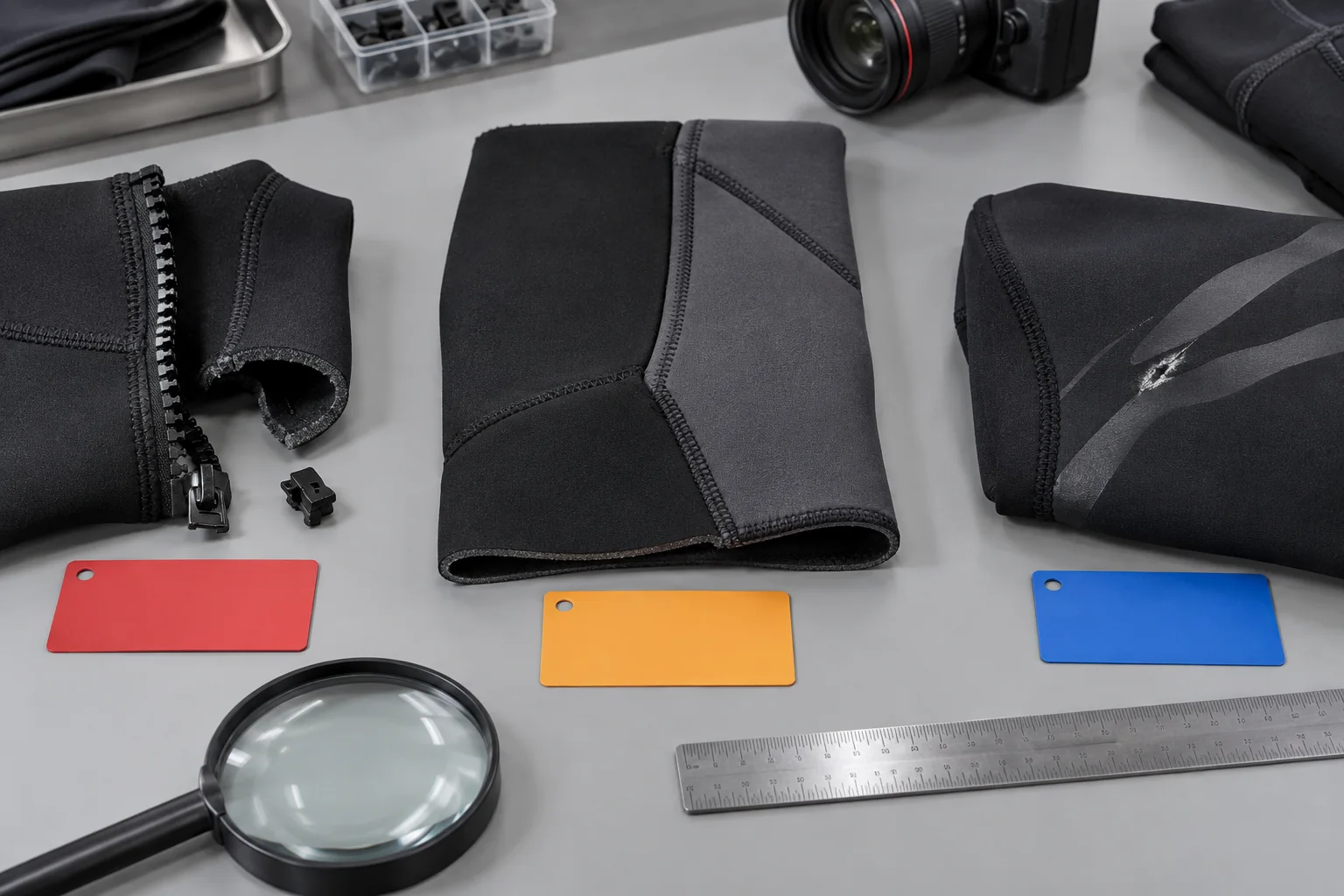
A classification can change with context. A small opening in a decorative seam may not carry the same consequence as an opening in a specified watertight construction. A missing warning or incorrect composition label may have a different impact in different markets. Do not copy generic examples without product and compliance review.
Agree who resolves an observation that is not listed. The inspector should document the evidence and escalate it rather than downgrade it to keep the inspection moving. The report should preserve the original observation, the classification decision, the person authorizing it and any approved deviation.
Step 5: use a repeatable inspection sequence
A fixed sequence reduces omissions and prevents the inspector from focusing only on visible cosmetics. Begin with lot status and references, then verify carton selection and product identity before opening the detailed inspection. A typical sequence is:
- Verify documents: purchase order, style, revision, sealed sample, tech pack, BOM, measurements, artwork, labeling and packing specification.
- Check quantity and assortment: finished and packed quantities, carton count, size/color ratio and carton marks.
- Select the sample: record the selection method, carton IDs and sampled unit IDs.
- Confirm identity: style, color, size, material appearance, labels, branding and components.
- Inspect workmanship: panels, seams, stitches, glue, tape, seals, zipper, openings, reinforcement and surface condition.
- Measure the product: use defined points, conditioning, tension, units and tolerances.
- Run specified function checks: zipper movement, closure, stretch/recovery, localized leak or other approved tests.
- Inspect packing: folding, polybag, labels, barcode, inserts, carton quantity, marks and condition.
- Reconcile and decide: total defects by class, compare with Ac/Re, list open issues and assign the release status.
Keep the current specification beside the work. The wetsuit tech pack and RFQ checklist explains how drawings, panel maps, material references and measurements should be controlled before they become inspection criteria.
Step 6: separate attribute inspection, measurements and functional tests
Not every check should use the same sample quantity. A full visual check can apply to the acceptance sample while detailed measurements use a size-balanced subset. A critical characteristic may be inspected on every unit. A destructive test may use a separately identified sample that cannot return to saleable stock.
For measurements, record the sample ID, size, point of measure, method, target, plus/minus tolerance, actual value and result. Keep the actual value rather than only “pass.” Several values near one tolerance edge can reveal pattern, material or process drift even when each individual garment technically passes. Use the wetsuit fit-testing protocol when the concern includes movement, pressure zones, water entry or sample-version approval.
For functional checks, state the equipment, conditioning, method, duration, units and acceptance rule. “Leak test passed” is not reproducible if the tested area, pressure or water condition, time and observation are absent. A factory check is also not automatically equivalent to a report from a laboratory operating under ISO/IEC 17025. Match the evidence route to the buyer’s requirement and the laboratory’s accredited scope.
Step 7: count defects consistently and apply Ac/Re without negotiation
Before inspection, define whether the plan counts nonconforming units, nonconformities or another permitted basis. One wetsuit can contain more than one observation. The counting rule must avoid both losing important defects and double-counting in a way that does not match the selected sampling plan.
Maintain a defect log with sample ID, carton, size, color, location, description, class, quantity, photograph and reference. Summarize critical, major and minor totals separately. Compare each total with the corresponding acceptance number (Ac) and rejection number (Re) entered from the approved plan.
- If the observed count is at or below Ac, the result for that class meets the sampling rule.
- If the observed count reaches Re, the result for that class fails the sampling rule.
- If the plan, count basis or classification is incomplete, do not manufacture a “pass”; mark the decision pending and resolve the missing input.
Do not average classes together. A low minor count cannot offset a critical defect. Do not remove an observation from the log because it was repaired during the visit. Record the original finding, containment, repair and reinspection result so the report shows what happened.
Step 8: define the failed-inspection response before failure occurs
A failed result should automatically place the affected lot on hold. The response begins with containment: identify the affected quantity, stop shipment, protect unrelated lots and preserve evidence. Then investigate whether the issue is isolated or systemic by tracing material batch, pattern version, production line, operator, component, size, color and packing period as relevant.
Possible dispositions include sorting, rework, replacement, further testing, rejection or a buyer-authorized deviation. The manufacturer should not decide alone that a known nonconformity is commercially acceptable. Any concession should identify the exact quantity, defect, risk, compensation or corrective action, and authorized buyer representative.
After correction, define the reinspection route. A new random sample may be required from the corrected lot under the approved standard and severity. Units repaired during the first inspection do not by themselves prove that the remaining quantity conforms. The new report should link the original failure, root cause, corrective action, rework quantity, verification and final decision.
Step 9: brief the third-party inspector as if they have no project memory
A third-party inspector needs a controlled package, not scattered emails. Send the booking instruction, factory and contact, product and lot details, approved references, sampling plan, defect catalogue, measurement sheet, test methods, packaging requirements, photo list and escalation contacts. State how much production must be complete and packed, when access is available and whether the inspector may open sealed cartons.
ISO/IEC 17020:2026 specifies requirements for the competence, impartiality and consistent operation of inspection bodies. If the buyer requires an accredited inspection body, verify the organization’s current accreditation, scope and location rather than relying only on a brand name. An inspection-body accreditation does not automatically cover every product, method or country office.
Define communication during the visit. The inspector may need to report a critical observation immediately, request a classification decision or document that required equipment was unavailable. The factory should have a contact authorized to locate records and products, but should not select replacement samples or pressure the inspector to reinterpret the buyer’s criteria.
Step 10: make the report support a real shipment decision
A useful report identifies the inspected lot, completion status, sample plan, selected cartons and units, governing revisions, observations, measurements, tests, defect totals, Ac/Re comparison, packaging result, photos, limitations and open actions. It should distinguish facts observed by the inspector from decisions made later by the buyer or manufacturer.
The final status can be structured as:
- Pass under the sampling plan: observed results meet the recorded decision criteria and no separate release blocker remains.
- Pending: the inspection is complete but required evidence, classification, laboratory result or authorized decision is missing.
- Fail / Hold: a rejection threshold, critical rule or other defined blocker has been reached.
- Released by authorized deviation: the buyer accepted a documented exception; the report must not relabel the defect as conforming.

Inspection approval and shipment release are related but not identical. Payment, required laboratory reports, corrective actions, quantity reconciliation, commercial documents or customer authorization may still be outstanding after the sampled product passes. The QC plan should list every release prerequisite and name the person who closes it.
What should buyers put in a wetsuit batch inspection RFQ?
Send enough information for the manufacturer and inspection provider to quote the same scope:
- product type, intended use, styles, colors, sizes and destination markets;
- order and lot quantities, factories or production sites and expected completion date;
- current specification, BOM, measurements, artwork, labels, packaging and approved sample;
- sampling standard and edition, inspection level, scheme status and AQLs or other criteria;
- defect catalogue and any characteristics requiring 100% inspection;
- measurement and function-test sample quantities;
- required equipment, test methods, photos, report format and language;
- reinspection, travel, waiting and destructive-sample arrangements; and
- release authority, report recipients and escalation contacts.
If the project also needs manufacturing, sampling or production-control support, review INSEAKU’s wetsuit production, quality-control and manufacturing services against the approved scope. The quotation should identify what INSEAKU performs, what the buyer or independent inspector performs, and which documents control the final decision.
Common AQL and batch-inspection mistakes
- Writing only “AQL 2.5”: the standard, edition, lot, level, sample and Ac/Re remain undefined.
- Calling AQL an allowed defective percentage: this misstates the sampling decision and can normalize known defects.
- Letting the factory preselect samples: this introduces selection bias and weakens traceability.
- Combining dissimilar production into one lot: a result may hide variation among styles, materials or revisions.
- Using generic defect examples: severity may not match the actual use, specification or destination market.
- Using one sample size for every test: measurements, destructive tests and high-risk checks may need separate plans.
- Changing classification after seeing the count: the decision rule is no longer independent of the result.
- Deleting repaired findings: the report loses evidence of the original process and containment need.
- Treating a passed sample as shipment authorization: other release prerequisites may remain open.
Frequently asked questions
Does AQL 2.5 mean the buyer accepts 2.5% defective wetsuits?
No. AQL is an index used with a defined acceptance-sampling system. The actual decision comes from the standard, lot size, inspection level, scheme, sample size and acceptance/rejection numbers. It is not permission to ship a known fixed percentage of defects.
Should critical defects always use Ac 0?
Many commercial plans use zero acceptance for critical defects, and that is INSEAKU’s normal starting framework. The buyer must define what is critical and approve the applicable decision rule for the product, market and sampling system. High-risk characteristics may also require 100% inspection or separate testing.
Can all colors and sizes share one sample?
Only when the approved lot and sampling plan support that approach. The selection method should still ensure meaningful coverage of important variants. A size or color with distinct materials, construction, revision or risk may need minimum coverage or a separate lot.
Should measurements use the same AQL sample?
Not automatically. Attribute defects, numerical measurements and performance tests answer different questions. Define a size-balanced measurement sample, measurement method and tolerance. Use a separate test sample where the method is destructive or requires special conditioning.
What if a defect is not in the catalogue?
Document the observation with the sample ID, location and photos, then escalate it to the named classification authority. Do not ignore it or choose a lower class simply to finish the report. Add the approved decision to the catalogue for future inspections.
Can a failed batch be reinspected immediately after spot repairs?
Spot repairs do not prove the rest of the lot conforms. Hold the lot, determine the affected scope, complete the approved sorting or corrective action and then follow the specified reinspection plan using a properly selected sample.
Is a third-party inspection the same as laboratory testing?
No. Product inspection and laboratory testing have different purposes and competence frameworks. ISO/IEC 17020 applies to inspection bodies, while ISO/IEC 17025 applies to testing and calibration laboratories. Confirm the organization’s current accreditation and scope for the required activity.
Build the QC plan before booking final inspection
Download the Wetsuit Batch Inspection and AQL QC Plan. Complete the lot, references, sampling inputs, defect catalogue, measurement methods, test samples, packing checks and release owners before the inspection date. Leave uncertain fields marked Open rather than turning missing criteria into a false pass.
Request an inspection-plan review: send INSEAKU your wetsuit specification, quantity and buyer QC requirements. Include the intended use, destination market, lot definition, proposed sampling system, critical characteristics, measurement chart, function tests, packaging and planned third-party inspection so responsibilities and timing can be confirmed in writing.
Official references
- ISO 2859-1:2026 — Sampling schemes indexed by acceptance quality limit for lot-by-lot inspection
- ISO 28590:2017 — Introduction to the ISO 2859 series
- ISO 24153:2009 — Random sampling and randomization procedures
- ISO/IEC 17020:2026 — Requirements for bodies performing inspection
- ISO/IEC 17025:2017 — Competence of testing and calibration laboratories
- ASQ — ANSI/ASQ Z1.4 and Z1.9 sampling-plan standards
Last reviewed: September 28, 2026. Inspection criteria, responsibilities and shipment-release conditions remain subject to the buyer-approved quality plan and project documents.