
PRODUCT GUIDES · WETSUIT BUOYANCY
Do wetsuits help you float? Yes—but they are not life jackets. Gas trapped in the neoprene foam adds buoyancy and can make it easier to keep your body near the surface. But a wetsuit does not reliably keep your mouth and nose clear of the water. If you cannot swim, do not rely on one instead of a suitable life jacket and supervision. [1] [3]
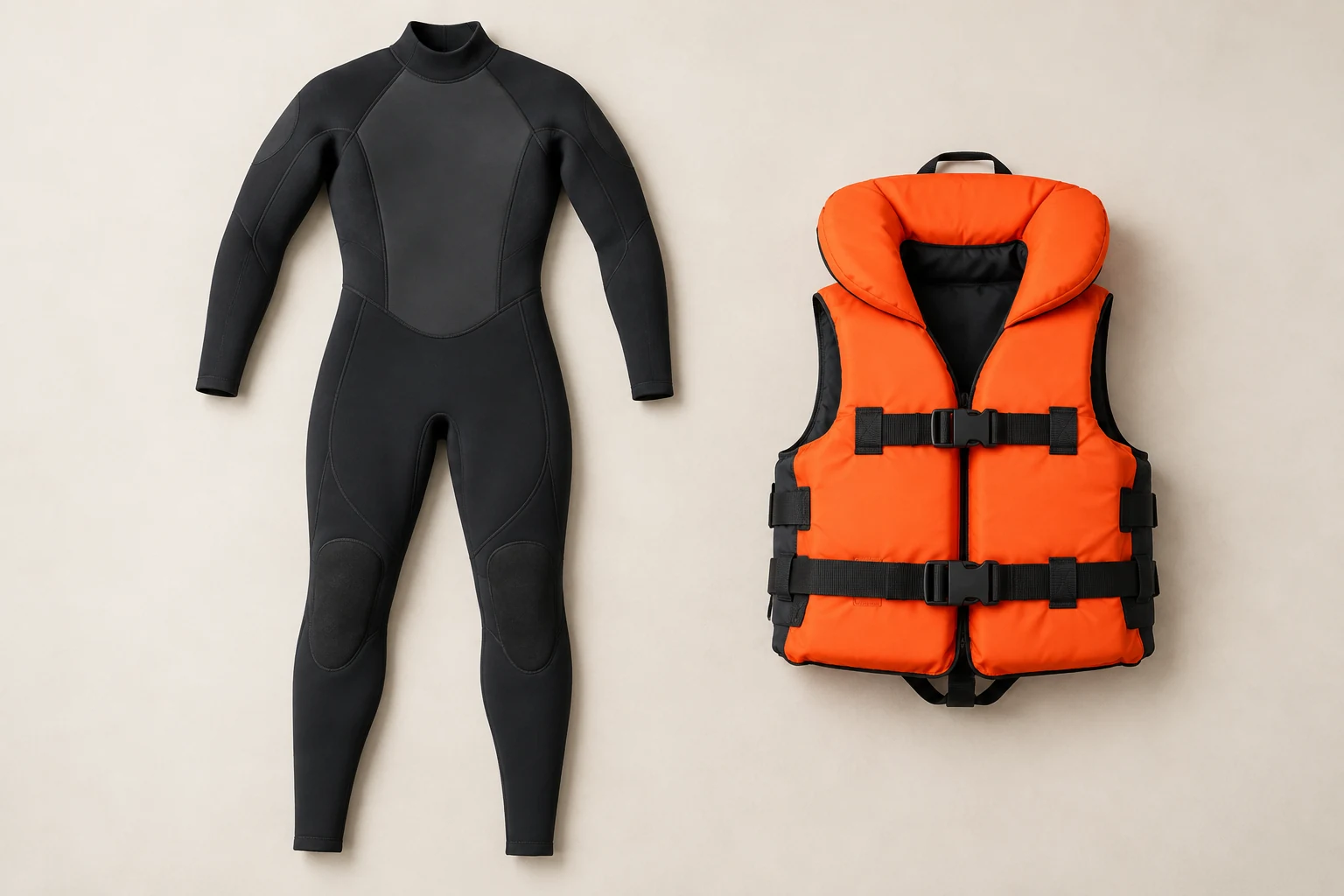
WetsuitInsulation, with additional buoyancy
Life jacketFlotation equipment selected for the wearer and activity
Extra buoyancy is not the same as a life jacket
A wetsuit may help your hips and legs sit higher while you swim. That is different from supporting someone who cannot keep their own face clear of the water. Being buoyant and being able to breathe are separate questions. [1] [2]
| Your question | Neoprene wetsuit | Suitable approved life jacket / PFD |
|---|---|---|
| Does it add buoyancy? | Yes. The foam contributes lift. | Yes. Flotation is its intended function. |
| Will it keep my face clear without my help? | Do not rely on it to do so. | Performance varies. Some designs turn a wearer face-up; others require an active wearer. |
| Can I use it as required boating equipment? | A normal wetsuit is not a substitute. | Use a device approved for the applicable use, in the correct size. |
USCG guidance distinguishes devices by their support and turning performance. “PFD” does not mean every design works the same way. [2] Our buoyancy aid vs life jacket guide explains that distinction.
If I am floating, why might my mouth still be underwater?
Buoyancy helps support your body; it does not automatically set your breathing position. Picture a swimmer looking down into the water. Their torso and legs can be close to the surface while their face is submerged. To take a breath, they still need to turn or lift their head.
A wetsuit distributes foam around the body. You cannot assume that distribution will rotate you onto your back or hold your airway clear if you stop actively controlling your position. Purpose-designed flotation devices are assessed for different support functions; even among approved PFDs, some require an active wearer. [2]
This is why “I float more easily in it” is not a test of whether a wetsuit can replace a life jacket. More lift alone does not answer the face-up support question.
Do wetsuits help you float? How neoprene works
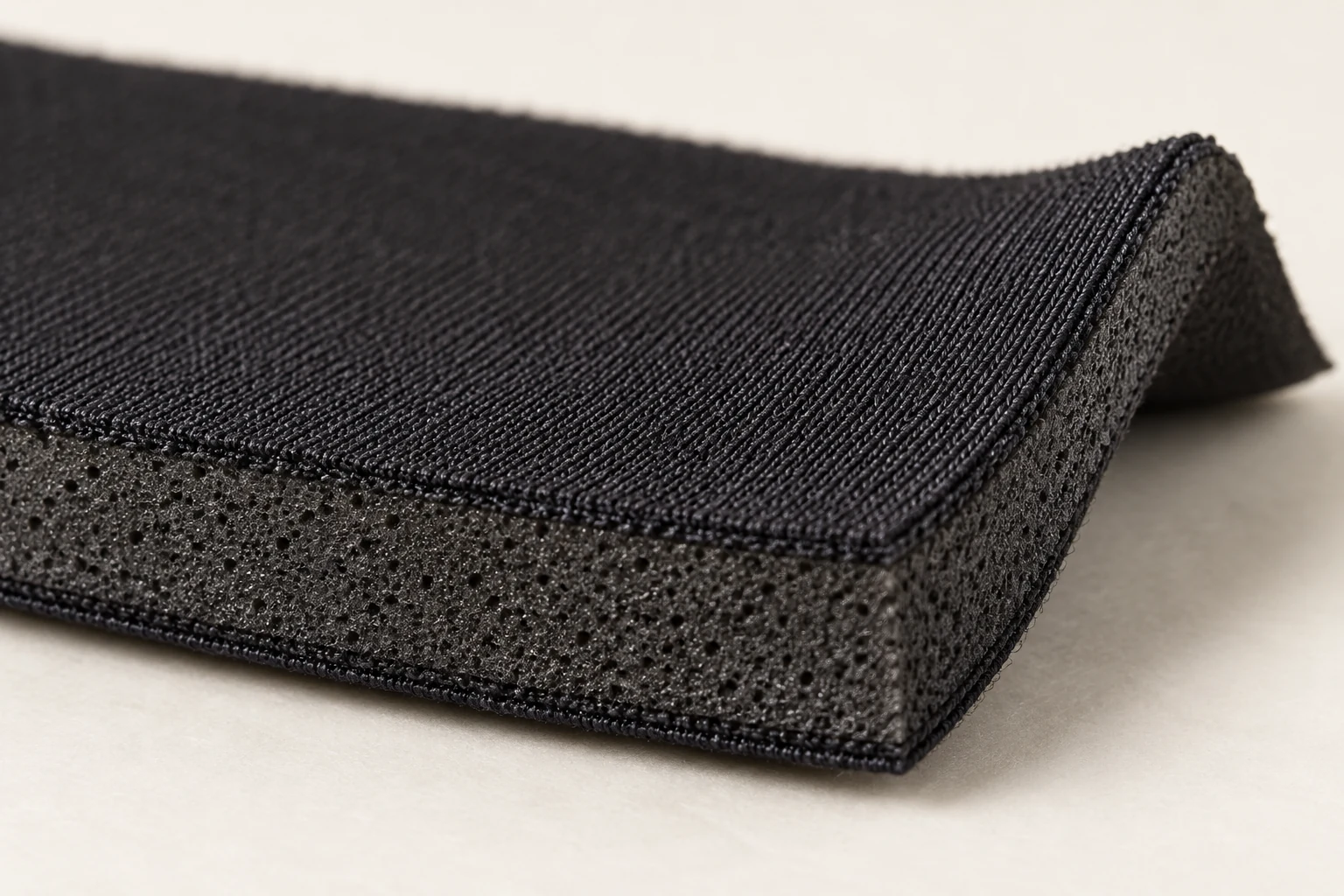
The lift comes from the foam
Conventional wetsuit neoprene contains many small, enclosed gas-filled cells. Those cells make the foam less dense than water. It displaces more weight in water than it weighs itself, producing a net upward force. [1] [4]
The water inside your suit is not what makes it buoyant. Nor do you need to trap a large air pocket under the collar. The useful lift is built into the foam.
The foam also slows heat loss. A close fit helps limit the replacement of warmed water next to your skin by cold water. This is why a wetsuit can help keep you warm while you are wet; it does not work like a waterproof drysuit. [5] For the insulation comparison, see wetsuit vs drysuit.
Does a thicker wetsuit always make you float more?
With comparable foam and coverage, more thickness generally adds buoyancy. But the thickness on the label cannot tell you how much lift a complete suit provides—or whether it will hold your face above water. [4]
Foam and coverage
The amount and type of foam matter. A shorty and a full suit are not a like-for-like comparison.
Panel placement
Swimming suits can place more lift around the hips and thighs while retaining flexible shoulders.
Water and wearer
Salt water provides more buoyancy than fresh water. Your natural body position also affects the change you notice.
These are qualitative factors, not a measured ranking of suits. Blueseventy describes panel placement and the effect of fresh versus salt water in its swimming-wetsuit guide. [1]
Why can two 3 mm wetsuits have different buoyancy?
Thickness describes one dimension of the foam, not the total amount in the suit. Imagine a short-sleeve, short-leg suit beside a full-length suit, both made from the same 3 mm material and sized for the same wearer. The full suit has extra foam covering the forearms and lower legs. That extra material contributes buoyancy even though the thickness is unchanged.
Real products may also use different foams or different thicknesses across the torso, shoulders and legs. Where those panels sit affects where the lift acts. A headline “3 mm” description is therefore not enough to compare whole-suit buoyancy. [1] [4]
Compare coverage, material and the actual panel layout together. The example explains the principle; it is not a measured comparison or a claim that every full suit out-floats every shorty.
Do not buy the thickest suit just because you are worried about sinking. Choose insulation for the conditions and a fit that lets you move and breathe comfortably. Use our wetsuit thickness guide for warmth decisions; address flotation needs separately.
What should you choose for your situation?
Start with swimming instruction and a suitable life jacket.
Choose a supervised setting and a properly fitted, approved foam life jacket appropriate for the activity. A wetsuit may add warmth; it does not replace those precautions. USCG guidance does not recommend inflatable PFDs for weak or non-swimmers. [2] [3]
Use a swimming wetsuit for warmth and mobility, with an open-water safety plan.
Arrange a buddy or supported session, use an appropriate supervised location, check conditions and know your exit. RNLI recommends a bright swimming cap and tow float for visibility. A tow float and a wetsuit do not replace a life jacket where one is needed. [6]
Two more questions before you buy
Can I still drown while wearing a wetsuit?
Yes. Extra lift does not guarantee a clear airway, the ability to swim back, or protection from cold-water shock. The RNLI notes that cold-water immersion can seriously affect swimming ability. Select your location, support and equipment for your actual skills—not the confidence the suit gives you. [6]
Will a tight suit give me more useful buoyancy?
Do not size down for flotation. Fit should allow comfortable breathing and movement. Foam construction provides the buoyancy; restrictive fit is not a flotation rating. If you are learning, address swimming support directly rather than trying to solve it with a tighter wetsuit.
Sources and further reading
Sources checked 2 November 2026. USCG references concern US-approved equipment; requirements elsewhere differ. No INSEAKU buoyancy tests or product certifications are claimed.
- Blueseventy — How buoyant are swimming wetsuits? Foam, panel placement and swimming-wetsuit limits.
- US Coast Guard — Life Jacket Wear Device performance, activity suitability and inflatable limitations.
- American Red Cross — Life Jacket Safety Wearer, activity and fit guidance.
- Divers Alert Network — Avoid the Chill Gas-filled foam, insulation and buoyancy changes.
- Divers Alert Network — Wetsuits Neoprene construction and the role of close fit.
- RNLI — Open water swimming Equipment, buddy planning, conditions and cold-water precautions.